Coffee grounds feel like pure garden gold — free, organic, endlessly available. But the advice circling online is often a bit dodgy. It treats them as a miracle fix for almost anything, and that’s where gardens quietly start languishing.
Some plants genuinely flourish with coffee grounds applied correctly this summer. Others are being slowly harmed while you congratulate yourself on recycling.
Here’s the honest breakdown. No enthusiasm, just bang on results.
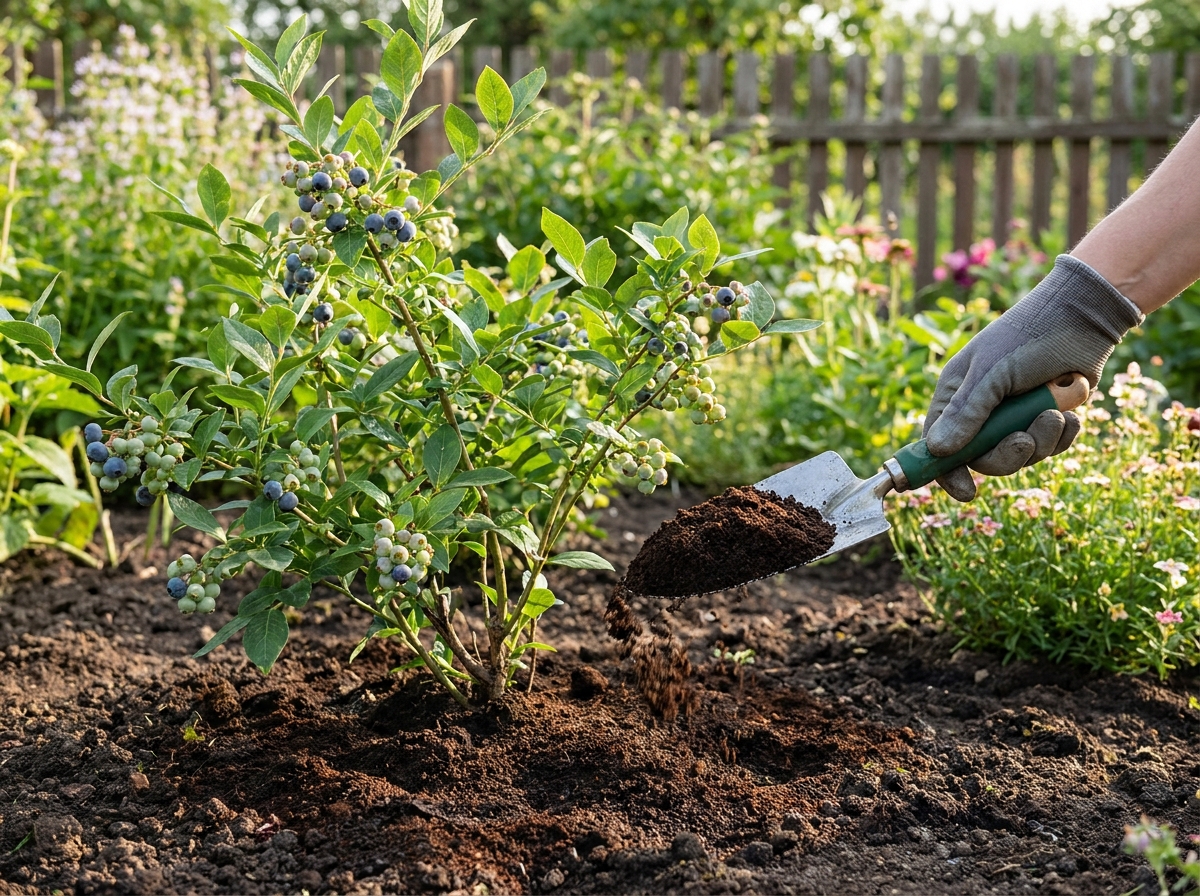
The list is shorter than most websites suggest. Acid-loving plants are the real winners here — blueberries, azaleas, rhododendrons, camellias, and hydrangeas grown for blue blooms all benefit from the gentle acidity grounds provide. Roses respond well too, particularly when grounds are worked into the soil around the drip line rather than piled at the stem.
Vegetables with the strongest positive response include tomatoes, peppers, and carrots. The nitrogen — roughly 2%, similar to grass clippings — gives leafy growth a proper kick.
Radishes and beetroot also show measurable improvement when grounds are incorporated before planting, not scattered on top mid-season.
For a deeper look at getting the most from your spent grounds in summer, the earlier article on why your garden needs coffee grounds right now covers timing and quantities in detail.
Lavender. Rosemary.
Geraniums. Clematis.
Any plant that prefers alkaline or neutral soil is being slowly pushed toward deficiency when you add coffee grounds regularly. The pH shift is gradual enough that you won’t see immediate collapse. You’ll just spot weaker growth, yellowing leaves, and fewer flowers over several weeks, and assume something else is wrong.
Seedlings are decidedly vulnerable. The fine texture of spent grounds compacts when wet. It forms a crust that obstructs both water and air exchange at soil level.
That earthy, slightly sour smell after rain? That’s the grounds beginning to mat.
Young roots can’t push through it.
Grass is another victim of misguided enthusiasm. Broadcasting grounds across a lawn in thick patches creates dead spots within 14 days.
The caffeine residue — yes, some remains — inhibits germination in several plant species. So, coffee grounds work as a weed suppressant around established plants. But they genuinely damage anything trying to establish from seed nearby.
The compost bin is always the safest route. Add grounds at no more than 20% of total compost volume, layered with carbon-rich material like cardboard or dry leaves to prevent compaction.
After 6–8 weeks of decomposition, the result is a balanced amendment that almost any plant can take up without risk.
Direct application works only when done with restraint.
And avoid the slug-repellent claim entirely. Multiple university trials, including research from Oregon State University Extension, found coffee grounds had no reliable effect on slug behaviour. That’s garden folklore, not fact. Skip it.
If you’re already seeing unexpected issues in your summer beds, the most common coffee grounds mistake this summer is worth checking before you apply another batch.
Yellowing leaves on acid-tolerant plants — the ones that should love grounds — usually signal nitrogen lockout from over-application, not deficiency. Counter-intuitive, but real.
Reduce application and water deeply twice a week for 3 weeks to flush the excess.
Root rot smell at soil level after watering is a red flag. The compacted crust has been trapping moisture against the crown. Rake it away completely. Let the soil dry for 48 hours. Then resume normal watering.
Pale, struggling seedlings near coffee-mulched areas are showing caffeine inhibition. Move them if possible. Or dig a 20cm buffer zone between grounds and any germinating seeds. The RHS guidance on composting consistently recommends processing grounds before use precisely to neutralise this effect.
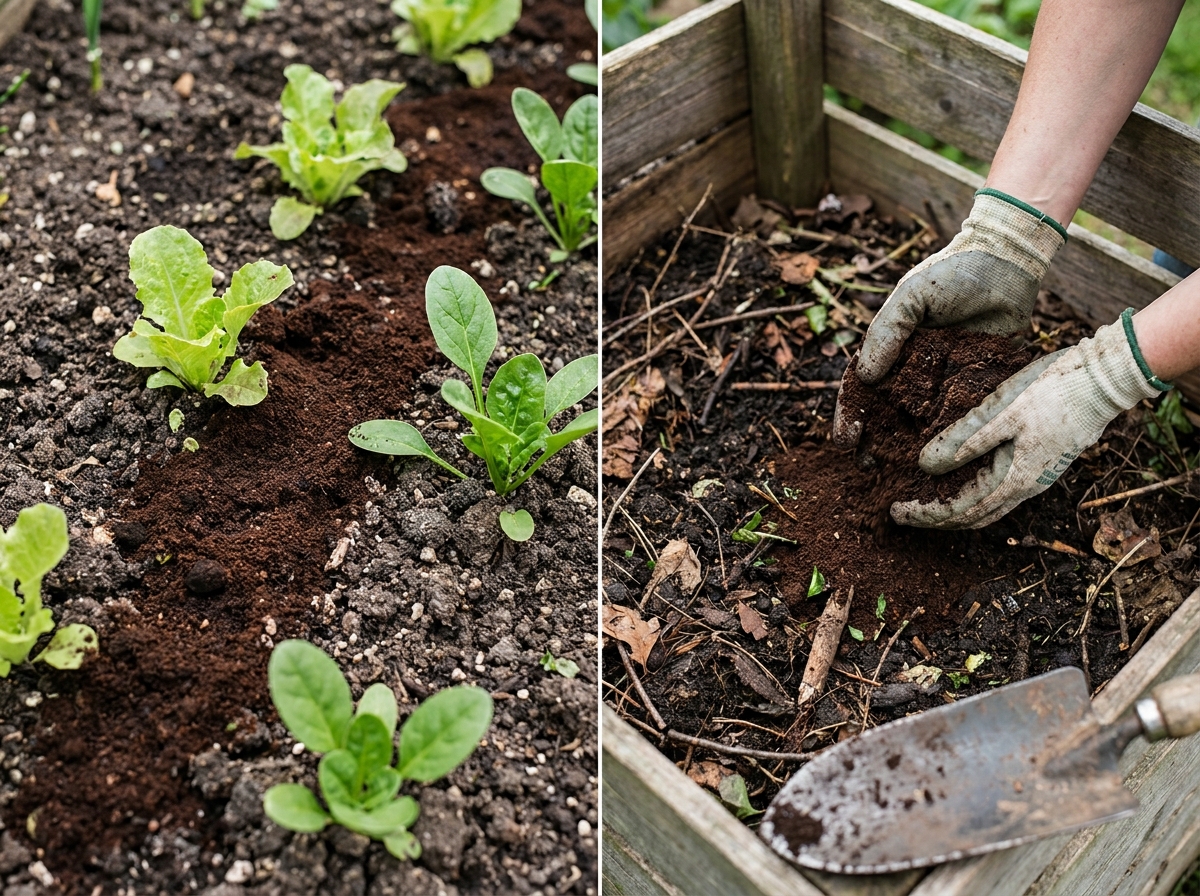
Smart tip: Always compost coffee grounds before use — six weeks of decomposition removes almost all risk of root damage or pH shock.
No. Daily application builds up faster than the soil can take it up. It creates a compacted, water-repellent crust within 10–14 days.
Once a month, worked in lightly, is enough for most plants.
Spent grounds are only gently acidic — most acidity ends up in your cup during brewing. The pH effect on garden soil is real but modest. So, they’re not a stand-in for sulphur-based acidifiers on severely alkaline soil.
Yes — tomatoes thrive on the nitrogen boost and tolerate mild acidity. Mix grounds into the planting area or apply as part of a compost top-dress once a month, not more frequently.
For readers in Australia, New Zealand, and South Africa — this advice applies to your winter garden too. Focus on compost-bin application now and save direct soil use for your spring planting season in September.