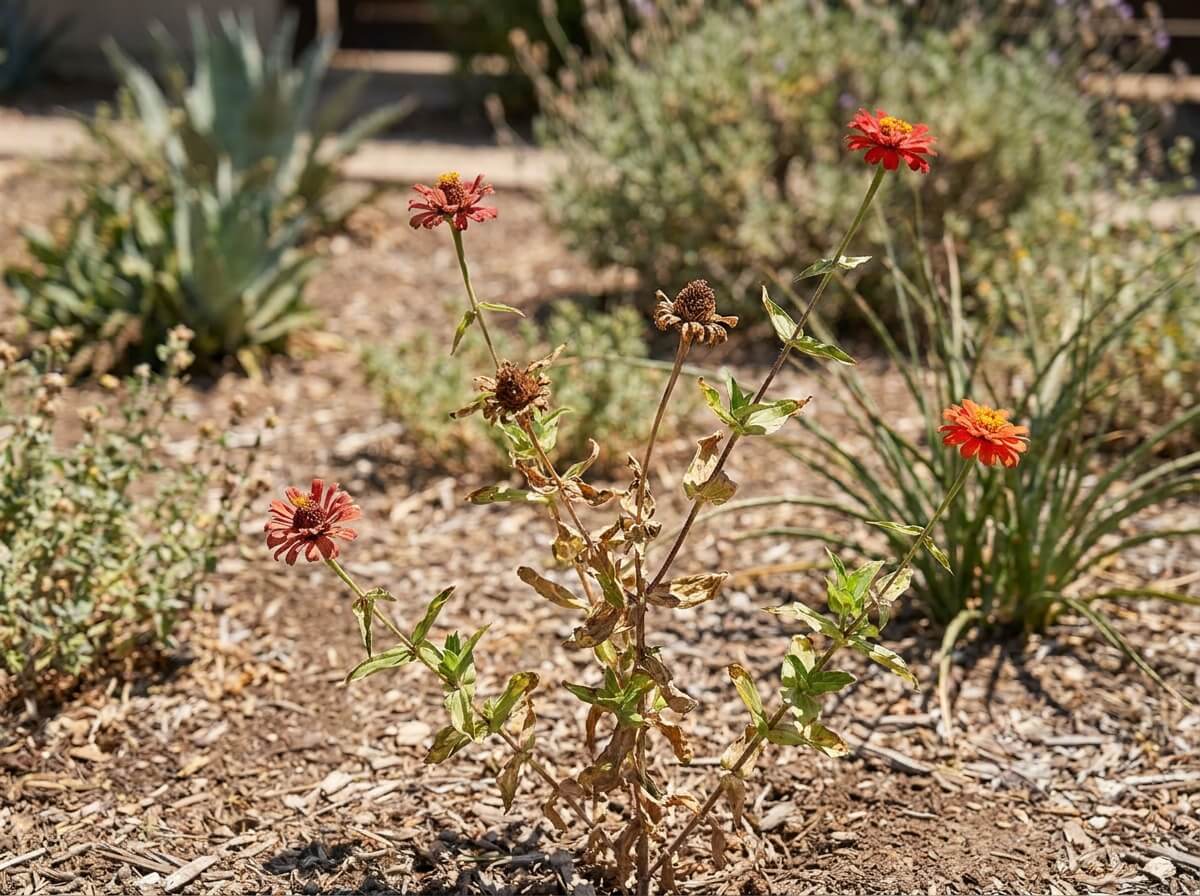
Your zinnias should be the loudest things in the garden right now — dense, riotous, relentlessly colourful. If they are not looking proper, something is not quite right. The issue is almost always deadheading done wrong: cutting in the wrong place, at the wrong frequency, or skipping it entirely during heat spikes. Fix the technique and you can realistically double your bloom count within two weeks.
Zinnias are cut-and-come-again plants. Every time a flower finishes, the plant wants to set seed — and the moment it does, it stops pushing new blooms. That is the biology behind deadheading. But where you cut matters enormously.
Most gardeners snip just below the dead flower head, leaving 10–15cm of bare stem above the nearest leaf node. That bare stub produces nothing. The plant has no axillary buds to activate on a leafless stalk, so growth stalls and you wait and wait for flowers that are not coming. With England recording its warmest June in history and heatwaves rolling across the US right now, heat stress compounds the issue — a zinnia already under thermal pressure simply can not afford to waste energy on a dead stub.
The second mistake is inconsistency. Deadheading every 10–12 days is the rhythm zinnias need. Miss one round, let three or four heads go to seed simultaneously, and the plant shifts into full seed-production mode. Getting it back into bloom mode takes another 2 weeks minimum.
This is not dangerous. It is, however, deeply wasteful. A zinnia plant that is allowed to set seed repeatedly will spend the rest of summer producing fewer and smaller flowers, with increasingly woody stems and a leggy, open shape that looks nothing like the compact, flower-packed plants you planted in spring. By late summer, you will have a plant that is essentially finished — weeks before the first frost, weeks before it needed to be.
And the other consequence is powdery mildew. Poorly deadheaded zinnias tend to develop dense, congested foliage around old stem stubs. That trapped humidity is exactly where powdery mildew takes hold. The RHS flags zinnias as particularly susceptible mid-season. Good deadheading does wonders for airflow as well as bloom count.
The fix is precise. Look down the stem of a spent zinnia bloom until you find the first pair of full, healthy leaves. Cut there — not above, not below, right at that node. Leave about 5mm of stem above the leaf pair. That is where the new lateral shoots will emerge, and each shoot carries its own flower bud. Use sharp, clean scissors or secateurs. Blunt cuts bruise the stem and slow the response. Yes, it is fiddly. Worth it. The difference between a plant deadheaded correctly and one cut haphazardly is night and day within 12 days.
Your summer deadheading routine for zinnias should look like this:
Also worth reading: Stop Deadheading These Summer Flowers — You are Stealing From Yourself — some summer annuals actually want to be left alone. So knowing which is which changes everything.
For a broader look at keeping all your summer annuals performing at their peak right now, Do This to Your Annuals Right Now or You Will Lose Color All Summer covers the full picture.
Sparse blooms from deadheading mistakes are not the only thing to watch. These signals mean something else is also going wrong:
The thing is, one thing most gardeners overlook: zinnias need a minimum of 6 full hours of direct sun to bloom well. Move pots immediately if they have drifted into shade as neighbouring plants have shot up. A zinnia blooming badly in shade will not recover in that spot — full sun is non-negotiable.

Smart tip: Always cut zinnia stems back to the first full leaf node — never leave a bare stub above it.
Every 7–10 days is the sweet spot. More frequent checks during heat waves are worthwhile, as flowers fade and set seed faster when temperatures stay above 30°C (86°F) for several days in a row.
Yes — cut all spent heads back to the correct leaf node now, water well, and new flowering shoots should appear within 10–14 days. The plant is not lost, just stalled. So do not despair.
Only with a low-nitrogen, high-phosphorus liquid feed every 3–4 weeks — something like a tomato fertiliser works well. Too much nitrogen pushes leafy growth at the expense of flowers.
In the ground, generally — zinnias in pots dry out faster and heat stress is more intense, which suppresses bud formation. If growing in pots, choose containers at least 30cm deep and water every 2 days in peak summer heat.