Coffee grounds are one of those things gardeners *swear by* — and then, usually, they’ll quietly kill plants with. Used correctly in summer, they’ll add nitrogen, improve soil structure, and give acid-loving plants a genuine boost. Used incorrectly — and that’s how most of us start, let’s be honest — they’re going to form a dense, water-repellent crust that suffocates roots and locks out moisture right when your plants need it most. So, here’s what actually works.
The mistake isn’t using coffee grounds. No, the mistake’s applying them in a thick, undisturbed layer directly on the soil surface. Spent coffee grounds? They’ve got extremely fine particles that compact together when wet. And in summer, with all that watering or rain, they’re gonna form a near-impermeable crust. Water beads off. Roots underneath start to suffocate. I did exactly this around my blueberries for about 11 days last June, piling on a half-inch-thick ring of fresh grounds every morning around 7 AM, like some kind of caffeinated obsessive. What a faff! The plants looked miserable. The soil beneath was bone dry while the top was a grey, mouldy mat.
The pH issue? That’s also completely misunderstood. Fresh grounds? They’re mildly acidic (around pH 6.0–6.5). But used grounds — you know, what’s actually coming out of your machine — they’re closer to neutral. The acidifying effect on soil? Yeah, it’s real, but it’s modest. You’re not gonna transform clay into ericaceous compost with a few handfuls. That’s just not happening. But what you will do is feed the soil with nitrogen, and that matters a whole lot in the long summer growing season.
A coffee crust in June or July? That’s particularly damaging because this is peak water demand for most vegetables and flowering plants, isn’t it? If water can’t penetrate the soil surface, it’ll just run off or pool — neither of which helps roots. Not at all. Worse still, that damp, compressed layer becomes a *perfect* environment for fungal growth, including grey mould (Botrytis). And the RHS — they’ve identified grey mould as one of the most common summer garden diseases, and anything that creates stagnant, humid surface conditions? It’s just gonna encourage it. You might also notice slugs and fungus gnats clustering in that damp mat. A problem that compounds itself fast. Oh boy. Do nothing, and by about three weeks in August, you’re dealing with root stress, mould, and pests simultaneously. Not a fun combination, is it?
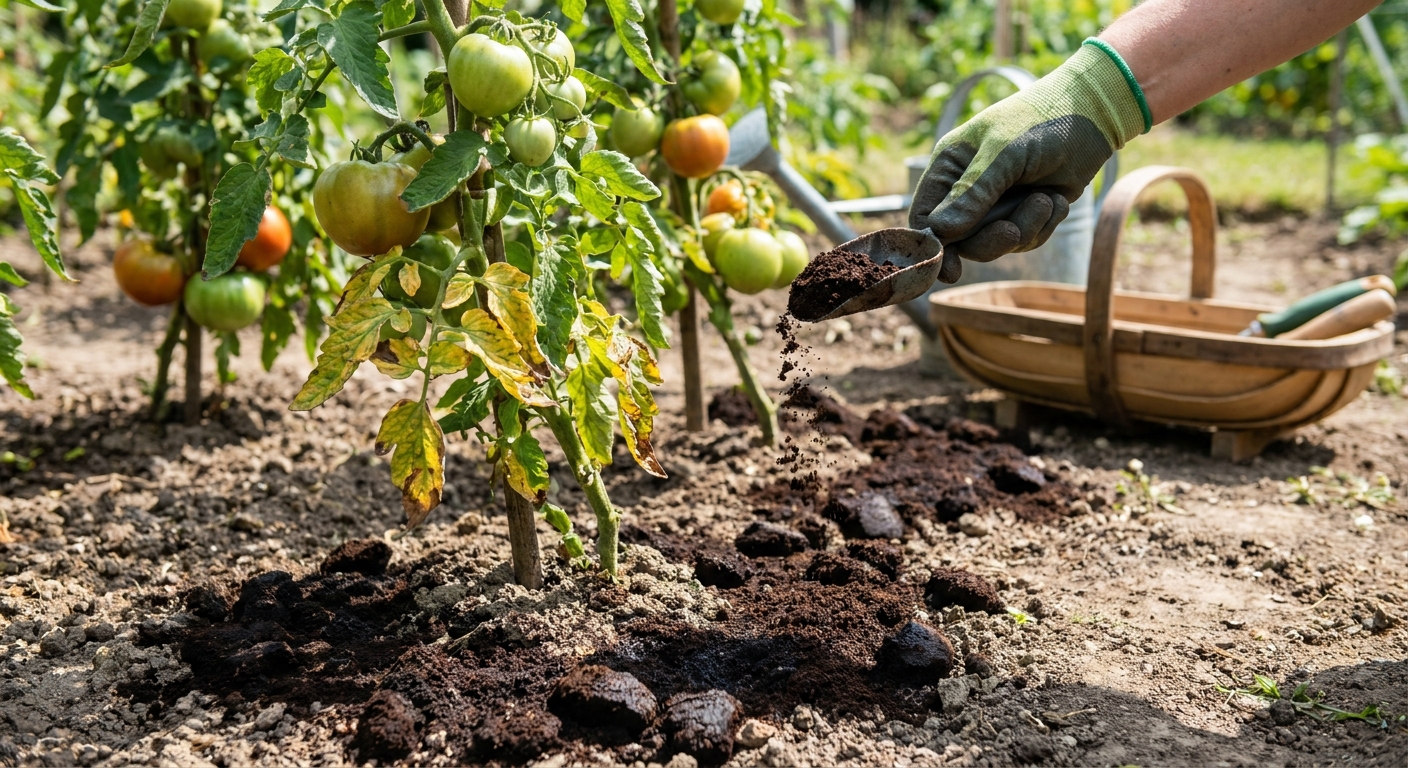
But the fix is simple, it’s just not instinctive, is it? Apply grounds thinly — no more than a half-centimetre layer — and always, *always* mix ’em into the top few centimetres of soil or blend ’em into mulch immediately. Never leave a solid ring of grounds sitting there on the surface. That doesn’t work. Full stop. So, in June, the single most effective approach? It’s this:
Here’s one genuinely weird detail no gardening book ever mentions: coffee grounds? They’ll attract earthworms at a striking rate! No kidding. Oregon State University Extension research actually found that worm activity increased measurably in soil where grounds were incorporated. Pretty cool, right? Earthworms are your best free soil aerators. Use ’em. Seriously. Incorporating grounds rather than just surfacing them — that’s the move that delivers this benefit. Always.
Southern Hemisphere gardeners: this applies directly, of course, to your December–January summer growing season.
Coffee grounds? They’re just one input in a bigger soil picture, aren’t they? If you’re using them and also seeing yellowing lower leaves on tomatoes or peppers, that’s more likely a nitrogen deficiency than anything grounds-related — grounds *do* help, but they’re not a fast fix. Wait, that’s not quite right — they won’t magically solve all your problems instantly. So, watch for these signals that something else isn’t quite right:
And if your lawn clippings are also ending up in your garden beds as mulch, you’ll wanna check out our guide on mulching with lawn clippings — the same clumping problem applies there, and the solutions? They’re gonna overlap. Sorted.
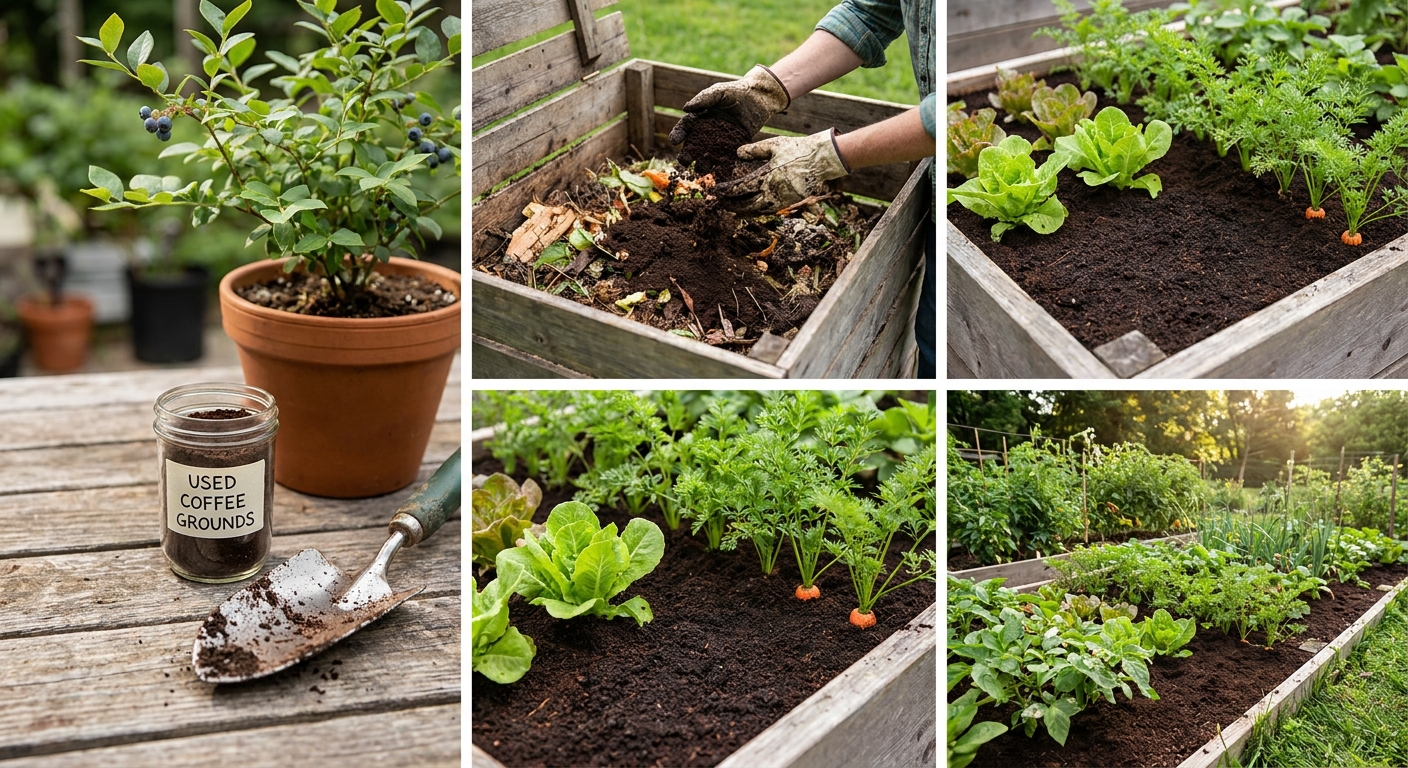
Smart tip: Always, always mix coffee grounds into compost or soil — don’t ever leave ’em just sitting there as a surface layer.
No. Acid-loving plants like blueberries, rhododendrons, and azaleas respond best. Avoid using grounds around plants that prefer alkaline or neutral soil — lavender, clematis, and brassicas don’t benefit, and heavy applications? They’ll just stress them out.
Once a week at most, in small quantities mixed into soil or compost. More frequent application without incorporation leads to the surface crust problem — more isn’t better here, it’s just *way* more damaging.
The evidence is genuinely mixed. Some gardeners swear by a ring of grounds as a slug barrier, but when grounds compact and get moist, they stop working and can actually attract slugs instead. It’s just not a reliable method in wet or humid summer conditions.
No, they’re not quite. Capsule-based grounds (from Nespresso-style pods)? They’re often finer and more compressed, so they’re gonna clump even faster. So, if you’re using pod grounds, you’ll wanna dilute them more heavily into compost rather than applying directly to beds.