
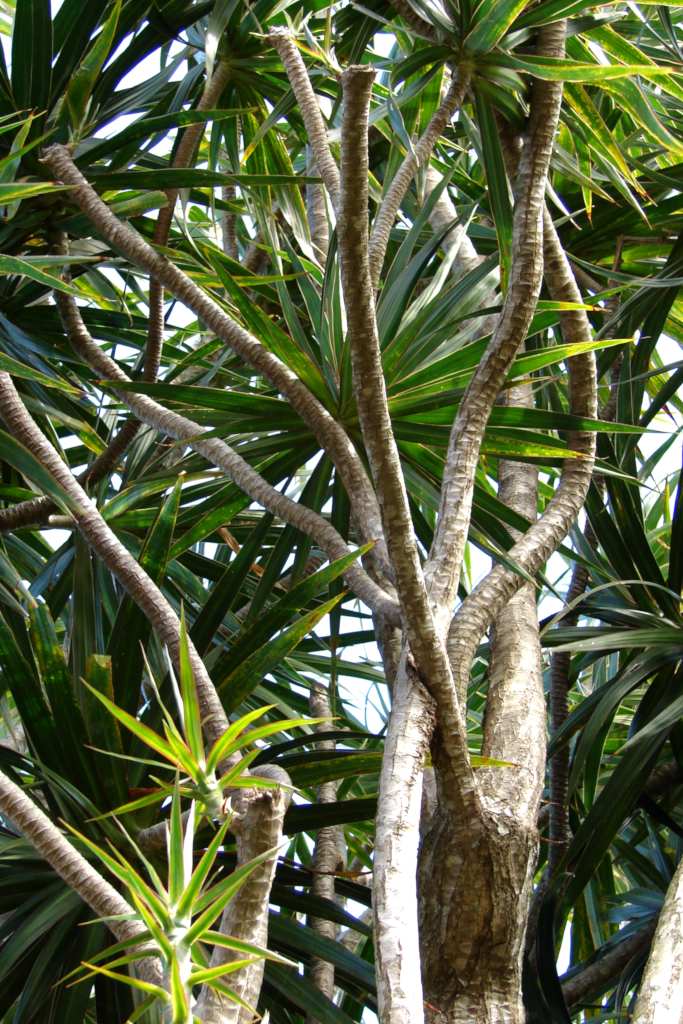
Trunks as thick as a leg, stems topping a dozen feet, thin grey bark peeling off in slabs: in the wild, the Madagascar dragon tree (Dracaena marginata) is nothing like the slim specimen grown in a pot indoors. Give it even warmth and constant moisture, and indoor growth starts to resemble that wild plant.
It towers to over a dozen feet (3 ½ meters) tall and grows trunks as thick as a leg.
Dracaena marginata is native to Mauritius and Madagascar, along the Indian Ocean. The most common name for this plant is actually related to this: Madagascar dragon tree.
These large islands share a special, tropical climate. There, temperatures remain even, at their lowest hover around 75°F (25 °C) and cap off at about 95°F (35°C). Having such a regular temperature range in its natural habitat is one of the reasons the Dracaena marginata dragon plant is successful as a houseplant. Indeed, indoor temperatures are often constant throughout the year.
Moisture in these parts of the world is always high and never drops below 80% relative humidity. This is a key difference when compared to the air inside our homes and offices, which often tends to be dryer. It’s one of the reasons that explain slow dracaena marginata growth indoors in temperate regions of the globe. Lack of air moisture is also why the dragon tree only very rarely flowers indoors.
Precipitations and rain vary greatly both in Madagascar and Mauritius, as it does in all coastal areas of the Indian Ocean. Intermittent drought is not uncommon and, for weeks on end, not a single drop may fall. Alternating with these droughts are flooding rains that drench the land for days. Dracaena marginata is particularly well equipped to cope with these irregular rain cycles.
The gap between a tropical island coast and a living room explains most of what the dragon tree does, or fails to do, in a pot. Here are the three conditions the article singles out.
| Condition | In its native habitat | Indoors in temperate regions | What it means for the plant |
|---|---|---|---|
| Temperature | Even all year, from about 75°F (25°C) up to 95°F (35°C) | Often constant throughout the year | One of the reasons it succeeds as a houseplant |
| Air moisture | Always high, never below 80% relative humidity | Air tends to be much drier | Slow growth, and flowering only very rarely |
| Rain | Weeks of drought alternating with days of flooding rain | Watering replaces any natural cycle | The plant is well equipped for irregular water supply |
Match the warmth and the moisture, and the growth you see indoors starts to resemble the wild plant.
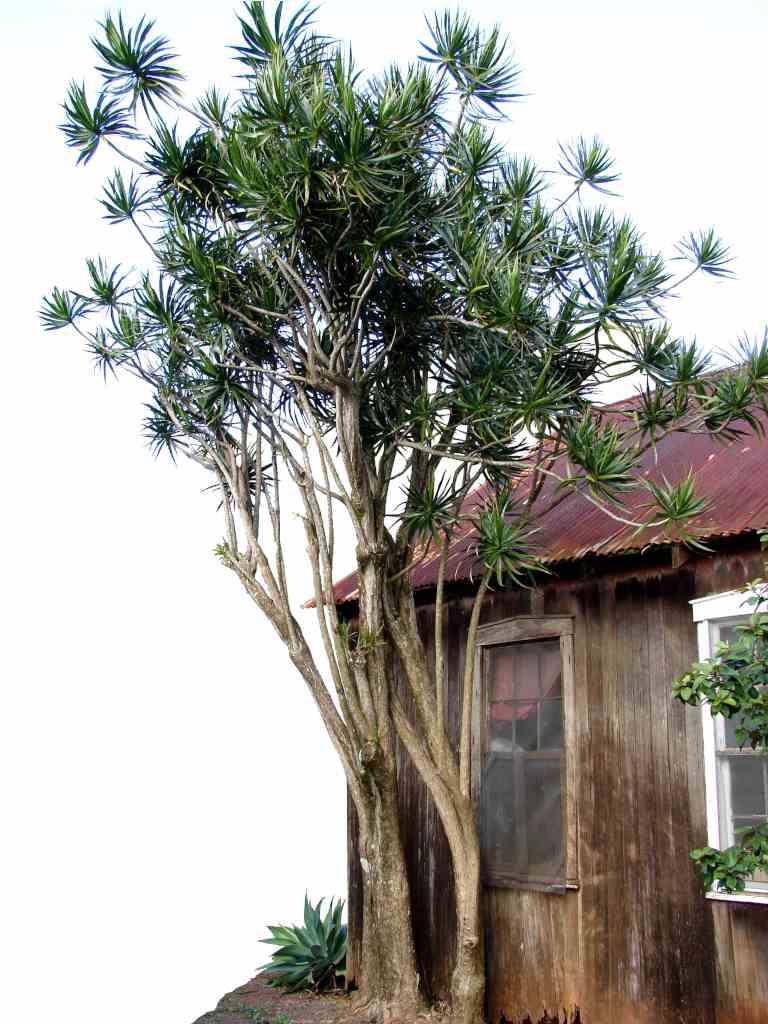
Dragon plants can tower to heights of over a dozen feet, especially when their roots are in rich soil and they’re protected from stronger winds.
Any damage to the branches leads to new sprouts branching off to the sides at the topmost, unharmed nodes.
When two or more trunks and stems grow too close together, they start fusing and become a single trunk.
This interesting capacity can help you produce thick stems for Dracaena marginata bonsai.
In many countries, from the Philippines to the Americas, Dracaena marginata has been introduced and now thrives outdoors. When abandoned and left to its own devices, it grows into thick, dense clumps that grow twice as tall as they are wide.
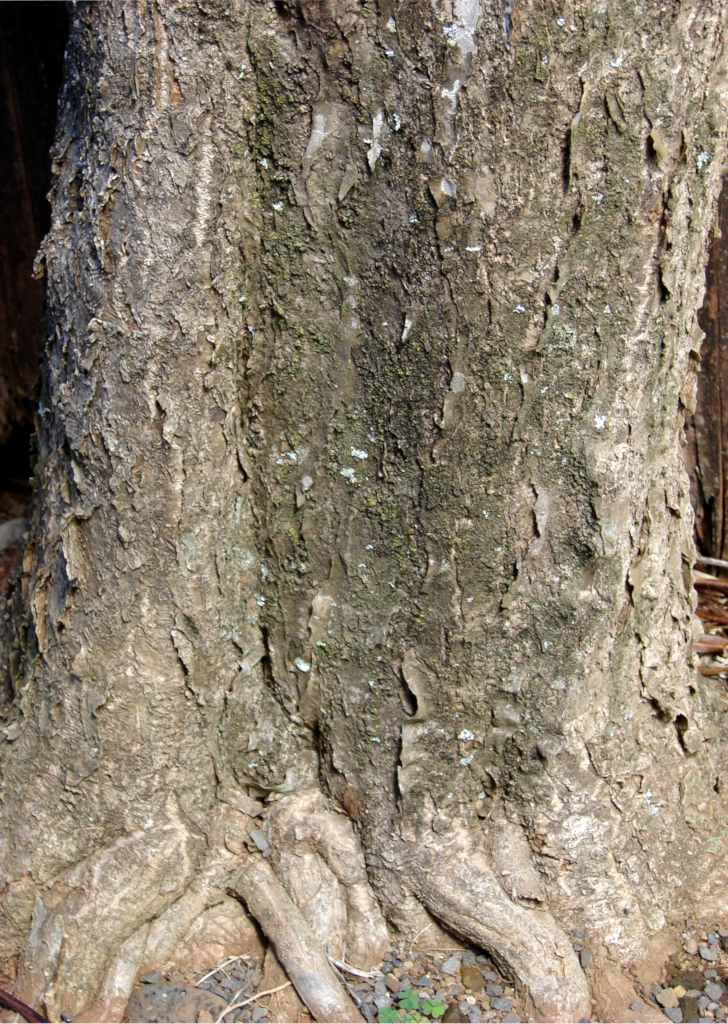
Some of the largest Dracaena marginata plants have trunks that exceed a foot in diameter (30 cm across).
The typical pattern left by leaves falling off disappears to reveal thin, gray bark that peels off in slabs when damaged.
The wild species has given rise to a handful of named forms that turn up in garden centres and houseplant aisles, differing mainly in leaf colour, thickness of stem and eventual size. Use the table to pick the one that suits your light levels and the space you have.
| Variety | Leaf colour | Habit | Light |
|---|---|---|---|
| Magenta | Dark green with purple-red margins | Tall, few branches | Bright to moderate |
| Tricolor | Green, cream and pink-red stripes | Slender upright canes | Bright indirect |
| Colorama | Mostly deep pink-red, narrow green centre | Compact, slower growing | Brightest indirect light |
| Tarzan | Green with red edges, broader leaves | Thick stem, dense rosettes | Bright to moderate |
Pruning and watering are the only two considerations when caring for outdoor Dracaena marginata.
Dracaena marginata, when grown outdoors, can be pruned whenever needed to control size and shape the tree.
Pruning just before the rainy season will ensure roots have plenty of water to start sending new shoots up from nodes along the stem.
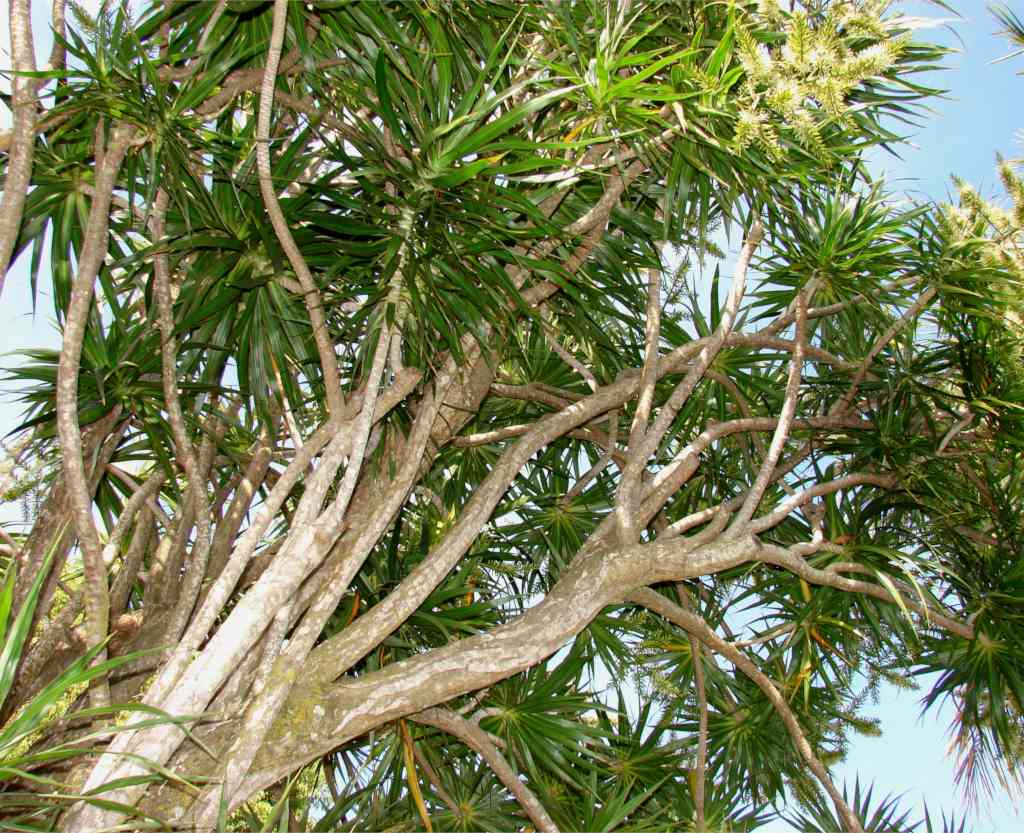
Although Dracaena marginata isn’t a desert plant, it still manages to cope well with drought when it doesn’t last too long.
Simply plant your Dracaena marginata outdoors in a place where it’ll receive normal rainfall. If you don’t want the chore of watering your dragon tree, just avoid planting it under overhung roofing that would deprive it of its natural rainwater.
If temperatures in your area always remain above 65-68 °F (18 – 20 °C), you can plant your Dracaena marginata outside.
Extend the height of your fence or perimeter wall with a Dracaeana marginata hedge planted along the base.
The bushy tips will add privacy at the top and minimal pruning will ensure that stems don’t grow thick at the base, preserving garden space.
Read also:
Image credits (edits: Gaspard Lorthiois): © CC BY 4.0 Kim & Forest Starr
1 How do you bonsai a Cycas pup please. 2 Love your site. It is a wonderful source of information. Thank you so much. I live in the south of France and our climate is temperate. our present Cycas in the garden is about 1.5 m high and wide and is doing very well thank you. We have always cut off the pups, of which there are many, with the hedge trimmer, but I would love to have some more plants, as they are expensive. I would like to use the pups. I am handicapped so my husband took of 5 or six pups of different sizes and I have cut all the leaves or fronds and along the bottom of the root ball and they are being hardened off in the pantry. I know they are poisonous. 3. What do I do now please? 4 I have a Hydroponic Dracaena marginata that I would like to pot up. What would be the best way to do that?