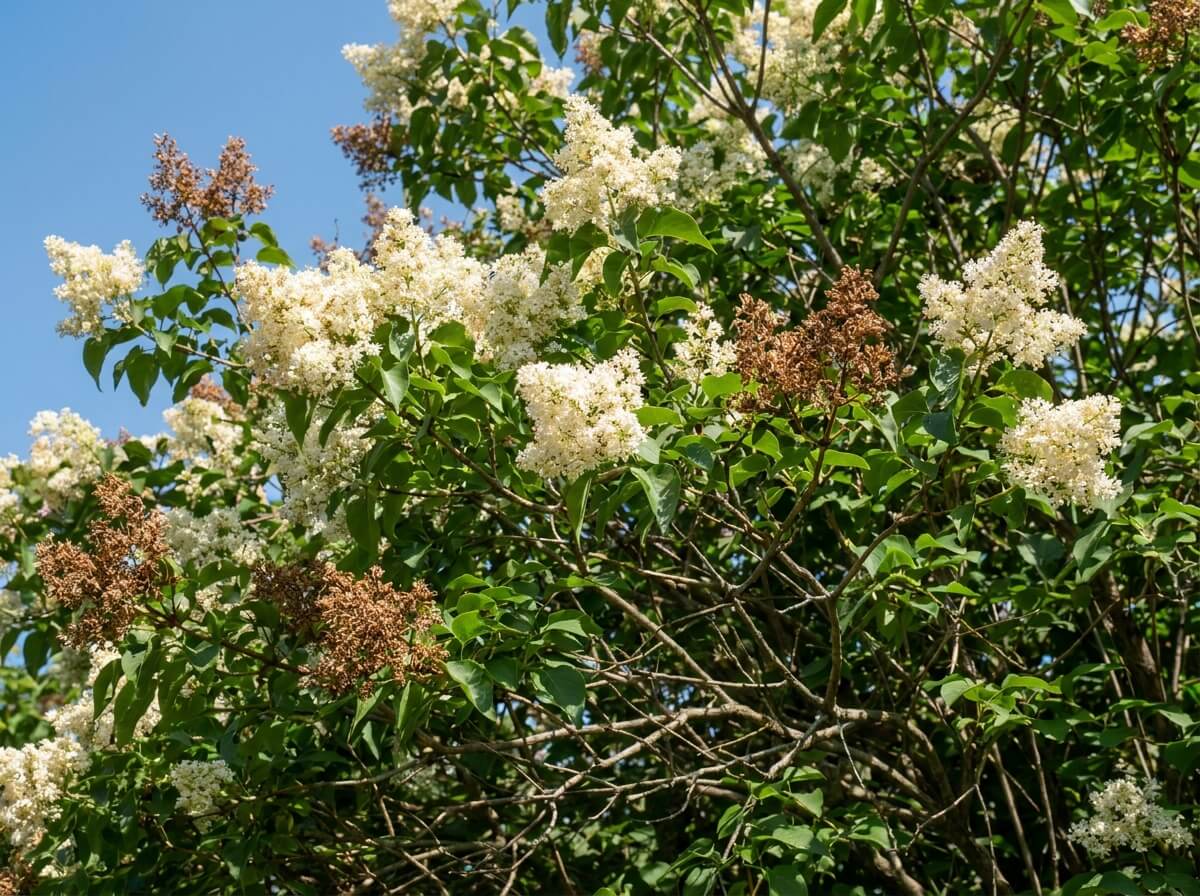
Japanese tree lilac (Syringa reticulata) finishes its spectacular early-summer display — those enormous creamy-white panicles — and then most gardeners simply walk away. That is a mistake. The weeks immediately after flowering are the best, and in some respects the only, time to shape this tree for structure, size, and a full floral performance the following season. Here is exactly how to do it.
Most ornamental trees get pruned in winter, when they are dormant and leafless and the structure is easy to see. Japanese tree lilac is different.
It blooms on wood produced the previous growing season, which means any pruning you do after late summer risks removing the embryonic buds that carry next year’s flowers.
The window is specific: prune within 4 to 6 weeks of the last flowers dropping. In Northern Hemisphere gardens, that is typically from late June through late July.
So, cut later than that, and you are gambling with next summer’s display.
Southern Hemisphere gardeners: this applies to your December–January period, immediately after your spring flowering finishes.
Stand back. Look at the whole canopy from at least 5 metres away before touching anything.
What you are assessing is not just the dead flower clusters — it is the overall silhouette, the density of the crown, and any branches that cross, rub, or shoot back toward the centre of the tree.
Japanese tree lilac has naturally handsome bark — smooth, reddish-brown, marked with horizontal lenticels that look almost identical to ornamental cherry bark. The structure of the tree is part of its year-round appeal.
And you are not shearing it into a blob. You are revealing a form that is already there.
Check for:
The thing is, a tree with genuinely good structure needs surprisingly little cutting. Resist the urge to over-prune. Taking more than 20% of the live canopy in one season weakens the tree and triggers exactly the kind of dense, unflowering regrowth you are trying to avoid.
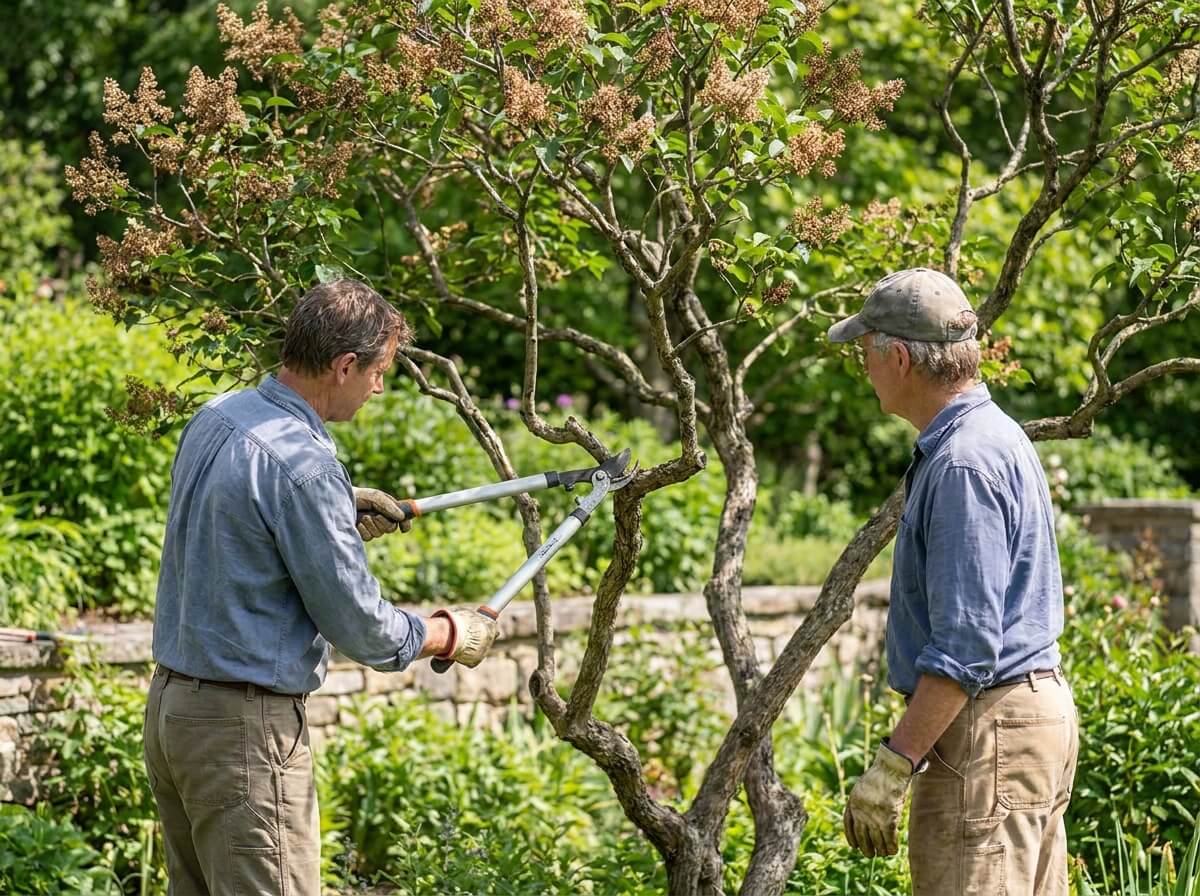
Tools first. Sharp, clean bypass secateurs for anything under 1.5cm diameter. Loppers for branches up to 4cm. A folding pruning saw — the Silky Gomboy is a reliable choice, and bang on for the job — for anything larger. Wipe blades with methylated spirits (denatured alcohol) between cuts on different branches; Syringa is susceptible to bacterial canker, and transferring sap between cuts is how it spreads.
Cut the finished panicles back to the first pair of healthy leaves or to a strong lateral bud. Do not leave stumps — bare stubs die back and invite fungal entry.
This single step, done promptly, redirects energy away from seed production and into the new growth buds that become next year’s flowers.
Cut back to live wood, identified by green tissue under the bark. Make the cut just above a bud or a side branch junction, angled slightly so rainwater runs off. On larger cuts — anything over 2cm — the RHS advises against wound sealants, which are now considered largely ineffective and may actually trap moisture.
Pick the better-placed of any two branches rubbing against each other and excise the other one entirely, back to its point of origin. Do not stub it — a clean collar cut heals cleanly.
Aim for a canopy where light and air can move freely through the crown. You should be able to throw a hat through the canopy without it catching.
Yes, that sounds theatrical. It is a genuinely useful mental test. Worth it.
Snip them off completely, as close to their origin as possible. Water shoots — those vertical, fast-growing, soft stems that erupt from old wounds or the base — will never flower well and drain resources from the rest of the tree.
Left entirely alone, Syringa reticulata reaches 8 to 10 metres. Most garden specimens are better kept to 4 to 6 metres through consistent, light annual shaping. Consistency is non-negotiable: a tree shaped gently every summer after flowering stays naturally compact without ever needing drastic renovation.
But if you have inherited a neglected specimen that is already outgrown its space, do not try to tackle the issue in one session. Reduce the height by no more than 25% per year over two or three summers, taking the longest, most dominant leaders back to strong lateral branches. Removing too much at once shocks the root system and triggers a storm of unproductive regrowth — exactly the outcome you are trying to avoid. You can read more about aggressive size reduction on trees in the hat racking guide, though that technique should be used only as a last resort on tree lilac.
Pruning in late winter or early spring — the default habit for many gardeners — removes the flower buds. The tree will look healthy and leaf out beautifully.
And then produce no flowers. Not fewer flowers.
None.
Shearing is equally destructive. Japanese tree lilac is not a hedge plant.
Running a hedgetrimmer across the top produces a flush of soft, dense growth that flowers poorly and looks dodgy. The tree has a naturally elegant, slightly irregular crown — work with that, not against it.
And hard renovation pruning in August or September is also a proper bad idea. Late-summer cuts stimulate late growth that will not harden off before the first frost, leaving soft tissue vulnerable to winter damage. Similarly, if you are pruning spring-blooming shrubs elsewhere in the garden, the timing rules that apply to something like a spring-flowering shrub pruned immediately after bloom follow the same logic as tree lilac — act right after the flowers finish, not before, not months later.
Water deeply if conditions are dry — 20 to 30 minutes at the base with a slow trickle, twice a week through any dry spell. Pruning is a physical stress, and a tree under drought stress simultaneously is more vulnerable to opportunistic pathogens.
A balanced, slow-release fertiliser applied to the root zone in mid-summer — not high-nitrogen, which pushes leaf growth at the expense of flowers — does wonders for the development of next season’s buds. Growmore (UK) or a 10-10-10 granular fertiliser (US, Canada) scattered at the drip line and watered in works well.
Mulch the base with 7 to 10cm of composted bark, keeping it clear of the trunk by at least 15cm. This retains soil moisture, regulates root temperature, and suppresses competition from grass, which steals disproportionate amounts of water and nutrients from the root zone of young specimens in particular.
The flowering window — those huge, creamy panicles with their distinctive privet-like musk — lasts roughly 2 to 3 weeks in early summer. But the tree earns its place all year.
The bark is genuinely ornamental. Reddish-brown, smooth, lenticelled — beautiful in winter light.
The fall colour is unremarkable, but the seed capsules that follow flowering are modest and tidy, unlike some ornamentals that drop debris for months. And in cold-climate gardens (USDA zones 3 to 7), it is one of truly few flowering trees that tolerates genuinely brutal winters without complaint — reliable where magnolias and other showier trees struggle.
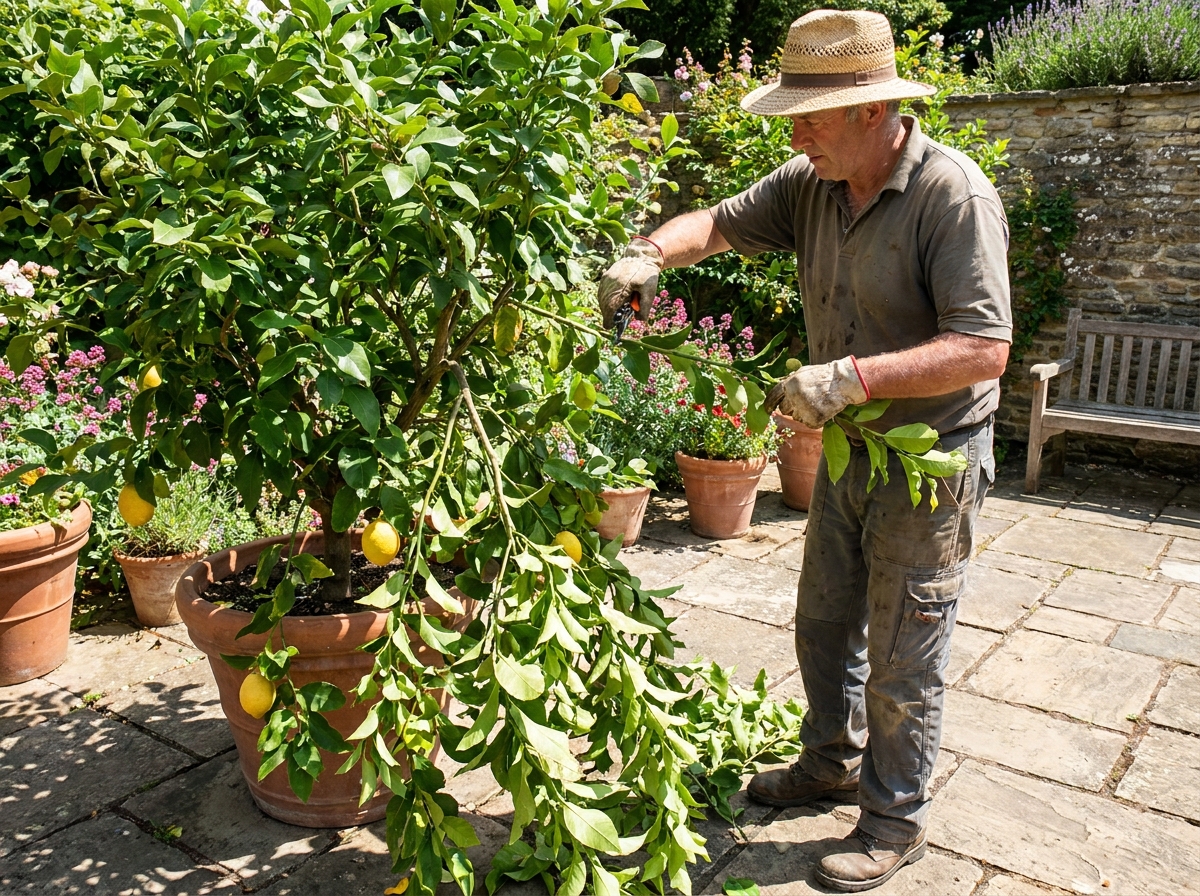
For those growing it in containers — it is possible, in a large 100-litre plus pot with careful root management — it suits a sheltered courtyard and benefits from the same post-flowering pruning discipline, with the added step of root pruning every third year to keep the rootball from becoming pot-bound.
Smart tip: Always prune Japanese tree lilac within 6 weeks of flowering finishing — every additional week risks cutting next year’s buds.
No. Winter pruning removes the flower buds set on last year’s wood, and the tree will produce foliage but no flowers the following summer.
Prune consistently every summer after flowering, reducing the longest leaders by 20 to 25% annually. Light and frequent is far more effective than occasional hard cutting.
The most common reasons are late pruning (removing the buds), heavy shade, or excessive nitrogen fertiliser pushing vegetative growth at the expense of flowering wood.
Yes. Deadheading promptly after flowering does wonders for energy into bud development for the following year, and also keeps the tree looking tidy through the rest of summer.
No — Syringa reticulata is a genuine tree reaching up to 10 metres, with different bark, flower scent, and pruning requirements to common lilac (Syringa vulgaris), which grows as a multi-stemmed shrub.