Lavender is one of the most heat-adapted plants you can shoot up. Its entire evolutionary history is one long preparation for exactly the conditions of a scorching summer — thin soil, blazing sun, almost no rain.
When it starts failing in peak season, the cause is almost never the weather. It is what is being done to it.
Understanding what lavender actually needs in the hottest months is the difference between a plant that thrives until October and one that quietly collapses by August.
The first thing to understand is that lavender enters a kind of semi-rest in the hottest weeks of summer. Growth slows.
The plant conserves energy. This is normal — and it looks, to most gardeners, like something is wrong.
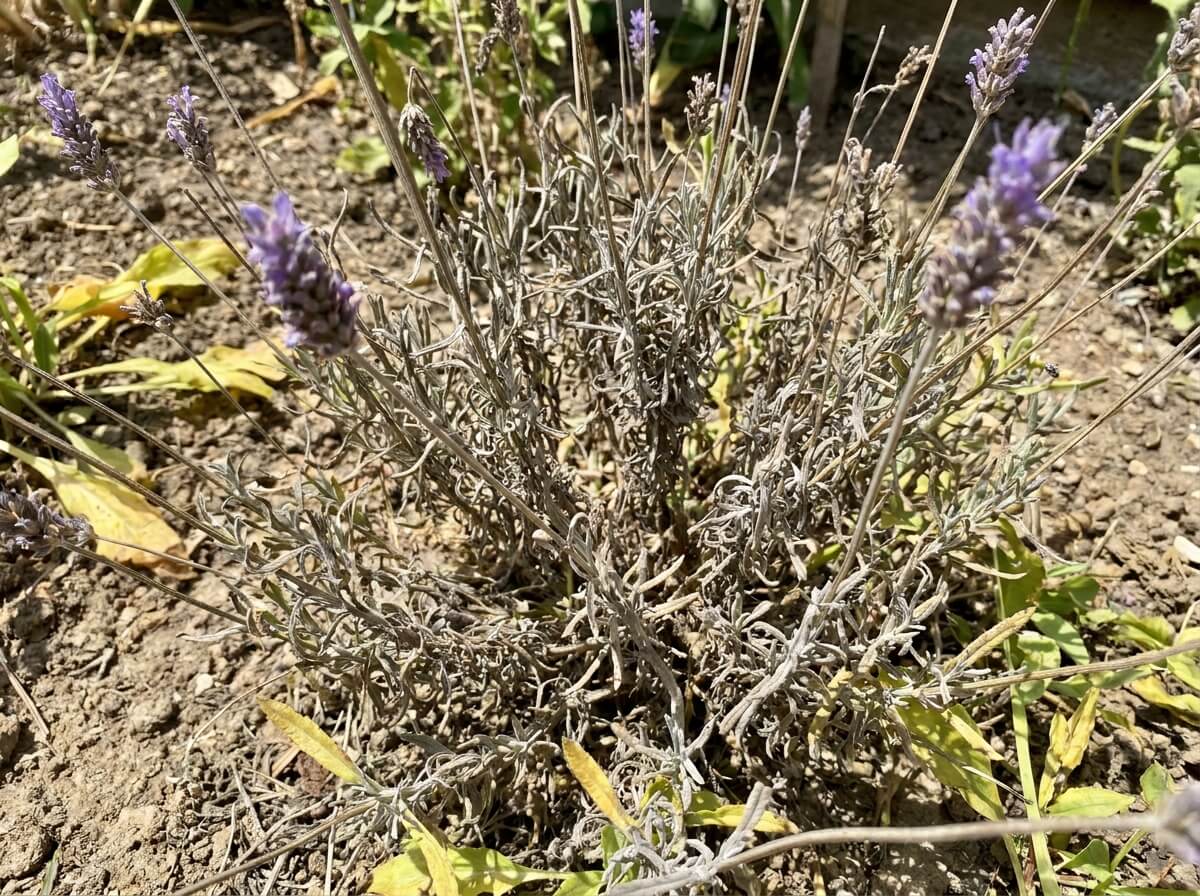
Flower stems begin to dry and turn brown after the first flush. Foliage may look a bit dull, perhaps more silver-grey than usual.
The whole plant can seem less vibrant than it did in late spring. None of this is cause for alarm.
It is the plant behaving exactly as it should under intense heat.
The issue starts when gardeners react to this normal summer slowdown by trying to help. More water.
Fertiliser. Shade cloth.
Each intervention, well-intentioned, moves lavender further from the conditions it actually thrives in.
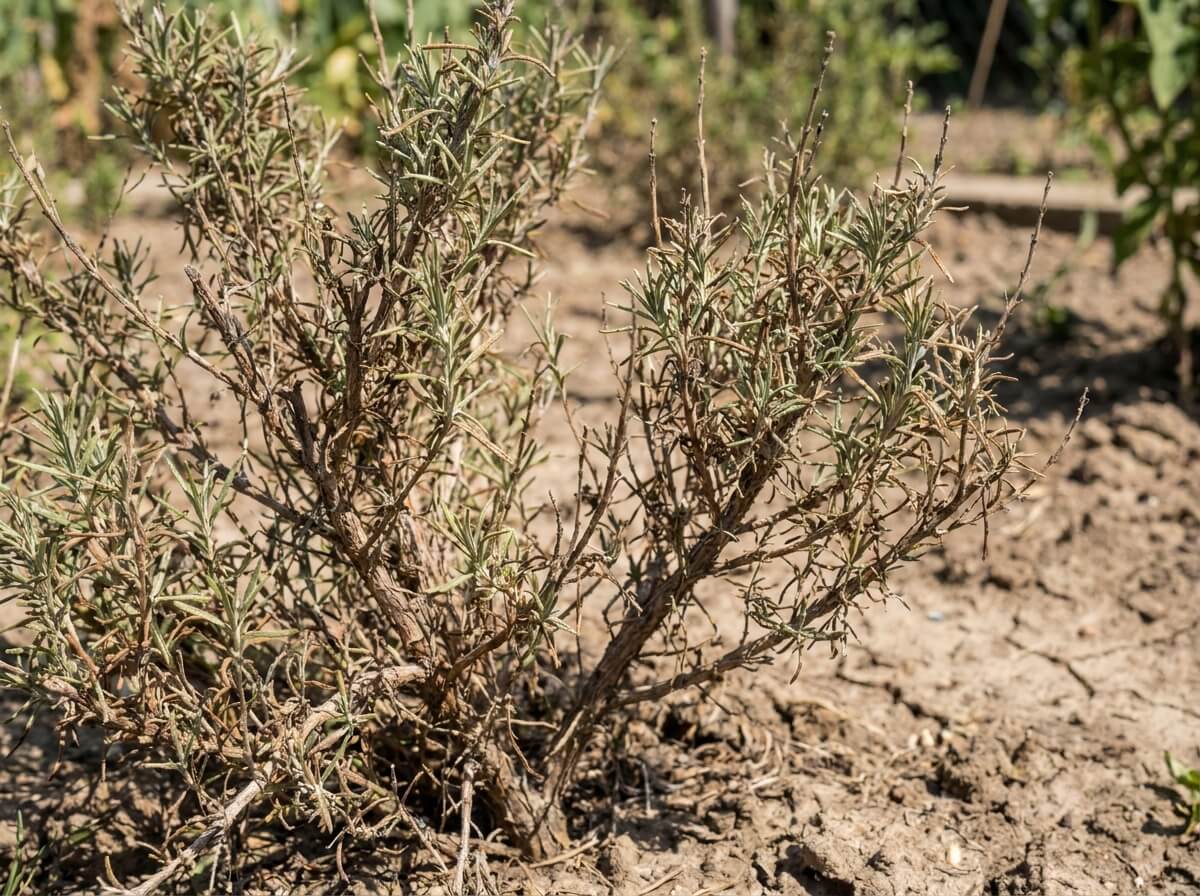
There is a difference between lavender resting and lavender struggling. These are the symptoms that indicate genuine stress — not just seasonal slowdown:
Any one of these in high summer points to root stress — usually from excess moisture. Several together, and the plant may already be beyond saving by conventional means.
Overwatering is the leading cause of summer lavender death. Not drought. Not heat. Water.
Lavender roots evolved in free-draining, often stony Mediterranean soils where rain arrives hard and fast, then disappears. In a garden border — especially one enriched with compost — moisture lingers far longer than lavender can tolerate.
Roots sitting in damp soil for more than five or six days begin to suffocate. By the time you see symptoms above ground, significant root damage has already occurred.
In containers, the issue compounds. A pot without adequate drainage holes, or one sitting in a saucer of water, can kill a healthy lavender plant in under two weeks in warm weather.
Poor air circulation is the other major culprit. But lavender planted too close to other dense shrubs, or in a corner where air stagnates, is vulnerable to botrytis — a grey mould that attacks the crown in humid conditions.
England’s warmest June on record, followed by the sultry start to summer now in progress, has created exactly the humid-then-scorching cycles that botrytis loves. It is a real concern. Watch for it particularly if you have had thunderstorms between heatwaves.
The thing is, soil fertility is also worth questioning. Lavender planted in heavily amended, compost-rich soil produces lush, soft growth that is far more susceptible to heat stress and fungal disease than the wiry, aromatic growth it makes in lean soil.
Rich soil is not generosity — it is a slow harm.
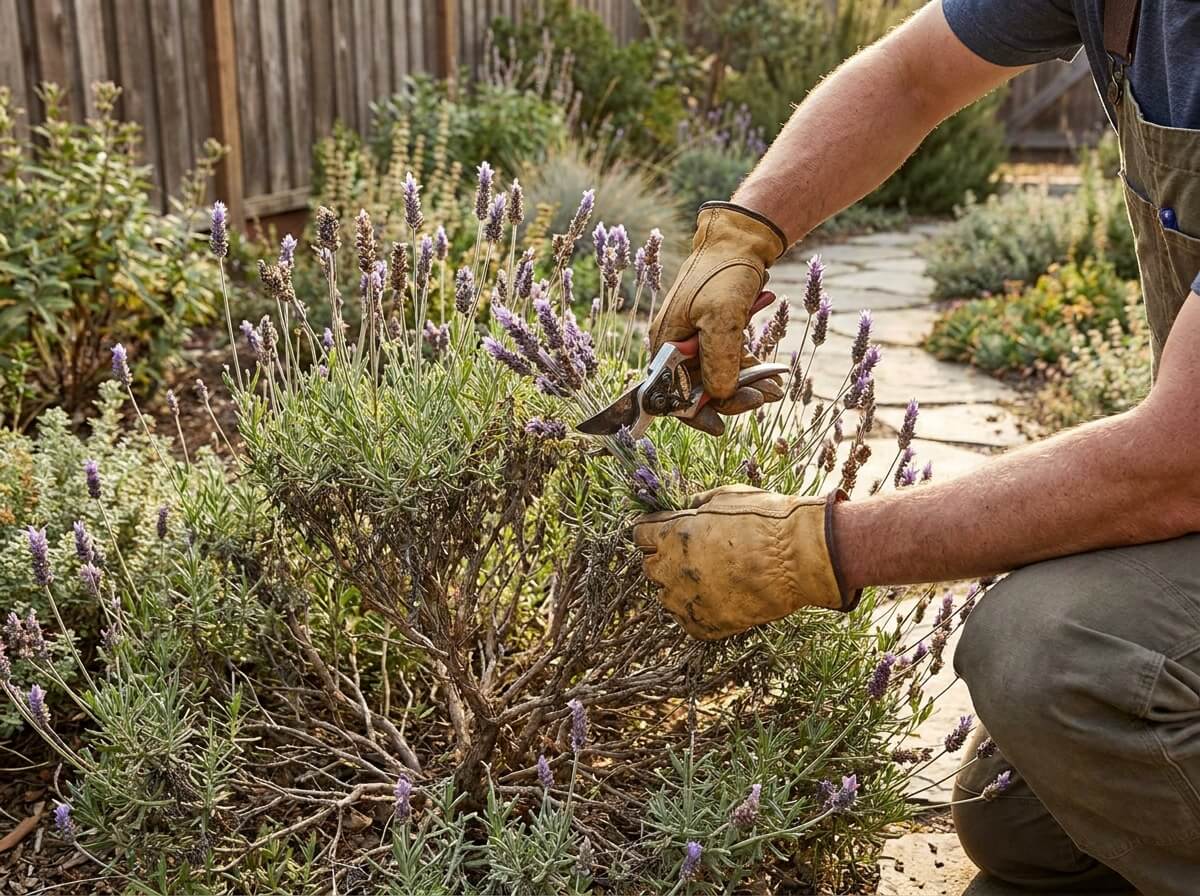
If your lavender is struggling, act in the early morning — before 9am, when the air still carries a trace of coolness and the soil temperature has not climbed yet. Here is the sequence that works:
Yes, the pruning feels aggressive mid-season. It is fiddly. Worth it. The difference between a plant that limps to autumn and one that produces a second flush of bloom by late August comes down entirely to this trim.
For context on how similar Mediterranean plants respond to summer heat, the approach used with rosemary in summer heat follows the same logic. You must prune. And improve drainage. And resist the urge to water on a schedule.
Container lavender has specific needs that differ from border plants, and summer is when those differences matter most.
Pots heat up faster than open ground — sometimes reaching 40°C at the root zone on a south-facing wall. At these temperatures, even brief waterlogging is lethal.
The thing is, the rule for potted lavender in summer is this: water only when the top 5cm of compost is properly bone dry to the touch, and then water deeply — soaking the rootball fully — rather than giving small, frequent sips. Small amounts of water keep the surface moist without penetrating to the roots. It encourages surface rooting and makes the plant more fragile. Awkward, is it not?
Terracotta pots are strongly preferable to plastic or glazed ceramic. They breathe.
Roots stay cooler. The risk of waterlogging drops significantly.
The RHS recommends terracotta specifically for Mediterranean herbs grown in containers, and the advice holds firmly for lavender.
Do not feed potted lavender in summer. A high-nitrogen feed at this stage stimulates soft, lush growth that will struggle in heat and attract pests.
Lavender needs no feeding between June and September.
If a lavender plant is dying at the base but still has living green growth in the upper stems, do not wait for a miracle recovery. Take cuttings now.
Select healthy, non-flowering shoots about 8–10cm long. Strip the lower leaves, leaving just the top cluster.
Push three or four into a small pot of 50:50 sharp sand and perlite. No rooting hormone is truly non-negotiable, though a cheap pot of hormone rooting powder (available at any garden centre) does wonders for speeding things up.
Place in bright indirect light — not full midday sun — and keep barely moist. Roots typically form within 21–28 days.
It is the most reliable way to preserve a beloved variety that the parent plant can no longer sustain. The guide to air-layering lavender covers an alternative propagation method particularly suited to woody, established plants.
Not all lavenders are equal under pressure. If you have repeatedly lost plants in the same spot, variety choice matters.
Lavandula angustifolia — English lavender — is the most cold-hardy and also the most tolerant of occasional summer rain and humidity. ‘Hidcote’ and ‘Munstead’ are both compact, vigorous, and reliably robust. They handle the variable summers of the UK, Ireland, and New Zealand far better than French or Spanish types.
Lavandula stoechas — French or Spanish lavender, with those distinctive rabbit-ear bracts — demands excellent drainage above all else and suffers badly in wet summers. Beautiful, but unforgiving. Position it against a south-facing wall on properly gritty soil, or accept it as a short-lived annual in wetter climates.
Lavandula x intermedia — lavandin hybrids like ‘Grosso’ and ‘Provence’ — are taller, more vigorous, and highly drought-tolerant. They work exceptionally well in the drier summers of southern England, California, South Africa, and southern Australia. In a drought-tolerant planting scheme, lavandin is one of the most reliably spectacular choices available.
Southern Hemisphere gardeners: this applies to your December and January.
Smart tip: In summer, if your lavender soil still feels damp at 8cm depth, do not water — wait at least three more days.
If there is still green growth in the upper stems, yes — cut back hard to just above the lowest green leaves and improve drainage immediately. If the entire crown is brown, soft, and dead, the plant cannot recover and should be replaced.
No. Lavender needs no fertiliser between late spring and early autumn.
Feeding in summer produces weak, disease-prone growth and actually reduces fragrance.
Counter-intuitively, lavender in lean, dry, stressed conditions produces more essential oil — and therefore stronger scent — than lavender shot up in rich, moist soil. The volatile oils concentrate when the plant is slightly under stress.
Rarely. Lavender can handle full sun without damage, provided drainage is good.
The combination of full sun plus poor drainage is what kills it — not the sun alone.
Immediately after the first flush of flowers fades — typically mid to late summer in the Northern Hemisphere. Cut back by about one third into the green growth, never into the old woody stems below.