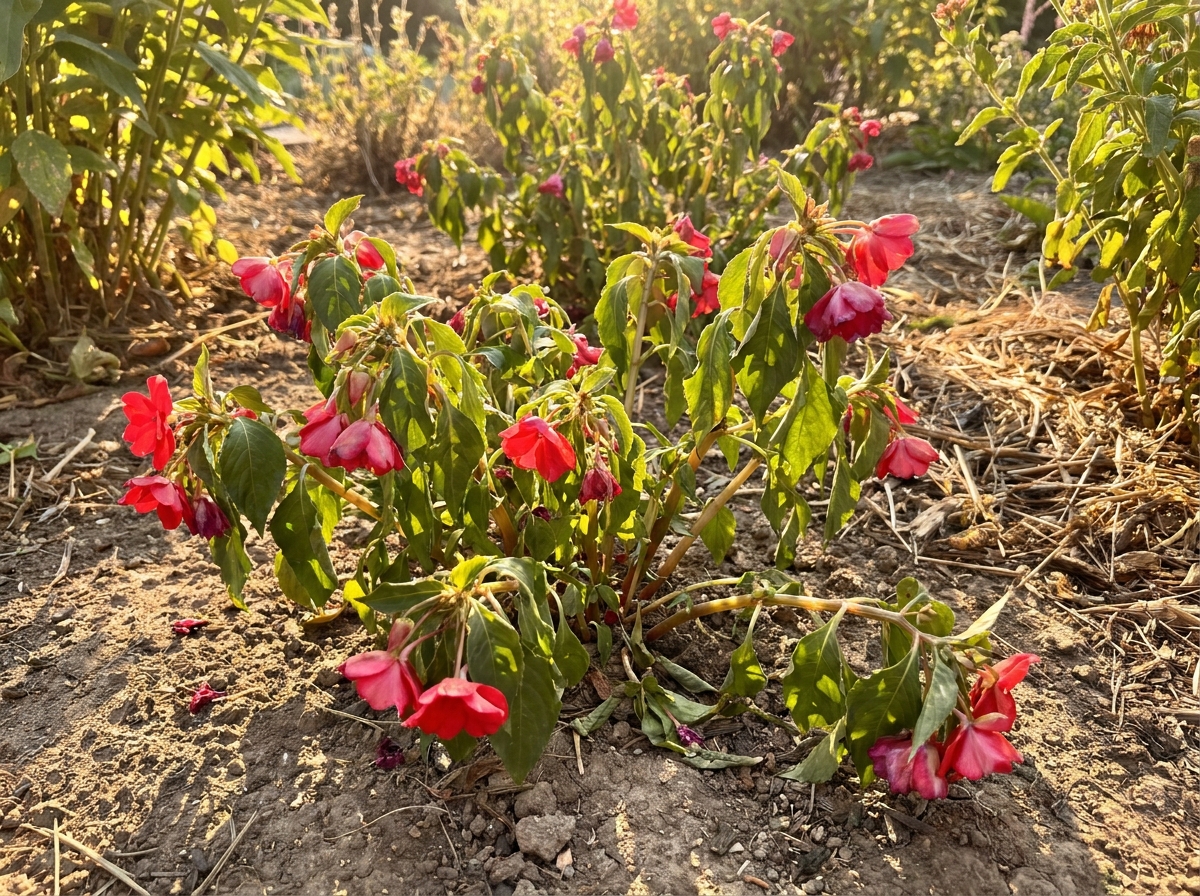
Your SunPatiens are slumping. Leaves gone limp. Stems drooping. The whole plant looks as though it has given up, despite your faithful watering routine, which might have led you to believe drought is the issue. The issue almost certainly is not what you think. In most cases, it is not drought causing the wilt — it is root-zone heat, waterlogging, or both. Catch it early. These plants rebound rapidly. But miss the real cause, and you will lose them within days, which would be a proper shame for all your effort.
SunPatiens handle direct sun brilliantly — but their roots are another matter. When a dark plastic container sits in full afternoon sun, the internal soil temperature can exceed 40°C.
At that point, roots cease absorbing water efficiently even when the compost feels damp. The plant wilts not from thirst but from heat-induced vascular stress.
There is a second cause that often catches people out. And overwatering — particularly when done in the evening — truly ensures roots remain in warm, poorly-oxygenated soil all through the night, which does them no favours.
That kills fine root hairs within 48 hours. Once those are gone, the plant can not pull up moisture no matter how wet the soil is.
A third possibility, less common but worth knowing: root rot caused by Pythium or Phytophthora, both of which thrive in hot, waterlogged conditions. Pull the plant gently — if the roots are brown, slimy, and smell sour, you are dealing with rot, not heat stress.
Heat wilt alone is reversible. A plant that droops by 2pm and recovers by 8pm is stress-cycling but persisting.
That daily pattern weakens the plant over time — flowering slows, stems thin, resistance to pests drops — but it will not kill SunPatiens in a week.
Root damage is different.
Once root rot takes hold or fine roots die from sustained heat, the plant declines fast. You will notice the wilt ceases recovery overnight. Leaves start yellowing at the base. New growth goes pale and stunted. So, you must grasp that at this critical stage, you have roughly 4–5 days before the plant is properly unrecoverable, an outcome not to be desired. University of Maryland Extension notes that heat-stressed impatiens become dramatically more susceptible to secondary infections once root health is compromised.
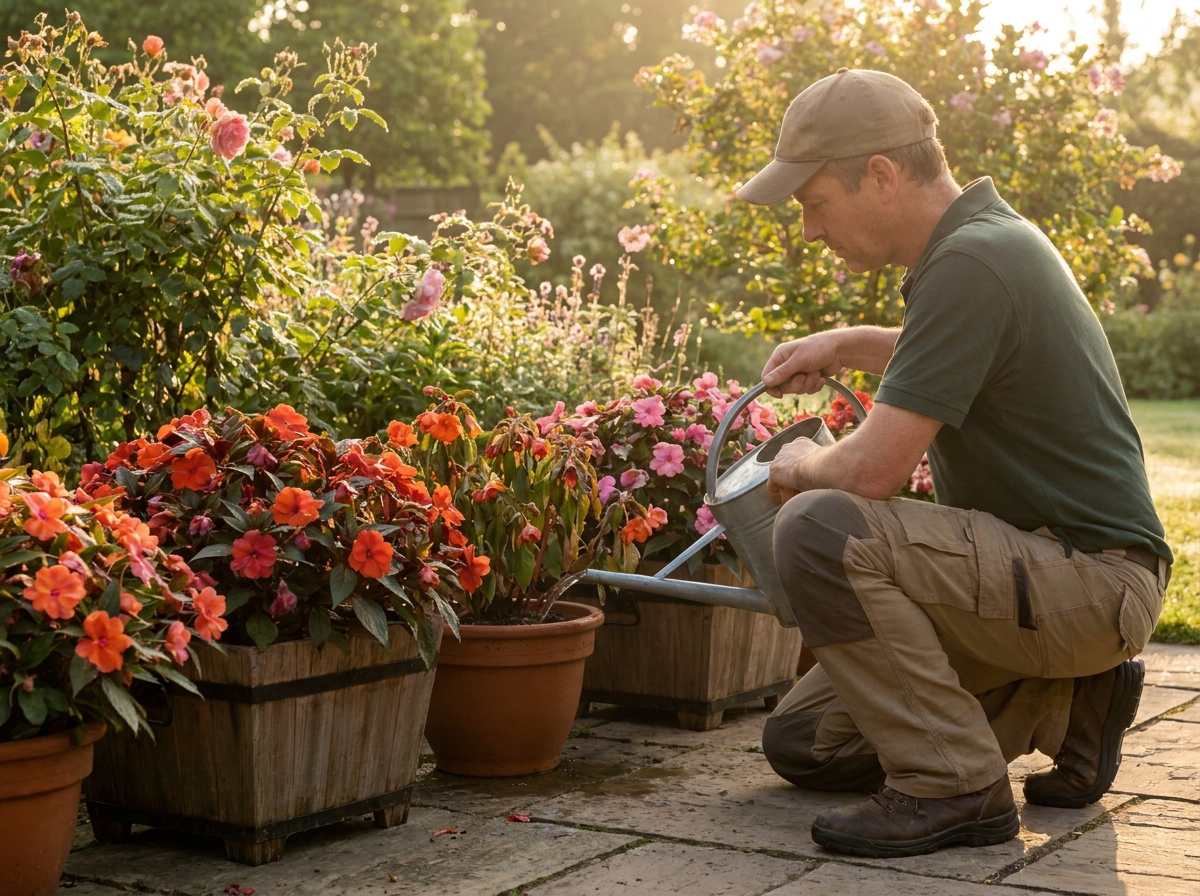
Start this morning. Water deeply at the base — not a light sprinkle, but a slow 15–20 minute soak — before 7am, before the soil heats up.
Never water during peak afternoon heat. The water evaporates before reaching roots and the thermal shock stresses already-weakened tissue.
Yes, checking soil moisture before every watering feels a bit much, truly fiddly. Worth it. This action is non-negotiable — the difference between a plant that recovers in 90 minutes and one that collapses for good is usually that single proper check.
Wilt is just one signal. Watch for these alongside it:
The thing is, a wilting SunPatiens that also shows pest damage is fighting two battles at once. Deal with the watering issue first — then assess the pest situation separately, once the plant has stabilised.
For Southern Hemisphere gardeners: this wisdom applies particularly during December and January, when SunPatiens typically peak in heat stress.
Smart tip: Water SunPatiens deeply at dawn, never in the afternoon — timing matters more than volume.
Yes, if roots are intact. Move the plant to shade, water deeply at the base, and check for recovery within 2 hours — healthy roots respond that fast.
In containers during a heatwave, once daily at dawn is usually right. Always check 5cm down first — soggy soil is as harmful as dry soil.
That is normal heat-stress cycling. It will not kill the plant short-term. But, if they cease recovery overnight, root damage has set in and you need to act immediately. Swift action is needed.
A light trim — removing up to a third of the stem length — reduces the water demand on stressed roots and genuinely speeds recovery. Do not remove more than that at once.