Your tomato plants are full of flowers. The foliage looks lush. But the harvest is thin, cracked, or rotting at the end. The issue is not your technique — it is the heat. England just recorded its warmest June in history, and a dangerous heatwave is sweeping the US right now. Both events are actively destroying tomato harvests in real time. Here is what is going wrong and precisely how to rectify the situation.
The culprit is temperature. Once the thermometer pushes past 32°C (90°F), tomato pollen becomes non-viable. The plant keeps producing flowers — sometimes prolifically. But fertilisation fails. The fruit never sets. You get beautiful blooms and nothing else.
But heat stress causes a second, slower crisis at the same time. Soil moisture evaporates faster than you realise, and if the supply is even slightly inconsistent, the plant suffers calcium uptake failure.
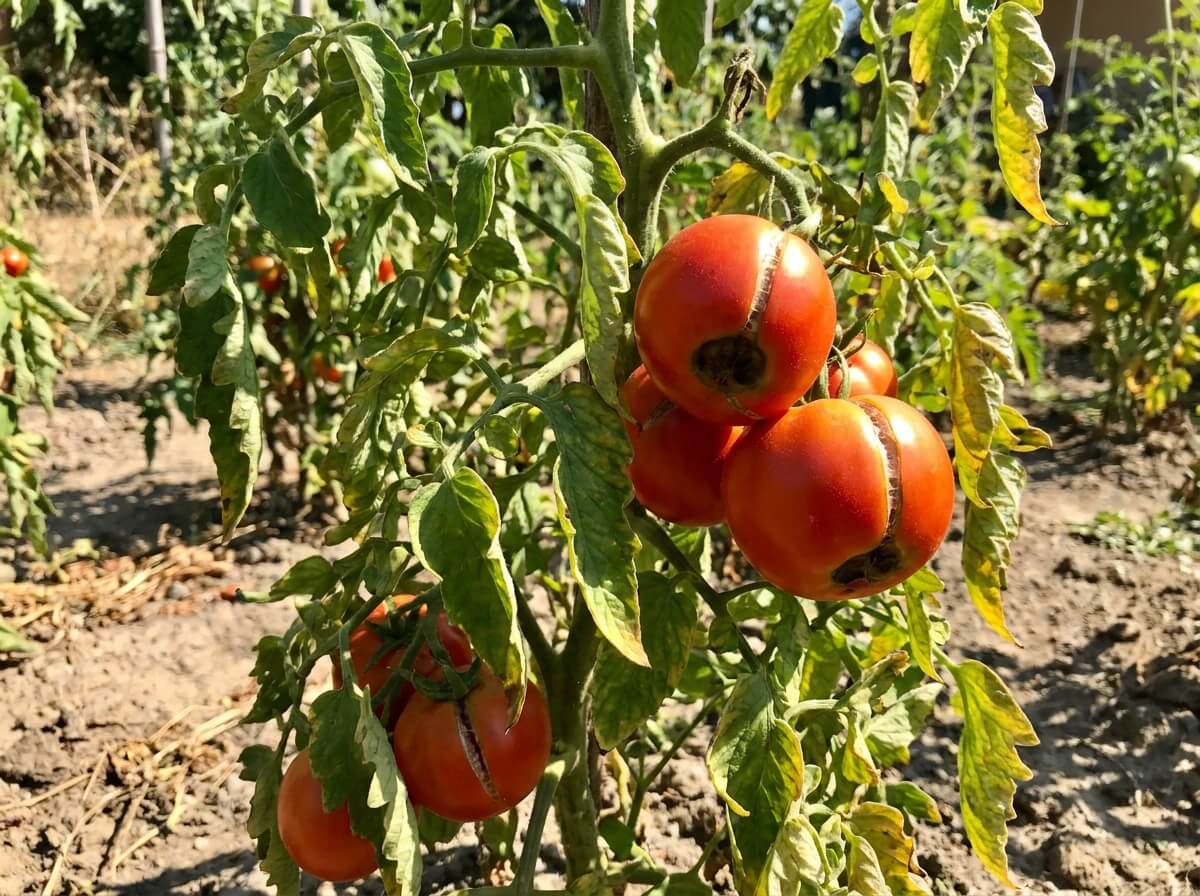
Blossom end rot is that dark, sunken, leathery patch on the bottom of developing fruits. It is not a lack of calcium in the ground.
A failure to absorb the calcium that is already there, because the water rhythm broke down.
Fruit cracking occurs for the same reason. Dry soil, followed by a heavy watering, causes the interior flesh to expand suddenly while the skin cannot keep pace.
The split appears within hours. Both issues can hit the same plant in the same week during a heatwave.
The window to save your harvest is real. It is closing. Tomatoes take 45 to 70 days from flower to ripe fruit, depending on variety.
Flowers that drop now — or fail to set — are fruits you will not eat in late summer.
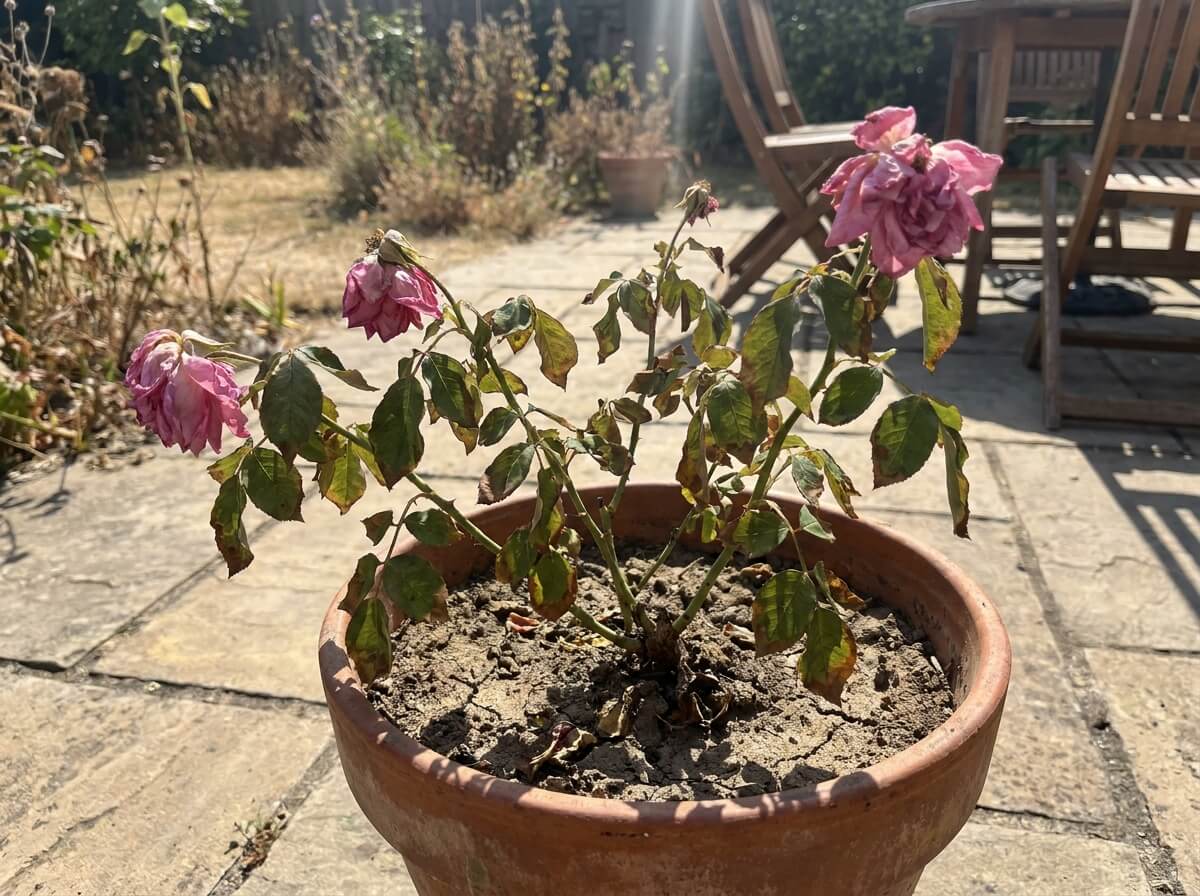
Left unaddressed, heat stress compounds quickly. Plants that cannot cool their roots begin redirecting energy away from fruit development entirely.
You will notice leaf edges curling inward. This is a classic stress response that looks alarming. But it is actually the plant trying to reduce surface area and conserve moisture. It is a warning. Not a cosmetic issue.
Powdery mildew and early blight also surge during heatwave conditions, especially if you have been watering overhead in warm evenings. By the time foliage damage is apparent, the root cause has usually been running for 10 to 14 days already.
Start with mulch. Apply 8–10cm of straw, grass clippings, or wood chip directly around the base of each plant, keeping it 5cm clear of the main stem.
This is the single most effective thing you can do today. It cuts soil temperature, slows evaporation dramatically, and stabilises the moisture level that causes blossom end rot and cracking. Yes, it is fiddly.
Do it anyway. The difference is night and day. It is non-negotiable.
Fix your watering immediately:
For containers specifically, daily watering is not excessive during a heatwave. Terracotta pots in full sun can lose moisture within 4 hours of watering on a 35°C day. So, adjusting your summer watering routine does wonders for your plants. It accounts for pot material and sun exposure, and alleviates more issues than any feed or spray.
If blossom end rot has already appeared, pull off affected fruits immediately. They will not be right. Leaving them on the plant simply wastes energy. Then, water consistently for 11 days. The next flush of fruits will likely be clean. The RHS confirms that regular, even moisture uptake is the only reliable fix.
Shade cloth over the plants during peak afternoon heat (12pm–4pm) makes a measurable difference. A 30% shade cloth loses you barely any photosynthesis, but drops leaf surface temperature by up to 8°C.
Once temperatures stabilise below 29°C at night, fruit set should resume without any intervention. But keep monitoring for these:
Southern Hemisphere gardeners: this applies to your December–January growing season when your summer peaks.
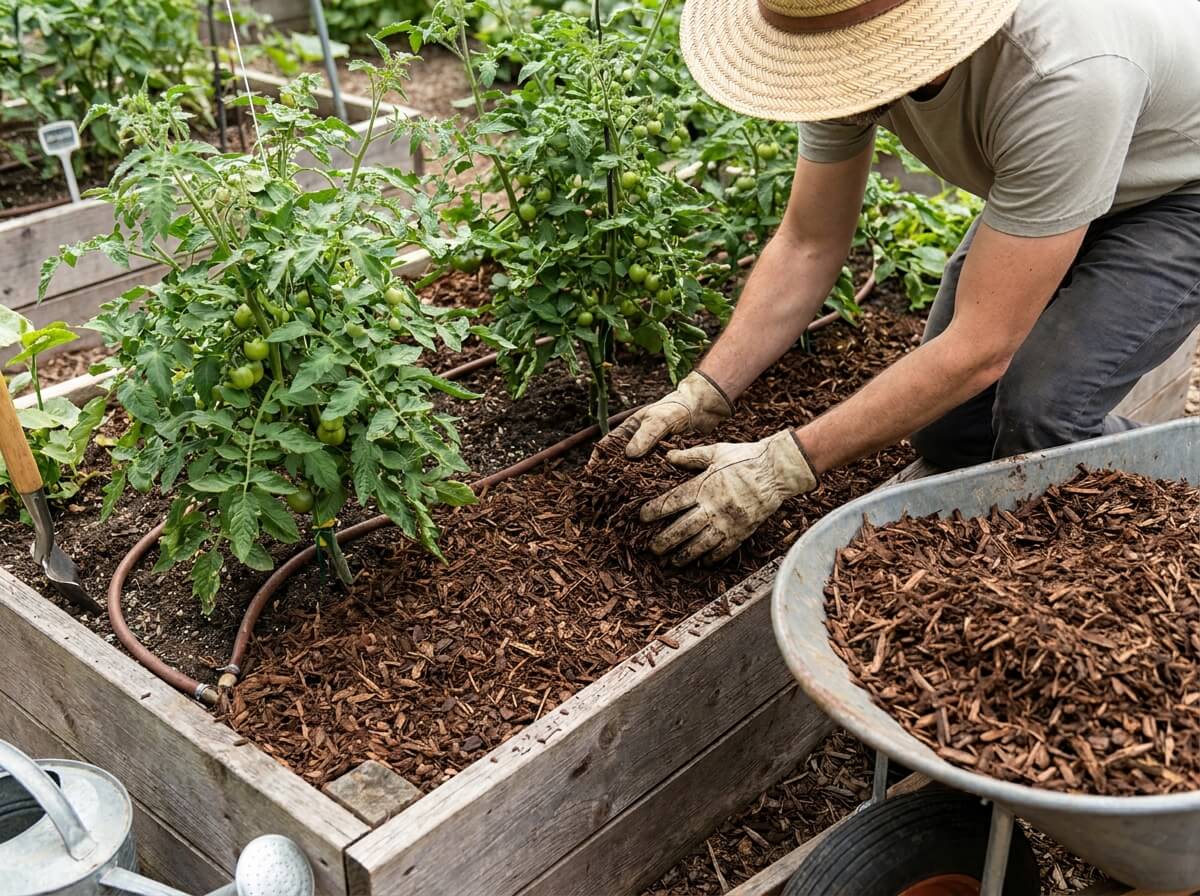
Smart tip: Mulch applied today is worth more than any tomato feed you buy this week.
Temperatures above 32°C (90°F) render tomato pollen sterile. So, flowers form but cannot set fruit and drop off. Once temperatures cool below 29°C at night, fruit set resumes naturally.
Almost never. Your soil almost certainly has enough calcium. The issue is inconsistent watering preventing the plant from absorbing it.
Adjust the watering rhythm. Then it is sorted.
Yes. Cracked tomatoes are fully edible if used immediately. The split skin allows bacteria to enter quickly. Pick them as soon as you notice the crack and use within 24 hours.
In-ground plants need deep watering 3 times per week at the base. Container tomatoes may need daily watering when temperatures exceed 30°C. Check soil moisture 5cm below the surface. It should feel properly damp, never bone dry or waterlogged.