Purslane and Bulgur Bowl with Garlic Yogurt and Walnuts
0
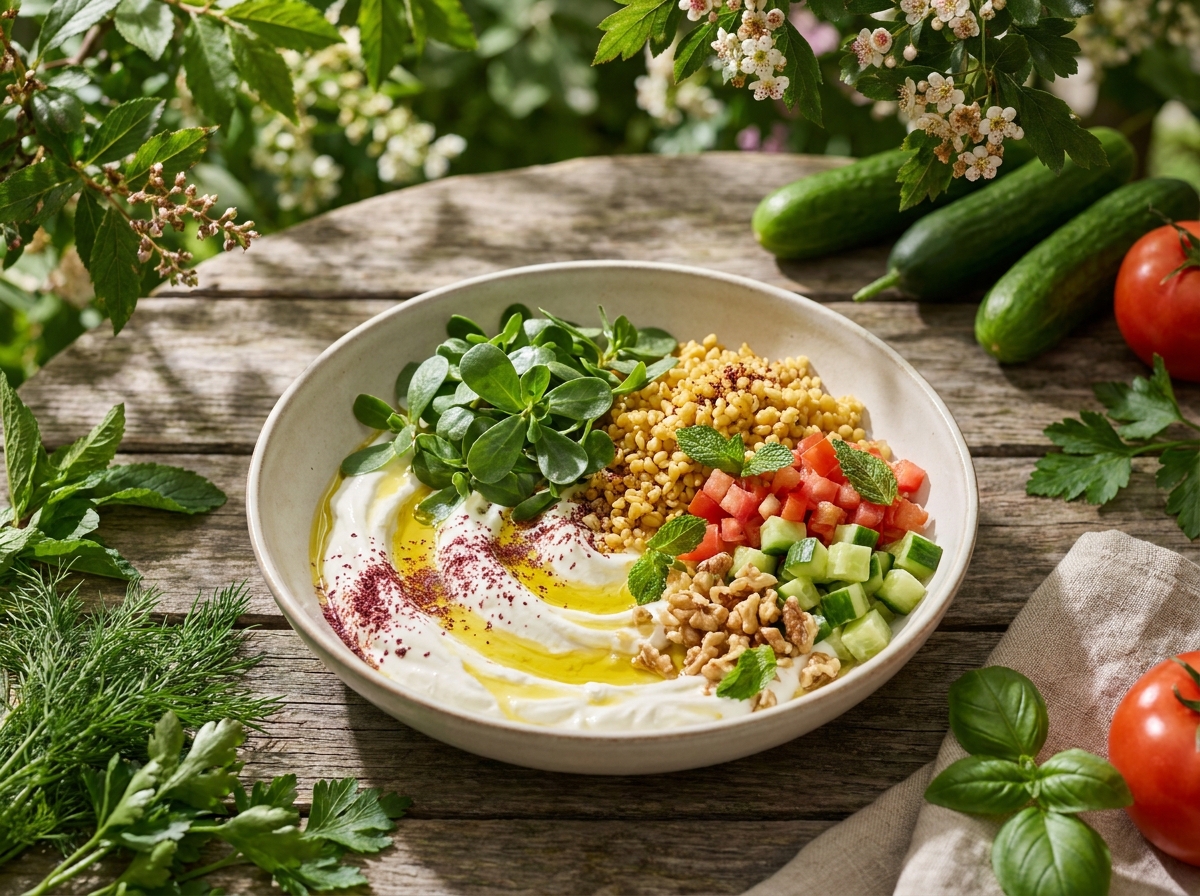
Purslane pushes up through gravel paths and between rows of beans, a fat-leaved succulent most gardeners yank out and toss on the compost heap. Bite a stem before you do: cold, faintly saline, sour as a green apple, snapping like a miniature cucumber. Turkey, Greece and Mexico have eaten it for centuries. Here it sits on cooled bulgur with salted tomatoes and garlic yogurt — a bowl that keeps its crunch right through a hot lunch.
⏱ Prep 25 min🔥 Cook 5 min👥 Serves 4📊 Level Easy
Ingredients for 4 people
5 oz (150 g) purslane, leaves and tender stem tips, thick stems reserved
3/4 cup (130 g) coarse bulgur (grade 3), or cracked freekeh
1 1/4 cups (300 ml) boiling water
2 medium ripe tomatoes, about 10 oz (300 g)
1 small cucumber, about 5 oz (150 g)
1 cup (250 g) thick strained yogurt (Greek-style, or plant-based coconut yogurt)
1 small garlic clove
1/2 cup (60 g) walnut halves
4 tbsp (60 ml) extra virgin olive oil
1 tbsp (15 ml) pomegranate molasses, or 2 tsp lemon juice plus 1 tsp honey
juice of 1 lemon, about 3 tbsp (45 ml)
1 tsp sumac, plus a small handful of mint leaves; flaky salt and black pepper
The Recipe
Put the bulgur in a bowl with 1/2 tsp fine salt and 1 tbsp of the olive oil, pour over the boiling water, cover with a plate and leave 20 minutes. Coarse grind swells into separate grains rather than porridge, and the oil coats each one so they never clump. Fluff with a fork, then spread on a tray to cool — steam trapped in a bowl keeps cooking the grain and turns it gummy.
Sink the purslane in a sink of cold water and swirl hard with your hand, then lift it out rather than draining it. The plant sprawls flat on soil, so grit lodges exactly where leaves meet stem, and pouring it out tips the sand back onto the leaves. Do not skip this step. Spin or towel dry until squeaky — water clinging to the leaves will slacken the dressing.
Slice the reserved thick purslane stems into thin coins, toss with 1 tbsp of the lemon juice and a pinch of salt, and leave to sit. Fifteen minutes of acid softens their woody snap into something closer to a pickled cucumber, so nothing from the plant is wasted.
Dice the tomatoes, toss with 1/2 tsp flaky salt and set in a sieve over a bowl for 10 minutes. You want the liquid that runs out: it is concentrated tomato juice, savoury and free, and it becomes the backbone of the dressing while the diced flesh stays firm instead of collapsing into the grain.
Halve the cucumber lengthwise and scrape out the seed core with a teaspoon, then dice the flesh. The seeds are pure water carriers — leave them in and the bowl weeps within ten minutes.
Toast the walnuts in a dry pan over medium heat for 4–5 minutes, shaking often, until they smell of warm bread and the skins crack and darken a shade. Tip onto a cloth and rub briskly: those loose papery skins hold most of the tannic bitterness. Chop coarsely.
Grate the garlic into the yogurt on a fine rasp, add 1 tbsp lemon juice and 1/4 tsp salt, and let it stand 10 minutes. Grating ruptures every cell and releases the harsh allicin all at once; the rest gives it time to mellow into the dairy so the garlic reads as warmth, not sting.
Whisk the reserved tomato juice with the remaining lemon juice, the pomegranate molasses, remaining 3 tbsp olive oil and the sumac until slightly cloudy. Fold two-thirds into the cooled bulgur first and let it sit 5 minutes — the grain drinks acid and salt, the leaves cannot.
Only when you are ready to serve, fold in the purslane leaves, macerated stem coins, tomatoes and cucumber with the last of the dressing. Salt and acid draw water out of those succulent leaves fast, and after ten minutes the snap is gone for good. Spread the garlic yogurt across wide plates, pile the salad on top, scatter with walnuts, torn mint and a final pinch of sumac and pepper.