Home » Recipes » Drinks » Ruby Red Shiso Cordial with Lime and Ginger
Ruby Red Shiso Cordial with Lime and Ginger
0
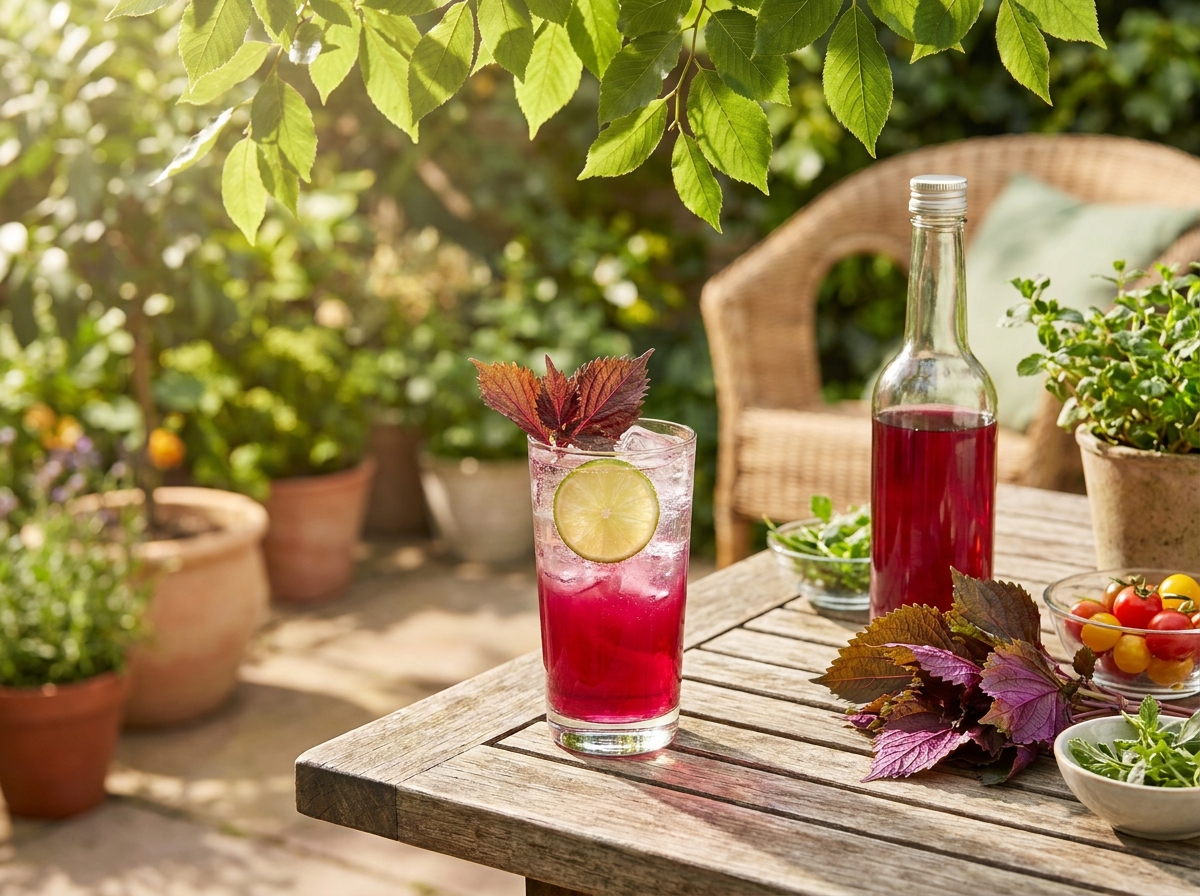
Red shiso — perilla, *ohba*’s crimson cousin — is the plant that colours Japanese umeboshi and Korean pickles, and once you sow it, it self-seeds along the path edges for years. Its leaves brew a murky olive-brown liquid that turns ruby the instant acid hits it, a piece of kitchen chemistry worth doing in front of an audience. Bottled now, it carries the garden’s peppery, cinnamon-mint scent into every glass of sparkling water until autumn.
3½ oz (100 g) red shiso leaves, thick stems removed — roughly 4 packed cups of leaves
1 oz (30 g) fresh ginger, thinly sliced into coins
Pared zest of 1 lime, in wide strips, no white pith
4¼ cups (1 litre) water
1¾ cups (350 g) granulated sugar
2 tsp (8 g) citric acid, or ½ cup (120 ml) fresh lime juice — about 4 limes
1 small pinch fine sea salt
To serve: chilled sparkling water or soda water
To serve: ice cubes and lime wheels
To serve: a sprig of green shiso, mint or lemon verbena per glass
The Recipe
Swish the shiso leaves in a bowl of cold water and lift them out rather than draining — grit sinks, and pouring it back over the leaves defeats the point. Strip away any stems thicker than a matchstick; woody stem tissue gives the finished cordial a tannic, twiggy edge that no amount of sugar hides.
Bring the water, ginger coins and pared lime zest to a gentle boil in a non-reactive pan (stainless steel or enamel — aluminium reacts with the pigments and dulls them). Simmer 5 minutes uncovered, until the kitchen smells sharply of ginger. This head start matters: ginger needs time to release its gingerol, while the leaves need almost none.
Push the shiso leaves under the surface with a spoon and simmer for exactly 5 minutes, no more than 7. Watch the leaves: they fade from crimson to a drab olive-grey as the pigment leaves them, and the liquid turns an alarming ink-brown. That murk is correct — do not panic and do not keep simmering to “fix” it, because past 7 minutes you extract chlorophyll and the drink turns grassy and bitter.
Strain through a fine sieve into a jug, pressing the leaves only lightly with the back of a ladle — just enough to release the liquid held between them. Wringing them out forces fine green sediment through and makes the cordial cloudy and vegetal instead of clear and perfumed.
Return the liquid to the rinsed pan over low heat, add the sugar and the pinch of salt, and stir until you can draw a spoon across the base without feeling any grit. Keep it below a simmer — boiling sugar syrup caramelises faintly and flattens the peppery top notes you just worked to extract. The salt is not for saltiness; it sharpens the perception of both acid and fruit.
Take the pan off the heat and let it cool to lukewarm, around blood temperature, before adding the citric acid or lime juice. Do not skip this step: added to boiling liquid, lime’s volatile oils vanish in the steam within seconds.
Stir in the acid and watch. The brown liquid flips through garnet to a clear ruby-magenta almost instantly, the whole pan changing colour in the time it takes to make two turns with the spoon. Taste now — it should be sweet-tart with a cinnamon-mint finish. If it tastes flat rather than bright, add citric acid ¼ teaspoon at a time; acid, not sugar, is almost always what is missing.
Funnel into sterilised bottles while still warm and seal, then cool completely. To serve, pour 1 part cordial into a glass of ice and top with 4 to 5 parts sparkling water, add a lime wheel and a shiso sprig, and stir once from the bottom so the colour blooms upward through the glass.