Stone fruit hits its absolute peak for only a narrow stretch of summer. A window of perhaps two or three weeks where peaches yield to your thumb, nectarines smell like perfume from a metre away and plums split with barely any pressure. This carpaccio exists entirely for that moment.
Wafer-thin slices, cold burrata, salt-cured prosciutto and a vivid mint oil from the garden. Ready in under 20 minutes.
Devastatingly good.
The whole dish depends on one thing: fruit that is genuinely ripe, not merely purchased. Supermarket stone fruit picked for shelf life and transported hard will not work here. The recipe needs juice that pools on the board, flesh that cuts without resistance, sugar that has developed fully on the branch.
Go to a farmers’ market, a farm shop, or pick from your own trees. Peaches (white or yellow flesh — both work, white is more delicate), nectarines, flat peaches, apricots, plums and greengages all belong on this platter.
Using two or three varieties at once creates a gradient of colour and flavour that a single fruit cannot match.
The test: press the fruit gently at the shoulder with one thumb. It should give by about 5mm and spring back slowly.
No give at all means unripe. A finger-shaped dent that does not spring back means overripe. Still sweet, certainly, but the texture will turn mushy when sliced thin.
Precise quantities are paramount here because the dish is all about balance — stone fruit sweetness against salt, cream against acid, fresh herb against cured meat.
The mint comes straight from the garden. If yours has been running through a heatwave, harvest it in the early morning — that is when essential oil content is highest and the leaves smell sharpest. If you shoot up both spearmint and a milder garden mint, the combination makes a more interesting oil than either alone. You can learn more about harvesting your herbs before summer heat steals their flavour — the timing principle applies directly here.
Start the oil 30 minutes before you plan to serve. This is the non-negotiable step most people skip, and it is the one that separates a bland green drizzle from something that tastes properly alive.
Bring a small pan of water to a rolling boil. Drop the mint leaves in for exactly 15 seconds, then lift them immediately into a bowl of ice-cold water.
This blanching step fixes the chlorophyll and gives you an oil that stays vivid green for up to 48 hours — unblanched mint oil goes khaki within 20 minutes of blending.
So, squeeze the blanched leaves firmly in your fist to pull off all water — really wring them out, they should feel almost dry. Blend with the olive oil, the vinegar and a generous pinch of flaky salt for 90 seconds at high speed.
Pass through a fine sieve if you want a cleaner texture; leave it unstrained for a slightly more rustic, more intensely flavoured result. Pour into a small jug and leave at room temperature.
Use a sharp knife. Not a serrated knife, not a bread knife — a thin, sharp chef’s knife or a Japanese-style slicing knife if you have one.
Stone fruit sliced with a blunt blade tears and bruises rather than cutting cleanly, and the juice runs everywhere before the fruit even reaches the plate.
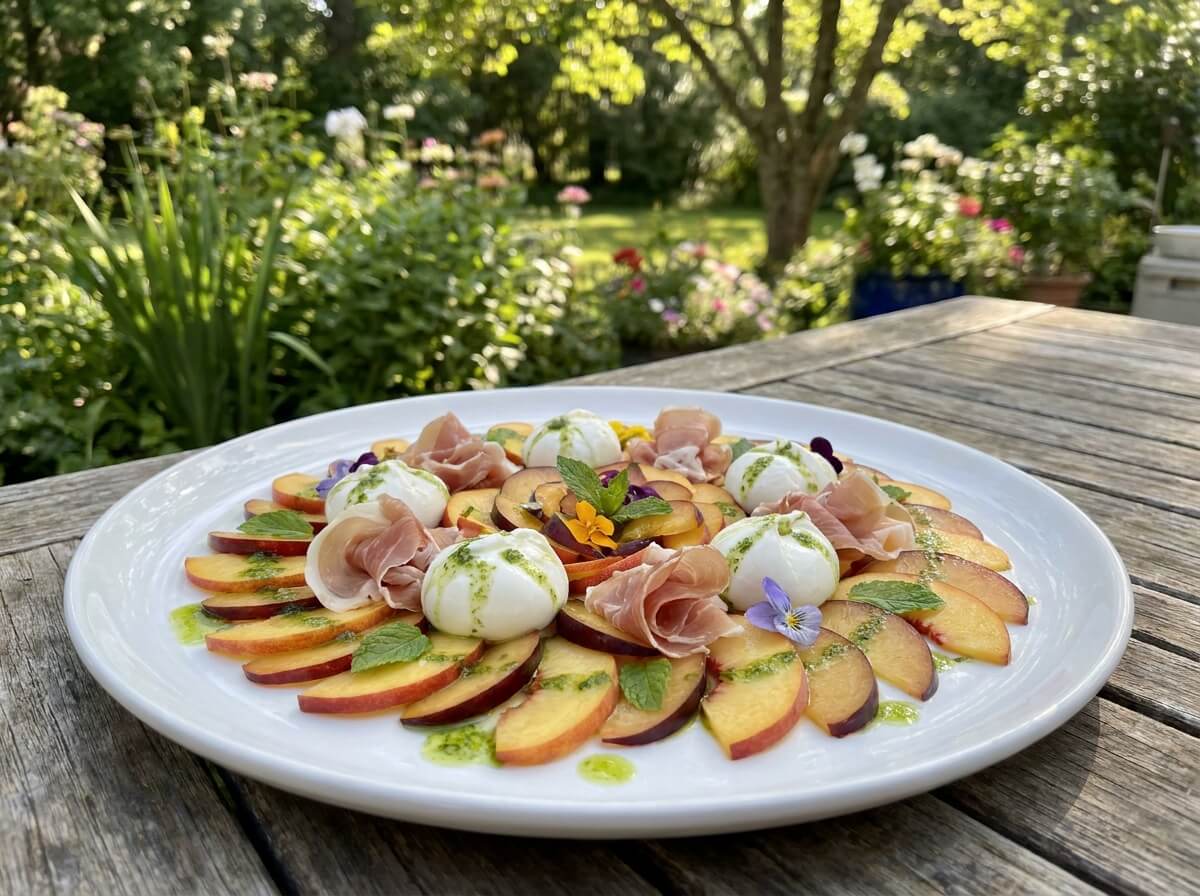
Halve and stone each piece of fruit. Slice each half lengthways into pieces no thicker than 4mm — thin enough to see a faint outline of your hand through the slice if you hold it to the light.
Arrange the slices on a wide, flat platter or a large wooden board, overlapping slightly and mixing varieties so colour alternates.
Tear the burrata in half directly over the centre of the platter and let the cream interior fall across the fruit. Drape the prosciutto loosely between and around the burrata — do not lay it flat, but fold it so it has volume and texture.
Season with flaky salt and several turns of black pepper.
Drizzle the mint oil generously over everything — including, deliberately, over the burrata. Scatter basil leaves and pine nuts if you are using them.
Serve immediately.
Burrata at fridge temperature is rubbery and flavourless. Pull it out 45 minutes before you need it and let it come fully to room temperature — the interior should be liquid and pooling when you tear it.
Never dress the dish more than 4 minutes before serving. The salt begins drawing liquid out of the fruit immediately. Within 10 minutes you have a watery platter rather than a jewelled one, and that is just not quite right.
But, the prosciutto should be sliced to order if possible. Pre-packed prosciutto left in the fridge dries out at the edges and loses its silky quality. Ask your deli counter to slice it on the day.
And keep the salt light on the prosciutto side of the platter, heavy on the burrata — the meat brings its own salt load.
A small squeeze of lemon over the fruit before plating (about half a teaspoon) brightens everything and slows oxidation if your slicing takes longer than expected. Do not overdo it.
This is not a lemon dish.
The base formula — ripe stone fruit, fresh cheese, cured meat, herb oil — is flexible. Swap burrata for properly fresh buffalo mozzarella or for a thick-set labneh. Replace prosciutto with bresaola (less salty, more herbal) or thin-sliced coppa. Use a basil oil instead of mint oil if your basil is currently going over and needs using — the technique is identical, and good fresh basil has real aromatic depth that holds well against ripe plums.
For a completely vegetarian version, drop the prosciutto and add 30g of toasted walnuts and a crumble of aged pecorino. The salt, the crunch and the fat all still come through.
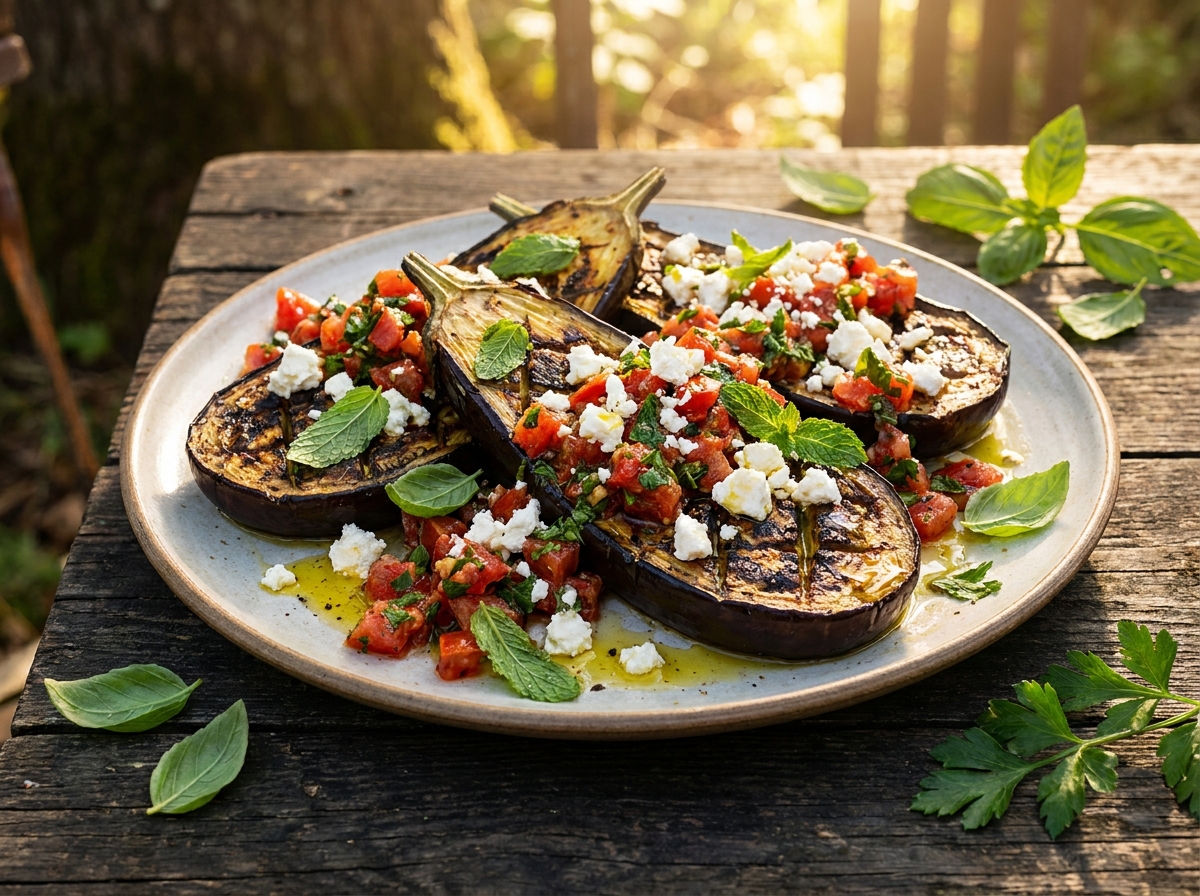
So, this dish pairs naturally with other platter-style summer cooking. If you are building a full outdoor spread, the grilled aubergine steaks with tomato-herb salsa verde sit on an adjacent plate without any flavour conflict — both dishes share the same herb-and-acid backbone.
This dish does not store. Full stop.
Once assembled, serve within 8 minutes or the fruit weeps, the burrata melts into the liquid and the prosciutto turns sticky. Plan to build it immediately before eating — not 20 minutes before guests arrive. That would be a bit much.
But, the mint oil keeps well. Refrigerate the leftover oil in a sealed jar for up to 5 days.
And use it on grilled fish, spooned over a fresh pea soup, or drizzled onto a plain yogurt bowl. The flavour deepens slightly by day two.
Stone fruit, once sliced, oxidises within 30 minutes, even with lemon. If you need to prep ahead, halve and stone the fruit, but leave the slicing until the last 5 minutes. That is how it is sorted.
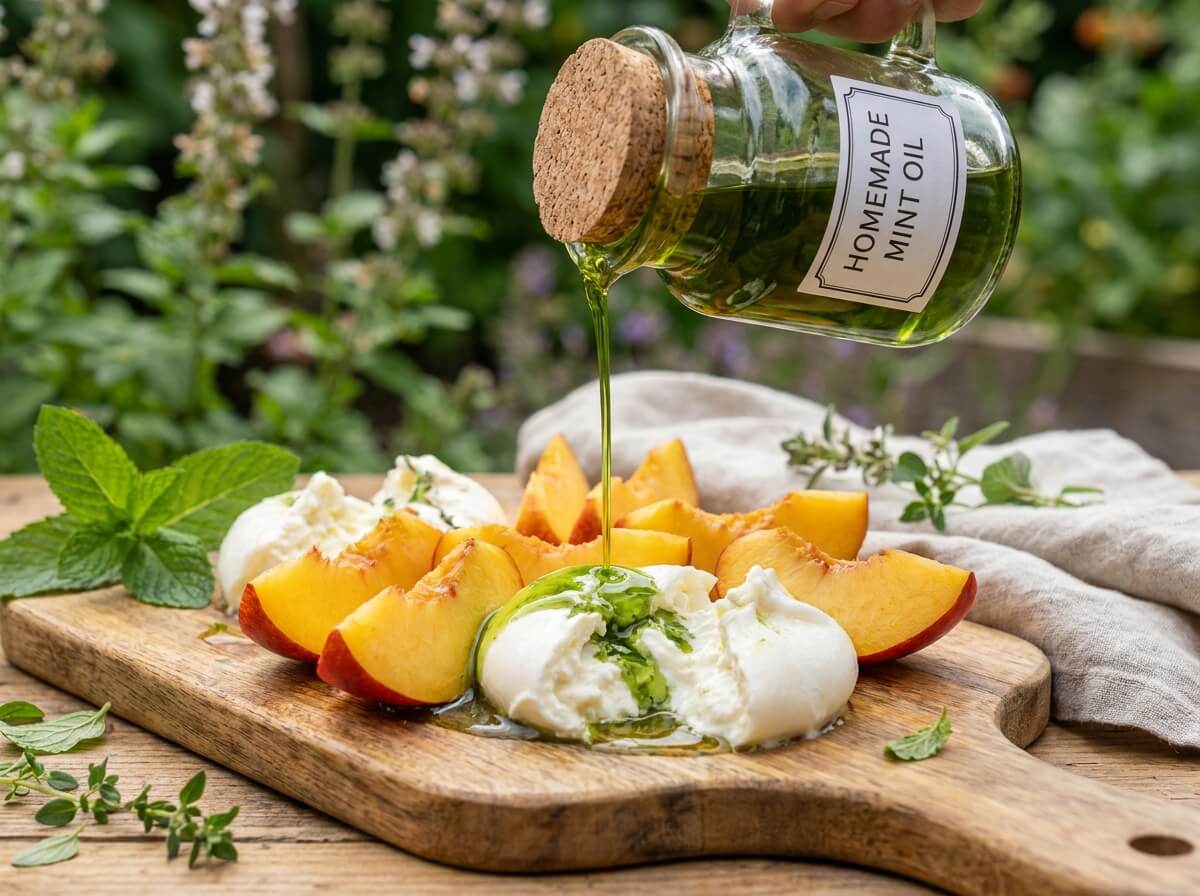
Smart tip: Pull burrata from the fridge 45 minutes early — cold burrata is the single most common reason this dish disappoints.
No. Tinned fruit is too soft and too sweet — it collapses when sliced thin and unbalances the whole dish.
Wait for fresh.
You almost certainly skipped the blanching step or did not squeeze enough water out before blending — water is the enemy of colour retention in herb oils.
Replace the burrata with a generous spoonful of thick coconut yogurt or a smooth cashew cream — the fat-acid balance still works, though the flavour is lighter.
Yellow nectarine, white peach and a dark-skinned plum give the widest colour range — the contrast between pale cream flesh and deep purple skin is genuinely striking on a platter.