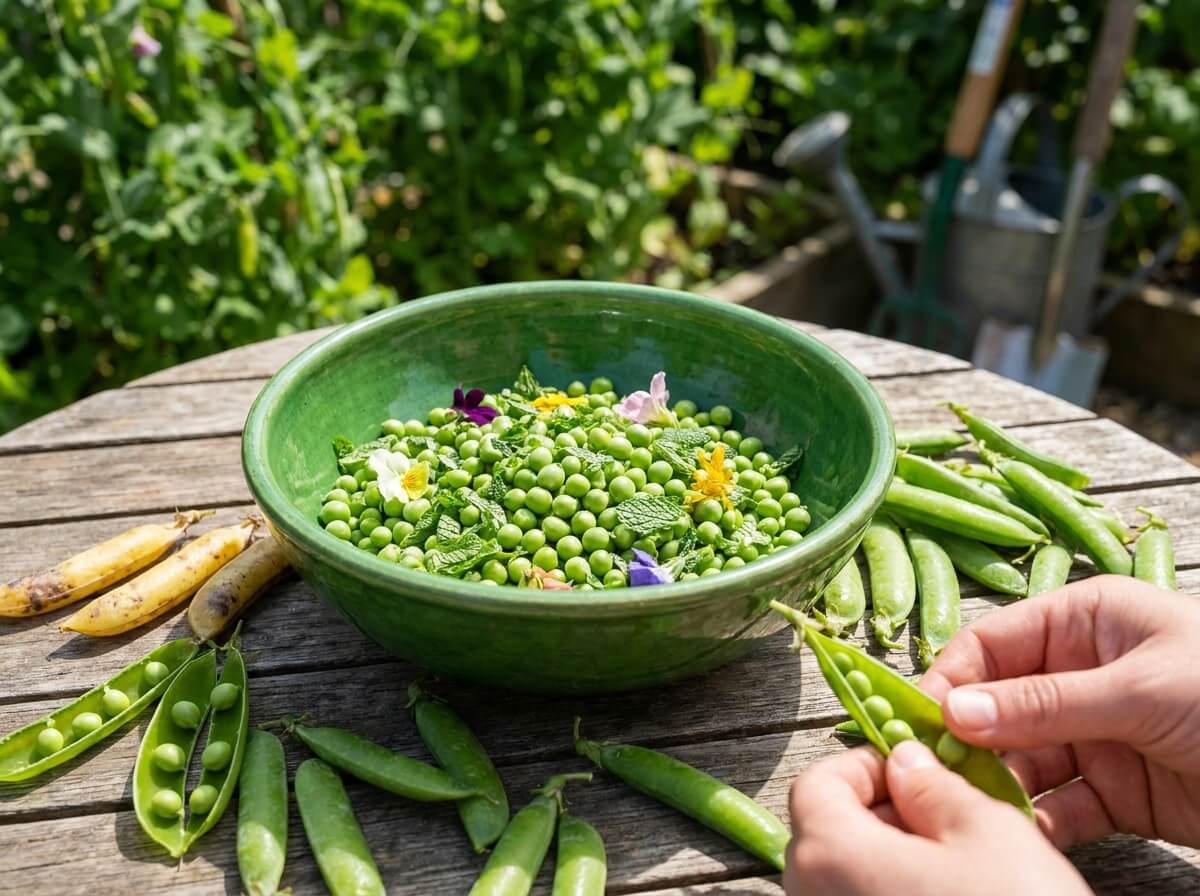
Pick your peas this morning and eat them before lunch. That is not garden romanticism; it is chemistry. Garden peas convert sugars to starch within 4 hours of harvest, and on a warm summer day, that window shrinks further. This 10-minute salad with fresh mint, lemon, and proper olive oil respects the pod. Make it now, while the sweetness still thrills.
The moment a pea is separated from its plant, the sugars inside begin converting to starch. No amount of refrigeration properly stops it; it only slows it down.
At room temperature on a summer day above 20°C (68°F), you have a narrower window than you think.
By the time peas are picked, transported, chilled, and shelved, the transformation is complete.
What you shoot up yourself is genuinely different — but only if you act fast. Refrigerating your peas immediately after shelling buys you a few extra hours. But nothing replaces speed.
The RHS recommends harvesting peas in the morning when temperatures are coolest, and eating or preserving them the same day for peak flavour.
Starchy peas are not dangerous. They are just disappointing — mealy, slightly floury, missing that bright pop that makes you eat them straight from the pod standing in the garden.
Cooked long enough, starchy peas can still work in soups or warm dishes. But for a salad, there is no recovering them. They are proper disappointing.
You cannot cook the sweetness back in. The sugars that made them extraordinary are gone.
And here is the hidden cost: if you leave pods on the plant too long, waiting for “the right moment,” the plant ceases production. Pick young. Pick often.
A pea plant left with mature pods will slow or halt new flower production within 5 to 7 days.
Shell your peas directly into a bowl of cold water. This halts enzyme activity and keeps them bright green.
Then drain, and build the salad.
You need:
Toss gently. Serve immediately.
Do not let it sit — the lemon will dull the colour within 15 minutes and the mint will wilt.
Yes, the recipe is simple. Worth it. The difference between fresh garden peas eaten within the hour and anything else is night and day.
If you have herbs ready to harvest alongside your peas, the advice in harvesting herbs before summer heat steals their flavour applies directly here — mint, especially, should be cut in the morning before the volatile oils dissipate in the heat.
Check pods every 48 hours once flowering starts. A pod ready to harvest feels plump and slightly firm — you can see the individual peas pressing against the skin.
Leave it 3 more days and the pod starts to yellow at the tip. That is too late for a salad.
Watch for powdery mildew on the leaves, which appears as a white dusty coating in warm, dry spells. It will not ruin the pods immediately. But it signals the plant is stressed, and it will shorten your harvest window. University of Minnesota Extension identifies powdery mildew as the most common end-of-season threat for peas in warm climates.
Pea moth is the other villain. If you find small white larvae inside otherwise-healthy looking pods, that is pea moth damage.
Affected pods are still edible — just pull off the larvae. But net plants after flowering next year to prevent it. Otherwise, you have a dodgy harvest next time.
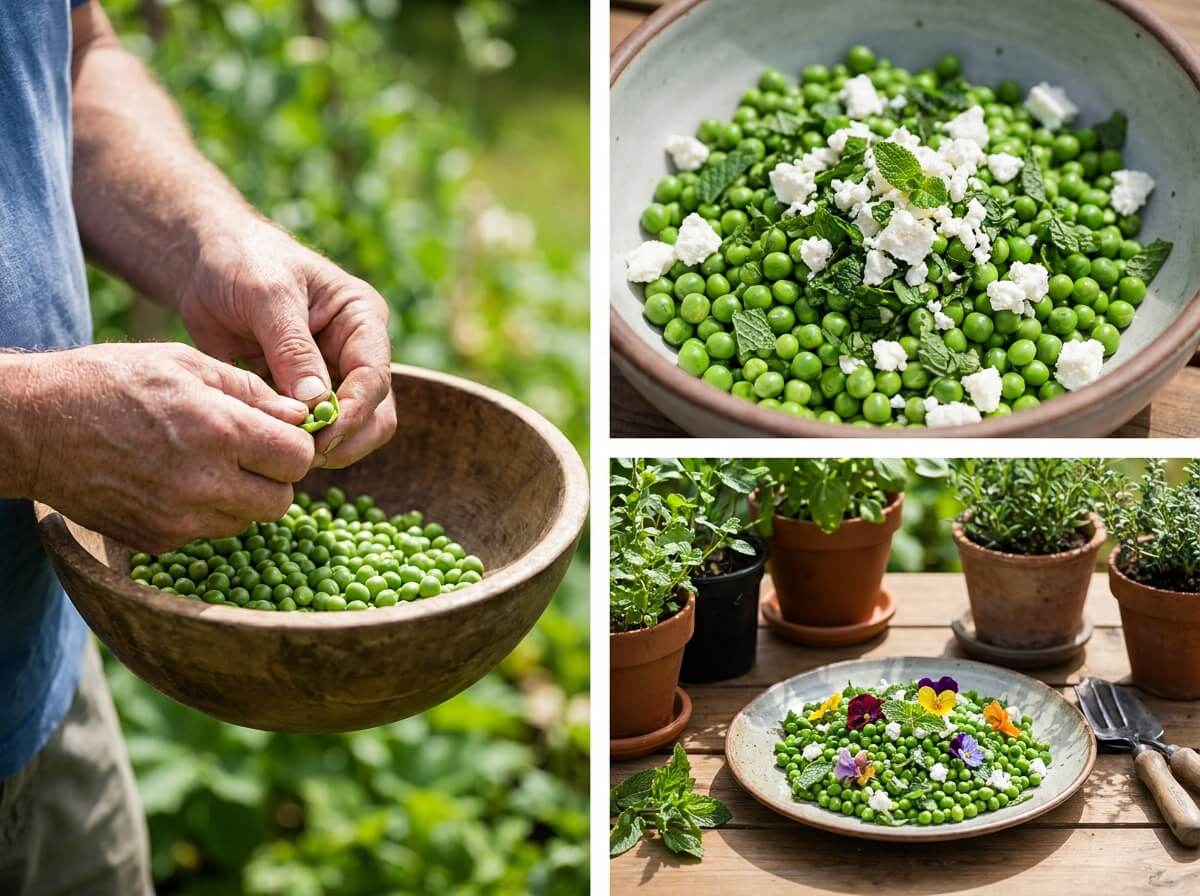
Smart tip: Pick peas in the morning and make this salad before noon. That single habit does wonders for how they taste.
Frozen peas are commercially flash-frozen within 2 hours of harvest, which locks in most of their sweetness — far better than starchy fresh peas picked days ago. Thaw them in cold water for 5 minutes and use as you would fresh.
Raw is best for peas picked the same morning — they have a firm, grassy sweetness that disappears with heat. Blanch for exactly 60 seconds only if you prefer a softer texture or if the peas are slightly more mature.
Torn burrata, sliced radishes, or cold cooked barley turn this into a main course without overpowering the peas. Keep additions minimal — the pea and mint combination deserves the lead role.
This applies to your December and January harvest, when summer peas are at their peak. The timing rule is identical: pick in the morning, eat within 4 hours.