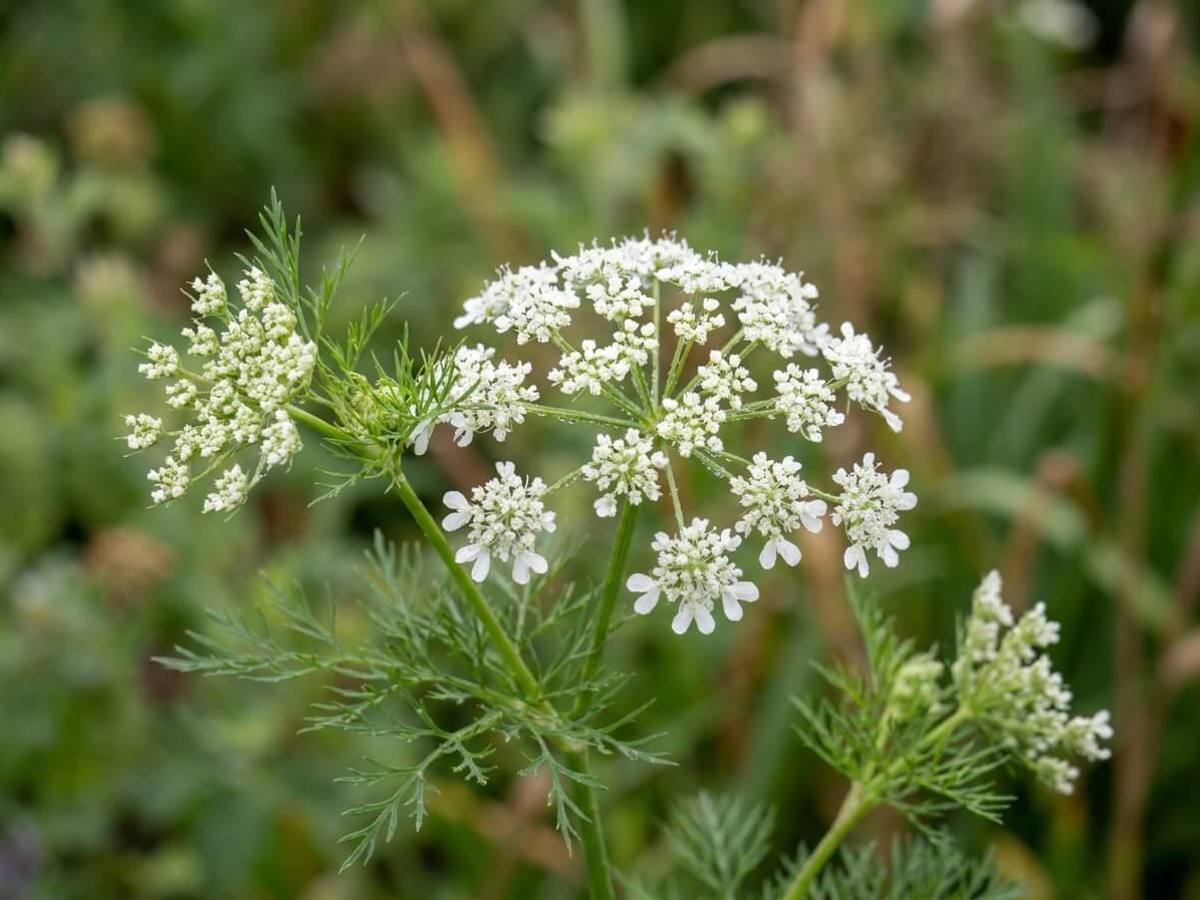
Skirret is one of the great forgotten vegetables of the European kitchen garden: a tall, elegant umbellifer that produces a cluster of slender, sweet white roots at the base of each crown. Its lacy white flower heads in midsummer are every bit as pretty as those of ornamental Ammi, and bees adore them. Best of all, it is a true perennial — lift what you need, replant the crown, and the same plant feeds you for years.
Growing conditions
Skirret crops best in full sun, which drives the sugars that make the roots worth eating. It will tolerate light dappled shade for part of the day, and in hot southern climates a little afternoon shade helps keep the foliage from scorching. Shelter from strong wind is useful once the flowering stems reach waist height.
The ideal soil is deep, loose and moisture-retentive — think of a well-worked vegetable bed enriched with garden compost or well-rotted manure. Unlike carrots, skirret actively enjoys a damp, heavy loam, reflecting its wild relatives’ fondness for ditch sides and stream banks. Aim for a pH between 6.0 and 7.5, and remove stones to the depth of a spade, as obstructions cause forked, fiddly roots.
It is thoroughly hardy across the British Isles, northern Europe and much of North America, shrugging off hard frost once dormant. In dry eastern districts or free-draining sandy soils, irrigation is essential — drought is the single commonest cause of thin, stringy roots.
How to plant Skirret
Early spring, from March to April, is the prime planting window for offsets, just as the crowns begin to stir. Autumn planting in October also works well on soils that do not lie wet over winter.
Spacing: set plants 30 cm apart with 45 cm between rows — crowded plants produce short, fibrous roots and compete badly for moisture.
Depth: plant offsets so the crown sits just at soil level, with the root fan pointing straight down; burying crowns deeply invites rot.
Soil preparation: dig in a bucketful of well-rotted compost per square metre and fork the bed to a spade’s depth to let roots run straight.
Watering in: soak thoroughly after planting and keep the soil consistently moist for the first six weeks while roots establish.
Propagation: in spring, lift a mature clump, snap off the finger-thick outer roots for the kitchen and replant the crown divided into pieces each with a shoot and a few roots.
Skirret growing in a naturalistic garden border
Care through the seasons
Spring: Scatter a general organic fertiliser or a mulch of compost around emerging crowns in March. Protect the soft new shoots from slugs, which find them irresistible. Sow seed under cover in February or March at around 15 °C, using fresh seed and pressing it onto the surface, as it germinates best in the light.
Summer: Water generously and regularly — at least 10 litres per square metre a week in dry spells, as drought stress is what turns roots woody. Mulch with straw or grass clippings to lock in moisture. Many growers remove the flowering umbels to push energy back into the roots, though leaving a few is a gift to hoverflies and parasitic wasps.
Autumn: Harvesting begins in October and the roots sweeten noticeably after the first frosts. Cut back yellowing top growth, lift what you need, and replant crowns immediately or heel them in. Autumn is also a good moment to divide congested three-year-old clumps.
Winter: The plant dies back completely and is perfectly hardy left in the ground. Roots can be lifted through the winter whenever the soil is workable; a mulch of leaf mould makes digging easier during frosty weather.
Best varieties to grow
Skirret has almost no formally registered cultivars, so choose by provenance and propagation method rather than by name.
Seed-raised garden strains — the usual offering from heritage seed suppliers; cheap and vigorous, but expect real variation in root thickness and core.
Named offset clones — crowns sold by specialist perennial-vegetable nurseries, selected over years for thick, sweet, nearly coreless roots; the best investment by far.
Eastern European sugar-root strains — long grown in Russia, Poland and Ukraine, these tend to produce longer, straighter roots on deep soils.
Dutch kitchen-garden types — selections tracing to the old Low Countries tradition, generally earlier to bulk up and good for shorter growing seasons.
Pests, diseases and common problems
Carrot root fly: as an umbellifer, skirret can be tunnelled by the same larvae that spoil carrots. Cover plants with insect-proof mesh from April, or grow within a 60 cm barrier of fine netting.
Slugs and snails: they shred emerging spring shoots and can set young plants back badly. Use beer traps, nematodes or evening hand-picking during damp weather.
Woody central core: a physiological problem, not a disease, caused by drought, poor soil or leaving roots in the ground too long. Water consistently, harvest from the second autumn, and slice the fibrous core out before cooking.