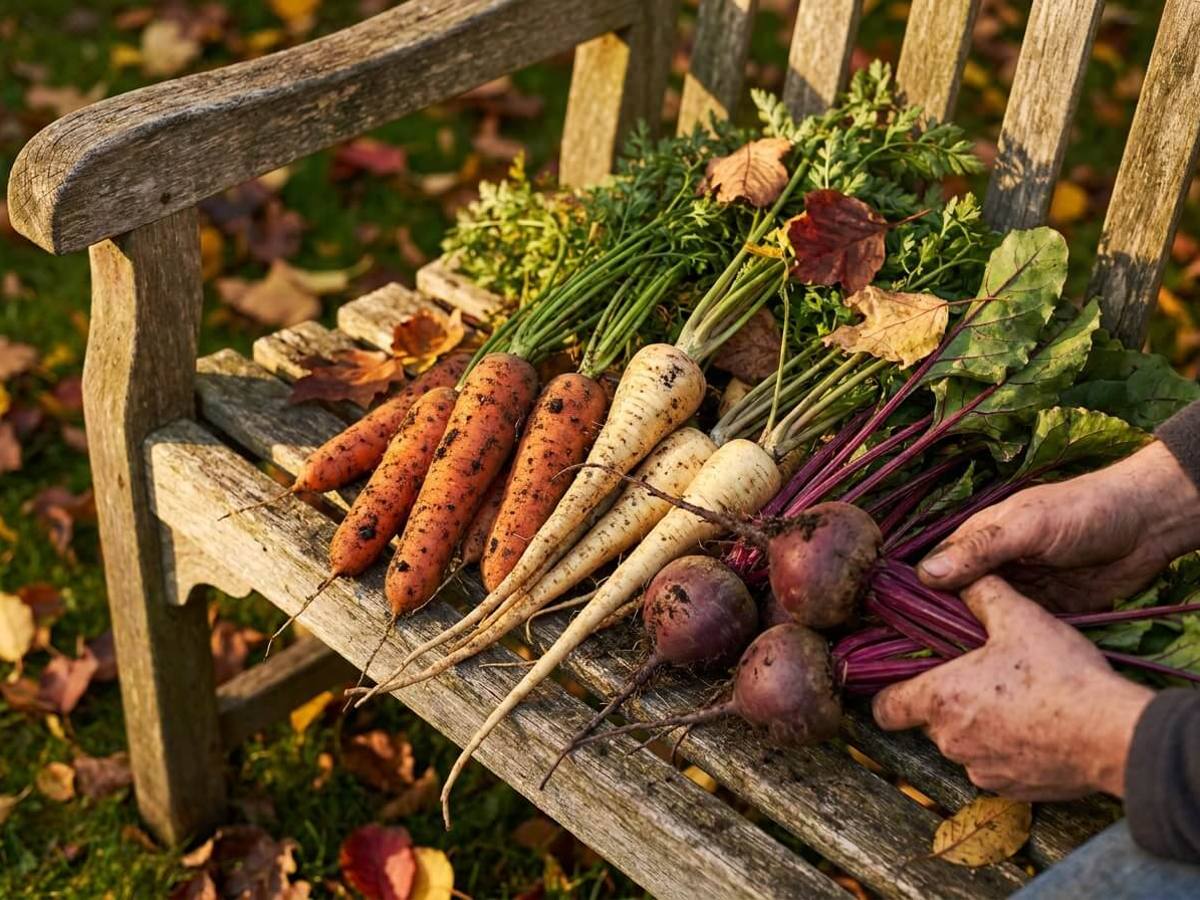
As September arrives, gardeners face a choice that could slash winter food bills by half. Families who swap October supermarket runs for homegrown root vegetables report savings of £300–£500 through the colder months, alongside an unexpected psychological shift from shopping anxiety to genuine seasonal abundance. The maths is compelling, and the timing is now.
Why September is your harvest window for winter savings
Early autumn marks the peak moment when carrots, parsnips, beetroot and swede reach harvestable size but soil temperatures remain warm enough for confident digging. Across the UK and US, gardeners are in the final weeks before first frosts arrive, transforming tender summer crops into storage-ready roots. This narrow window, typically spanning mid-September through early November depending on region, determines whether families eat homegrown vegetables or reach for pricey supermarket alternatives all winter.
The hidden cost of store-bought roots through winter
A family purchasing organic carrots, parsnips and beetroot weekly from November through March routinely spends £6–£8 per shop. Over a typical winter, this adds up to £300–£500 in root vegetables alone. Homegrown equivalents, once harvested and stored properly, cost almost nothing beyond initial seed investment and labour.
Yet the financial calculation only tells half the story. Families who harvest their own roots report a profound shift in mindset. The anxiety of budget shopping, comparison checking and availability stress dissolves when a cellar or cool cupboard holds weeks of guaranteed vegetables. One Somerset gardener with three children described the feeling as moving from scarcity to sovereignty over her family’s food supply.
What to do in September to secure winter harvests
Start your harvest strategy with these four essential actions:
Check root diameter by gently clearing soil around the shoulder of each vegetable. Carrots should be thumb-thick or wider, parsnips and beetroot golf-ball-sized minimum. Leave smaller roots to bulk up another two weeks.
Harvest on a dry day after soil has warmed. Wet roots are prone to rot in storage. Use a garden fork to loosen soil, then pull roots gently by the crown to avoid breakage.
Remove foliage completely, trimming leaves to 2 centimetres above the shoulder. Leafy tops draw moisture from roots during storage, shortening shelf life dramatically.
Store in cool, dark, frost-free conditions, ideally between 2–5 degrees Celsius. Cardboard boxes layered with sand or newspaper work well; so do perforated plastic crates in sheds or cellars. Check weekly for rot and remove any damaged roots immediately.
Monitoring your crops as temperatures drop
Watch soil temperatures as late autumn approaches. Once night temperatures dip below 12 degrees Celsius consistently, roots become more susceptible to splitting and pest damage. Harvest before the first hard frost if your region experiences them early. In milder zones, roots can stay in ground under straw mulch, offering on-demand harvesting until December or beyond. The real test comes in late November, when families who invested time in September harvesting open their storage boxes to reliable, pesticide-free vegetables whilst neighbours pay premium prices at the till.
🌿 Nature & Garden Newsletter
Gardening tips, recipes & seasonal advice, twice a week.
🌿 Nature & Garden Newsletter
Gardening tips, recipes & seasonal advice, twice a week.
🌿
Get our gardening tips, recipes and seasonal advice
Subscribe to Nature & Garden Newsletter — twice a week, no ads.