Green Tomato Chutney with Apple, Ginger and Mustard Seed
0
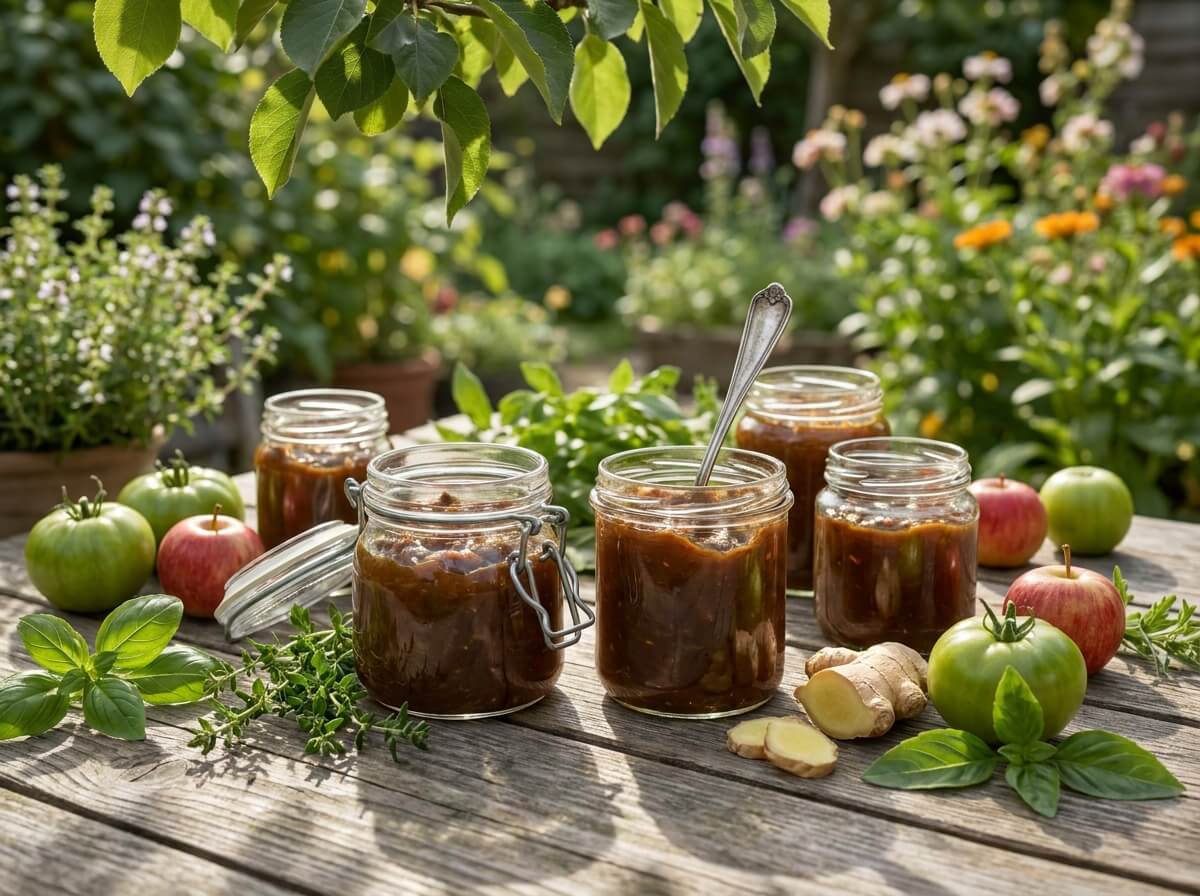
By early September the tomato vines are carrying more fruit than the light can ripen, and once night temperatures settle below 12 °C those hard green globes will stay green on the truss until frost takes them. Chopped small and simmered down with tart apples, ginger and cider vinegar, they turn glossy, dark and savoury-sweet. This is the jar that makes cheese, cold roast meat and fried eggs taste considered rather than leftover.
⏱ Prep 30 min (plus 1 hour salting)🔥 Cook 80 min👥 Serves 30 (makes about 3½ cups / 850 ml)📊 Level Medium
Ingredients for 30 people
2 lb (900 g) green tomatoes, cored and cut into ½ in (1 cm) dice
12 oz (350 g) tart cooking apples such as Bramley or Granny Smith, peeled, cored, diced
10 oz (300 g) onions, finely chopped
2 tsp (12 g) fine sea salt
1½ oz (40 g) fresh ginger, peeled and finely grated
4 garlic cloves, thinly sliced
1 cup (200 g) light muscovado or soft brown sugar
1 cup (240 ml) cider vinegar, 5% acidity
2 tsp brown or yellow mustard seeds
1 tsp coriander seeds, lightly cracked
½ tsp dried chilli flakes
⅓ cup (50 g) sultanas or golden raisins
The Recipe
Toss the diced green tomatoes and onions with the salt in a colander set over a bowl and leave for 1 hour. You will collect 3–4 tablespoons of cloudy liquid — that is water you would otherwise have to boil off, and removing it early keeps the cooking time short enough that the fruit holds its shape instead of dissolving into purée. Do not rinse; the salt is part of the seasoning.
Dry-toast the mustard and coriander seeds in the empty pan over medium heat for 60–90 seconds, until the mustard seeds start to hop and click against the metal and the coriander smells like warm orange peel. Tip them straight onto a plate — left in the hot pan they scorch in seconds and turn acrid.
Use a stainless steel, enamelled or non-stick preserving pan, never bare aluminium, copper or cast iron. Vinegar reacts with those metals over a long simmer and gives the chutney a grey cast and a metallic edge. Do not skip this.
Put the drained tomatoes and onions, apples, ginger, garlic, sugar, sultanas, chilli flakes, toasted spices and ¾ cup (180 ml) of the vinegar into the pan. Warm over low heat, stirring, until the sugar has completely dissolved and the mixture no longer feels gritty against the base of the spoon — undissolved sugar crystals sink and caramelise into a burnt layer the moment it boils.
Bring to a gentle simmer, then cook uncovered at a lazy bubble for 60–75 minutes, stirring every 10 minutes and more often towards the end. The colour shifts from pale green to a dull khaki and finally to a deep russet-brown; the surface loses its watery sheen and starts to look thick and glossy.
Test for the set by drawing a wooden spoon firmly across the base of the pan: if the channel holds for two or three seconds before the chutney slumps back, it is ready. If liquid floods in at once, keep going in 5-minute stages. Overcooked chutney stiffens further as it cools and turns tacky, so stop at the first clean channel.
Off the heat, stir in the remaining ¼ cup (60 ml) vinegar. An hour of boiling drives off the volatile aromatic compounds in cider vinegar and leaves only flat acidity behind; this late addition puts the apple-sharp top note back.
Ladle boiling-hot into hot sterilised jars, leaving ¼ in (5 mm) headspace, wipe the rims and seal with vinegar-proof lids. For long shelf storage, process the sealed jars in a boiling water bath for 10 minutes. Listen for the lids to pop concave as they cool — any jar that does not seal goes in the fridge and gets eaten first.
Store the sealed jars in a dark cupboard and leave them alone for at least 4 weeks. Straight from the pan the vinegar is aggressive and the spices sit separately; maturation rounds the acidity and lets the ginger and mustard fuse into the fruit. Three months is better still.