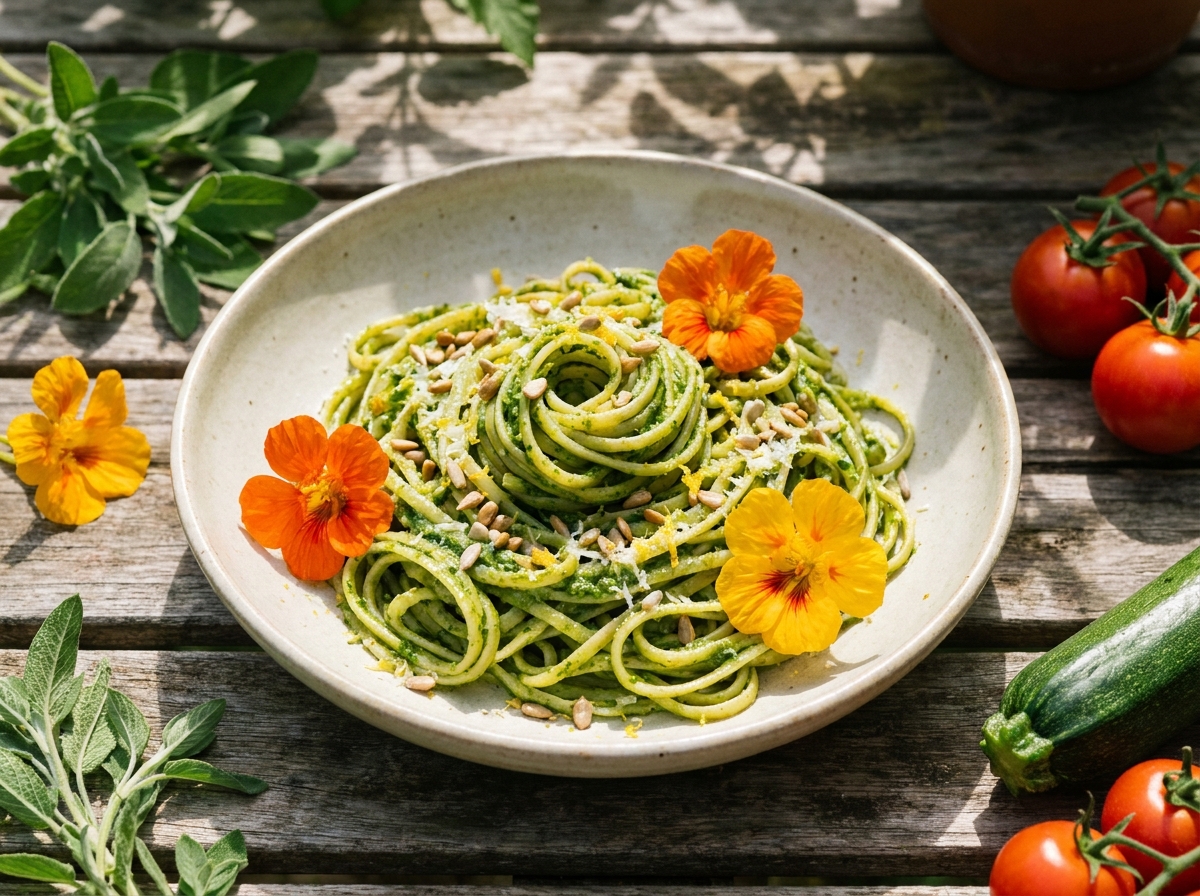
Nasturtium Pesto Linguine with Lemon, Ricotta and Sunflower Seeds
0
Nasturtiums sprawl over the edges of the vegetable patch all summer, planted to lure aphids away from the beans and left to climb wherever they like. The round leaves carry the same mustard-oil heat as watercress, sharper after a dry spell, and by August a single plant gives more than any salad can absorb. Turned into a raw pesto, softened with ricotta and loosened with starchy pasta water, that pepperiness becomes a sauce with genuine bite — pungent, green, and made in the time the linguine boils.
⏱ Prep 20 min🔥 Cook 12 min👥 Serves 4📊 Level Easy
Ingredients for 4 people
12 oz (350 g) linguine or spaghetti
3 packed cups (60 g) young nasturtium leaves, coin- to saucer-sized
1 cup (20 g) flat-leaf parsley leaves
½ cup (70 g) sunflower seeds (or blanched almonds)
1 small garlic clove
¾ cup (75 g) finely grated pecorino, plus more to serve
½ cup (120 ml) extra virgin olive oil
1 unwaxed lemon — zest of the whole fruit, plus 1 tbsp juice
⅓ cup (80 g) whole-milk ricotta
1 tsp (6 g) fine sea salt, plus 2 tbsp (30 g) coarse salt for the pasta water
Black pepper, coarsely cracked
12–15 nasturtium flowers and a few unopened buds, to finish
The Recipe
Pick the leaves in the cool of the morning and wash them in a bowl of cold water, then spin or towel them completely dry. Any clinging water will refuse to emulsify with the oil later and the pesto will split into a watery green puddle rather than a glossy paste.
Toast the sunflower seeds in a dry pan over medium heat for 4–5 minutes, shaking often, until they are the colour of pale straw and a few start to pop and smell like warm bread. Tip them straight onto a cold plate — seeds left in the hot pan keep cooking and turn bitter, and warm seeds would wilt the leaves in the processor.
Blanch one-third of the nasturtium leaves in boiling water for 8 seconds only, then plunge into iced water, drain and squeeze dry in a cloth. This knocks out the enzyme that turns raw leaves khaki within the hour, so the pesto stays emerald, while the untouched two-thirds keep their full mustard heat. Do not skip this step if you want the sauce to look alive on the plate.
Pound or blitz the garlic with the fine salt first, until it is a smooth paste with no visible fragments. Garlic worked into salt breaks down evenly; dropped in whole with everything else it stays in raw shards that dominate every third mouthful.
Add the cooled seeds and pulse to a coarse rubble, then the blanched and raw leaves with the parsley, pulsing in short bursts and scraping down the sides. Pour the oil in a thin stream with the motor running only at the end. Long continuous blending heats the blade above 40°C (104°F), and warm mustard oils turn acrid and grey.
Scrape the pesto into a bowl and fold in the pecorino and lemon zest by hand with a spoon. Machine-blended hard cheese shears into a gluey paste; stirred in, it stays granular and the sauce keeps its texture.
Cook the linguine in heavily salted water — 2 tbsp coarse salt to 4 litres — until al dente, with a thread of white still at the centre when you bite a strand, usually 1 minute less than the packet suggests. Scoop out 1½ cups (350 ml) of the cloudy water before draining; that starch is what will bind oil and cheese into a sauce.
In a warmed serving bowl, slacken the ricotta with 4 tbsp of the hot pasta water until it pours like thick cream. Add the drained pasta, toss, then add the pesto **off the heat** and toss again, loosening with more pasta water a splash at a time until every strand is coated and the sauce slides rather than clumps. Never return the pan to the flame — above 65°C (150°F) the pepperiness collapses and you lose the whole point of the dish.
Finish with the lemon juice, plenty of cracked black pepper, a little more pecorino and the flowers torn over at the last second, buds left whole. The petals are sweet and faintly nectared against the hot leaves, and they wilt within minutes of hitting warm pasta.