Home » Recipes » Main Dish » Borlotti Beans Braised with Tomato, Sage and Garlic Crumbs
Borlotti Beans Braised with Tomato, Sage and Garlic Crumbs
0
By late August the borlotti pods hanging off the bean poles have stopped being green — they turn parchment-pale and streak themselves crimson, the plant’s signal that the beans inside have swelled and are ready to shell. Fresh shelling beans need no soaking and cook in half an hour, and their starch is still soft enough to whisk with olive oil into a sauce that behaves like cream without any dairy. This is the braise that makes a bowl of beans a main course.
⏱ Prep 25 min🔥 Cook 60 min👥 Serves 4📊 Level Easy
Ingredients for 4 people
2 lb (900 g) fresh borlotti beans in the pod — about 2½ cups (400 g) shelled
6 tbsp (90 ml) extra-virgin olive oil, plus more for finishing
1½ cups (75 g) coarse sourdough breadcrumbs, torn not blitzed fine
Finely grated zest of 1 lemon
1½ oz (40 g) pecorino or Parmesan, finely grated
4 thick slices country bread or sourdough
Fine sea salt and coarsely cracked black pepper
The Recipe
Shell the beans, discarding any that are shrivelled or grey, and set aside four of the emptiest, cleanest pods. Rinse the beans in cold water. Those reserved pods go into the braise: they carry a green, grassy bean flavour that the shelled seeds alone lose in cooking, and you fish them out before serving.
Warm 4 tbsp (60 ml) of the olive oil in a heavy pot over medium-low heat and sweat the onion with the 2 crushed garlic cloves and 6 sage leaves for 10–12 minutes, stirring, until the onion is fully translucent and slumped but shows no brown edges. Browning here would push the base towards a caramel sweetness that competes with the beans instead of carrying them.
Add the shelled beans, the reserved pods and the water or stock — the liquid should sit about 1 in (2.5 cm) above the beans. Bring to a bare simmer, the kind where bubbles break lazily at the edges only, and cook uncovered for 25–40 minutes. A hard boil bursts the skins and shreds them; the beans must stay whole. After 10 minutes, add 1 tsp fine salt so it has time to penetrate the beans as they soften.
Test three beans, not one — fresh borlotti ripen unevenly in the pod. They are ready when the skin gives no resistance and the centre is smooth and floury, with no chalky bite at the core. Only now remove the pods and stir in the grated tomato. Do not skip this order: tomato acid firms the beans’ pectin, and beans added to tomato too early can simmer for an hour and never turn creamy.
Simmer 15 minutes more, uncovered, until the tomato has lost its raw pink brightness and darkened to brick, and the liquid coats a spoon rather than running off it. If it tightens too far, splash in hot water — you want a loose stew, not a paste.
Meanwhile, heat the remaining 2 tbsp (30 ml) oil in a small frying pan over medium heat and add the sliced garlic and remaining 8 sage leaves. When the sage stops hissing and goes rigid and matte — about 45 seconds — lift the leaves and garlic out onto paper. Add the breadcrumbs to the same oil and fry, stirring constantly, for 3–4 minutes: they are done when they rattle against the pan like gravel and turn deep amber. Off the heat, crumble in the sage, crush in the garlic, add the lemon zest and a pinch of salt. Zest added off the heat stays perfumed instead of scorching to bitterness.
Take the beans off the heat. Crush roughly one-fifth of them against the side of the pot with the back of a spoon, then pour in a generous 2 tbsp olive oil and stir hard for 20–30 seconds. The released bean starch grabs the oil and the liquid turns opaque and glossy — this is the sauce, and it happens only with vigorous stirring off direct heat. Season with black pepper and more salt: fresh beans absorb salt greedily and almost always need a second round.
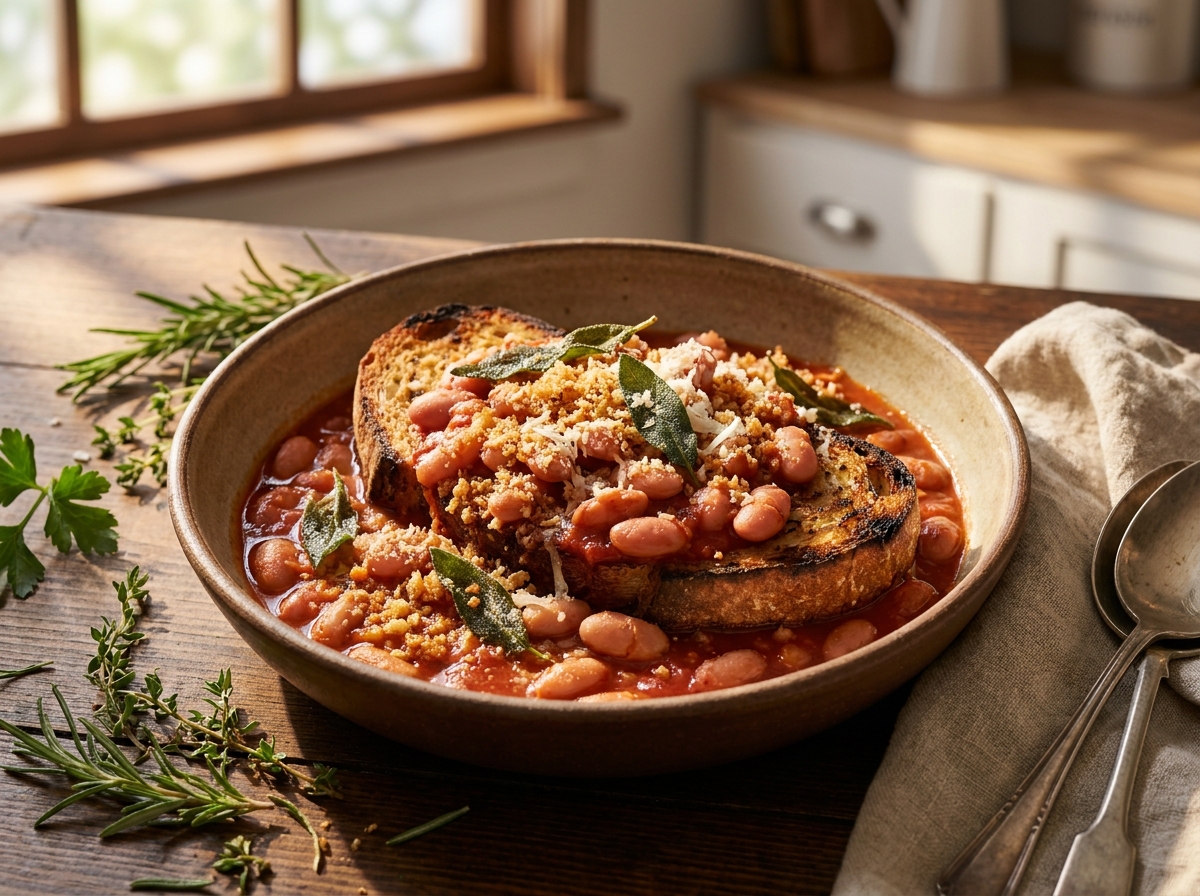
Toast or grill the bread until it bears dark stripes, rub the cut face with a raw garlic clove if you like, and set a slice in each warm bowl. Spoon the beans over, shower with pecorino, then add the crumbs at the very last second so they are still crackling when the bowl reaches the table.