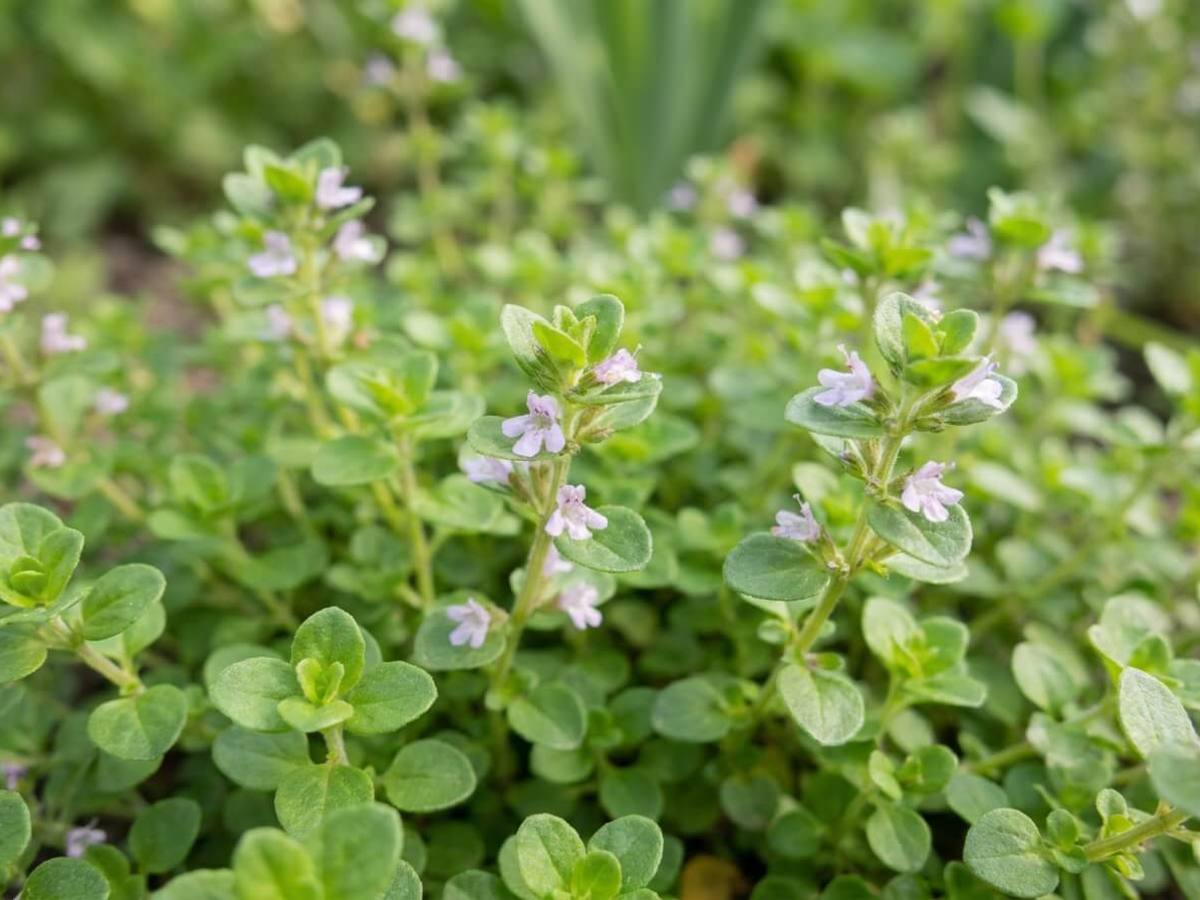
Mentha requienii, better known as Corsican mint, is the smallest mint in cultivation — a film of emerald, pinhead-sized leaves barely a centimetre or two deep that creeps between paving slabs and over damp, shady soil. In high summer it is dusted with minute mauve flowers that bees adore. Its real appeal, though, is underfoot: the lightest brush of a shoe releases a startlingly powerful, sweet peppermint scent.
Growing conditions
Corsican mint grows best in dappled or partial shade, mimicking the cool, shaded rock crevices of its island home. It will take full sun in cooler maritime regions provided the ground never dries out, but in hot inland gardens midday sun scorches the mat to brown within days.
Give it a moisture-retentive yet free-draining soil, enriched with leaf mould or garden compost and opened up with horticultural grit. A neutral to slightly acidic pH of around 6.0–7.0 suits it, though it is not fussy so long as drainage is sharp in winter. Heavy, waterlogged clay is the surest way to lose it.
Plants are reliably perennial in mild, damp climates and are often short-lived where winters are both cold and wet. In colder zones, treat it as a plant for sheltered pockets, troughs and paving joints where the crown stays well drained.
How to plant Mentha
Plant in mid to late spring, once the soil has warmed above about 10 °C and frosts have passed, so the shallow roots can knit in before summer. Early autumn planting works in mild areas, but spring is safer.
Space plants 15–20 cm apart: they will meet and form a continuous carpet within a single growing season.
Set the crown exactly level with the soil surface — burying it even slightly causes rot in wet weather.
Fork grit and leaf mould into the top 10 cm of soil; between paving, backfill joints with a gritty compost mix rather than sharp sand alone.
Water in thoroughly and keep the mat evenly damp for the first six weeks; shallow roots dry out astonishingly fast.
Propagate by lifting rooted sections in spring and replanting them, or surface-sow the dust-fine seed at 18–21 °C in early spring — it needs light to germinate, so do not cover it.
Mentha requienii growing in a naturalistic garden border
Care through the seasons
Spring: Growth restarts as soil temperatures climb; tease away any dead patches left by winter and fill gaps with rooted pieces. A light topdressing of sieved leaf mould or a weak liquid feed is plenty — rich feeding produces soft, rot-prone growth. Refresh container plants with fresh compost at this point.
Summer: Watering is the single most important task; the mat wilts and browns quickly in drought, and shaded sites still need water in long dry spells. Clip back any stems straying where they are not wanted, though the plant is easily pulled up by hand. Leave the flowers for the bees and hoverflies.
Autumn: No cutting back is needed, but remove fallen leaves promptly as they smother the low mat and encourage rot. Early autumn is a good moment to divide and replant in mild gardens. In wetter areas, scatter a thin layer of grit over the mat to keep crowns dry.
Winter: The foliage largely dies back in cold spells and may disappear entirely below about −5 °C, resprouting in spring. Cover vulnerable plants with a cloche or move troughs under an open-sided shelter to keep off persistent rain.
Best varieties to grow
Corsican mint has no named cultivars in general trade, so it is the species itself you will buy — but several mat-formers give a comparable effect.
Mentha requienii — the straight species, sold unnamed, and still the finest-textured and most intensely peppermint-scented ground cover of its kind.
Mentha pulegium ‘Nana’ — creeping pennyroyal, a tougher, slightly coarser mat with the same low habit for drier or sunnier joints.
Thymus serpyllum ‘Pink Chintz’ — creeping thyme for hot, dry paving where Corsican mint would scorch, with salmon-pink summer flowers.
Sagina subulata ‘Aurea’ — golden Scotch moss, a scent-free lookalike that brings lime-green colour to shaded paths and troughs.
Pests, diseases and common problems
Slugs and snails: They graze the tender mat into bare, ragged patches, especially in damp shade. Apply a grit or wool mulch around the edges and gather them by torchlight after warm, wet evenings.
Mint rust (Puccinia menthae): Orange pustules appear on leaf undersides, followed by shrivelling. Remove and bin affected growth — never compost it — and thin surrounding plants to improve airflow.
Drought scorch and winter dieback: Brown, crisp patches in summer signal dryness; black, mushy patches in winter mean waterlogging. Mulch with leaf mould and irrigate in summer, and add grit to improve drainage before the wet months.