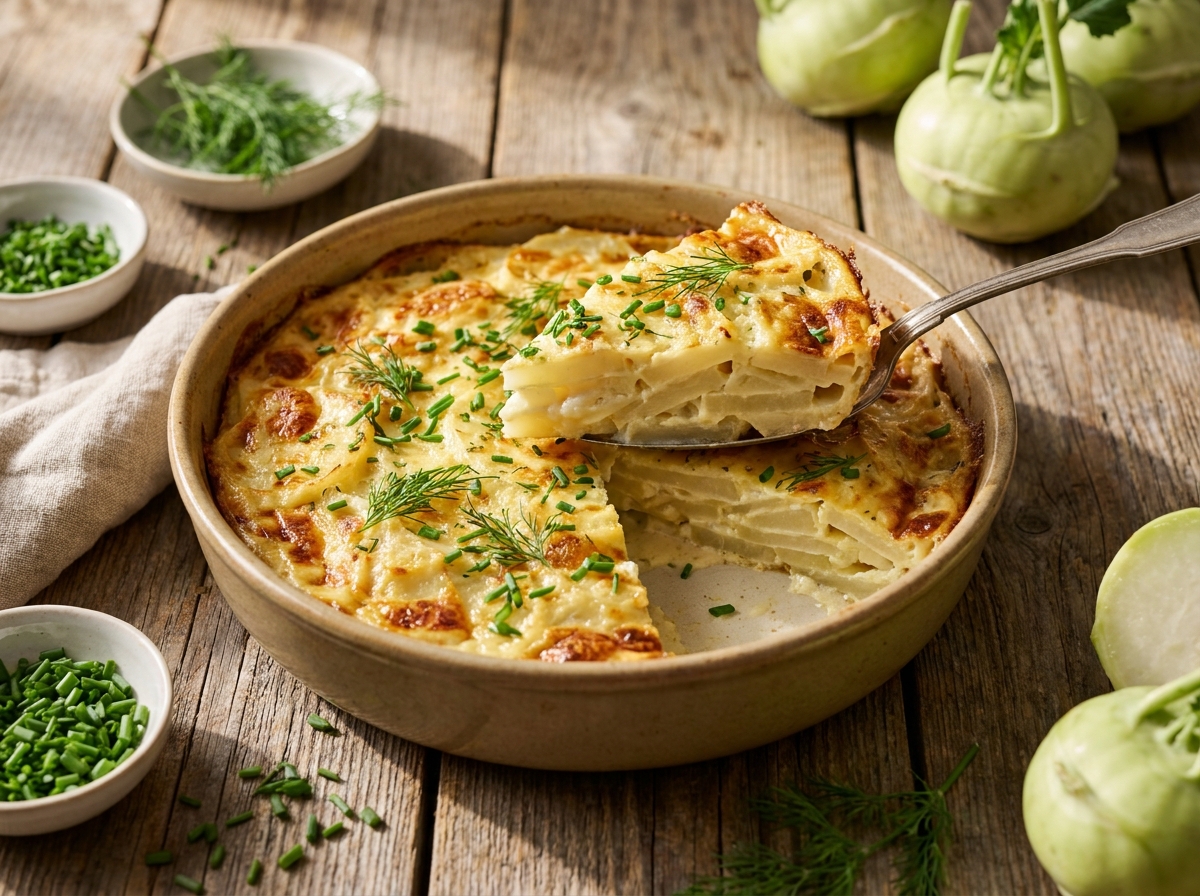
Kohlrabi grows like nothing else in the vegetable patch: a pale green globe sitting proud above the soil — a swollen stem, not a root — throwing leaves out at odd angles. Sown in succession, it goes from seed to tennis-ball size in eight weeks, and August bulbs are the sweetest: crisp, faintly peppery, tender at the core. Baked in thyme cream under mustard crumbs, that crispness turns silky and nutty.
2 lb 4 oz (1 kg) kohlrabi, about 4 medium bulbs, leaves removed
1 small floury potato, about 5 oz (140 g) — Russet, Maris Piper or King Edward
1¼ cups (300 ml) heavy cream (double cream)
½ cup (120 ml) whole milk
3 garlic cloves, lightly crushed
8 sprigs lemon thyme (or common thyme), plus 1 fresh bay leaf
¼ whole nutmeg, for grating
4 oz (110 g) Gruyère, coarsely grated (Comté, Emmental or aged Cheddar work)
1 tbsp Dijon mustard
1¼ cups (60 g) coarse breadcrumbs, torn from day-old sourdough
2 tbsp (30 g) unsalted butter, melted, plus more for the dish
1½ tsp fine sea salt, plus black pepper
2 tbsp chopped chives and dill, to finish
The Recipe
Peel the kohlrabi twice. Take off the skin with a knife rather than a peeler, then go round again removing the pale fibrous layer beneath — that second layer stays stringy no matter how long it bakes. You will know you have reached the good flesh when the blade glides and the cut surface looks glassy and wet. Slice into rounds 2–3 mm (1/8 in) thick, on a mandoline if you have one; thicker slices stay stubbornly crunchy in the middle.
Warm the cream, milk, garlic, thyme, bay, 1½ tsp salt and a generous grating of nutmeg in a wide pan until the surface just trembles — do not let it boil, or the cream can split and the thyme turns medicinal. Take it off the heat and leave for 10 minutes to infuse; kohlrabi is mild and needs the aromatics carried in the fat.
Peel and coarsely grate the potato straight into the infused cream and stir. This is insurance: kohlrabi contains almost no starch, so it cannot thicken its own cream the way a potato gratin does. Do not skip this step, or you will cut into a puddle.
Fish out the thyme stalks and bay, add the kohlrabi slices, and simmer very gently for 12–15 minutes, stirring often so nothing catches. They are ready when the edges look translucent and a slice bends over the back of a spoon without snapping. The cream will have thickened to the consistency of pouring custard and will cling to the slices.
Off the heat, stir in the Dijon. Mustard’s pungency is volatile and dies above roughly 80°C (175°F), so adding it now keeps a sharp note that cuts the dairy — stirred in earlier, it disappears entirely.
Butter a shallow baking dish, about 9 x 12 in (23 x 30 cm), and heat the oven to 375°F (190°C). Layer in half the kohlrabi with its cream, scatter with half the Gruyère, then the rest, pressing everything flat with the back of a spatula. Compacting drives out air pockets, which is what makes gratins collapse when you serve them.
Cover with foil and bake 25 minutes, then uncover. Toss the breadcrumbs with the melted butter and the last of the cheese, scatter over the top, and bake 15–20 minutes more. It is done when the crumbs are deep gold and the cream bubbles at the edges in slow, thick blips — fast thin bubbles mean the cream has not reduced enough and needs another 5 minutes.
Rest for 12–15 minutes before serving, then shower with the chives and dill. Do not skip the rest: hot cream is liquid, cooled cream is a set sauce, and this is the difference between a spooned wedge that holds its shape and a flood across the plate. The raw herbs on top reset the whole dish after the richness of the oven.