Tomato Water Risotto with Basil Oil and Torn Burrata
0
By late August a tomato plant stops being polite — skins split after rain, fruit ripens faster than anyone can eat it, and the heaviest trusses sag into the mulch. Those overripe, misshapen tomatoes hold the most sugar and aroma, and when blitzed, salted and hung in a cloth they drip a clear amber liquid more intensely tomato than any sauce. Cook rice in it and the grains taste of the whole vine.
⏱ Prep 25 min (plus 3 hours dripping)🔥 Cook 40 min👥 Serves 4📊 Level Medium
Ingredients for 4 people
4½ lb (2 kg) very ripe tomatoes, any size or colour, split and blemished ones welcome
2 tsp (10 g) fine sea salt
1½ cups (300 g) carnaroli or arborio rice (sushi rice works at a pinch; long-grain does not)
1 medium onion or 3 shallots (about 3 oz / 80 g), diced very fine
3 tbsp (45 ml) extra virgin olive oil, plus ½ cup (120 ml) for the basil oil
3 tbsp (45 g) cold unsalted butter, cubed
½ cup (120 ml) dry white wine or dry vermouth
2 garlic cloves, thinly sliced
1 large bunch basil (about 1 oz / 25 g leaves)
⅔ cup (50 g) finely grated Parmesan or aged pecorino (use a vegetarian hard cheese if needed)
1 burrata (8 oz / 225 g), or 2 balls buffalo mozzarella, or 1 cup (200 g) fresh ricotta
Black pepper, coarsely cracked
The Recipe
Core the tomatoes, cut them into rough chunks and blitz with the salt in short 5-second pulses for no more than 20 seconds total. Stop while you can still see flecks of skin — over-blending emulsifies the pulp into the juice and you will get cloudy pink liquid instead of clear amber. The salt is not seasoning here; it ruptures the cell walls so the tomatoes release their juice.
Line a sieve with a double layer of muslin, cheesecloth or a clean thin tea towel, set it over a deep bowl, tip in the pulp and leave it to drip in a cool place for 3 hours, or overnight in the fridge. Do not squeeze or press the cloth — pressure forces pulp through and turns the water muddy. You should collect around 3½ cups (850 ml) of pale, clear liquid that smells startlingly of tomato leaves. Top it up to 5 cups (1.2 L) with hot water.
Scrape the drained pulp from the cloth into a small frying pan with 1 tbsp olive oil and the sliced garlic. Cook over medium heat for 10–12 minutes, stirring, until the colour deepens from bright red to brick and the oil separates and pools at the edges — that separation is the signal that the water has gone and the sugars have started to caramelise. Set aside.
Blanch the basil leaves in boiling water for 10 seconds, then plunge straight into ice water. Squeeze bone dry, blend with ½ cup (120 ml) olive oil for a full minute, and strain through the rinsed muslin. Do not skip the blanching: it deactivates the enzyme that turns puréed basil black within the hour, and locks the oil an emerald green that lasts for days.
Pour the tomato water into a saucepan and bring it to the barest tremble — around 175°F (80°C), where a few bubbles rise at the edge but the surface never breaks. A hard boil drives off the fresh green top notes you spent three hours collecting and leaves you with something tasting of tinned soup. Keep it at this whisper throughout.
In a wide, heavy pan, sweat the onion in 2 tbsp olive oil and 1 tbsp of the butter over medium-low heat for 8–10 minutes, until completely translucent and collapsing but without a hint of gold. Coloured onion brings a caramel note that fights the clean acidity of the tomato water; you want sweetness with no toast in it.
Add the rice and stir for 2–3 minutes until the grains turn glassy at the edges with an opaque white dot still visible at each centre, and the pan smells faintly of warm biscuit. This toasting firms the outside of each grain so it releases starch slowly instead of dissolving into porridge. Pour in the wine and stir until you can drag the spoon across the base and the trail stays dry for a second.
Add the hot tomato water one ladle at a time, stirring often and only adding more when the previous addition has almost gone — the surface should look like wet sand, not soup. After 16–18 minutes, taste: the grain should give under the teeth with a barely perceptible chalky core. Tomato water is thinner than stock, so you may need slightly less liquid than usual; go by the bite, not the clock.
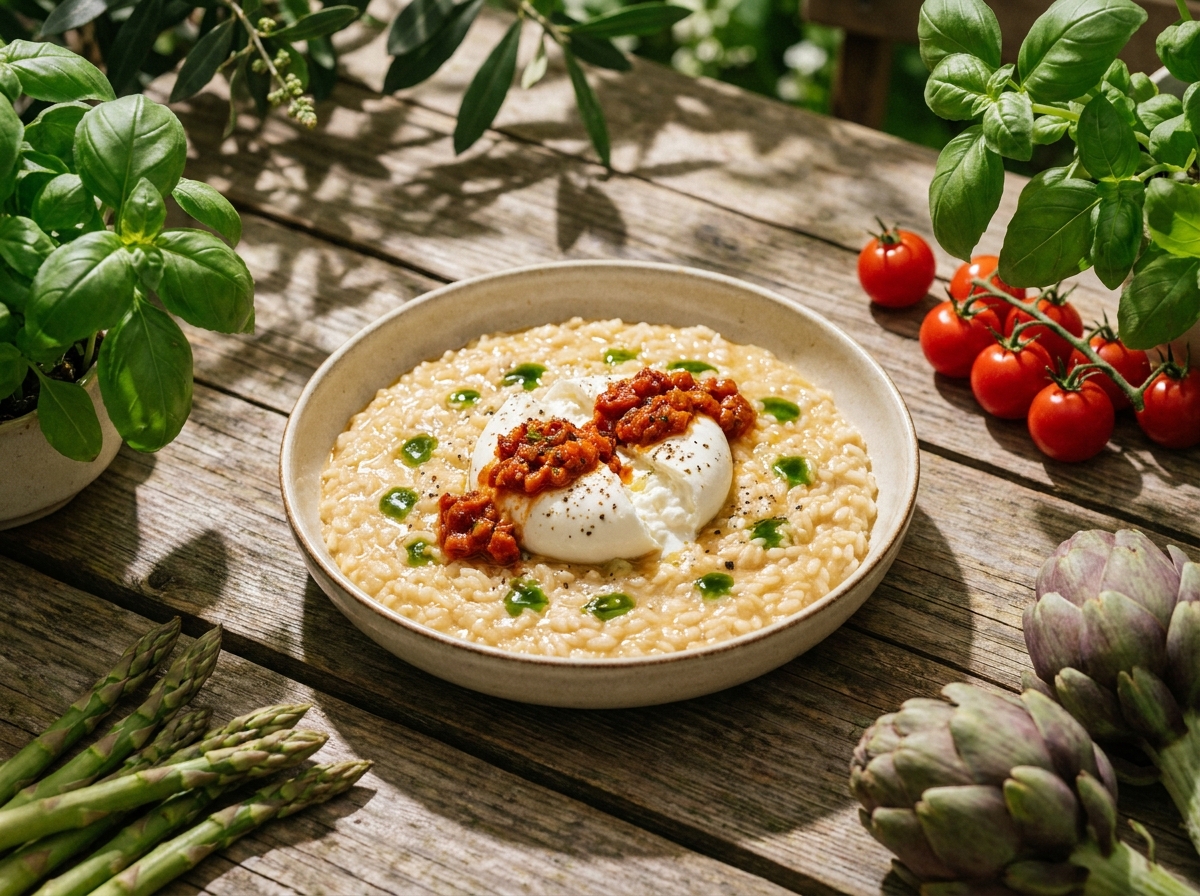
Pull the pan off the heat, beat in the remaining cold butter and the Parmesan hard for 30 seconds, then cover and rest for 2 minutes. Beating cold fat into hot rice off the heat is what makes risotto flow *all’onda* — in a wave — rather than sitting in a stiff mound. Loosen with a last splash of tomato water, spoon into warm shallow bowls, tear the burrata over the top, add a spoonful of the tomato compote, and finish with basil oil and cracked pepper.