Home » Recipes » Starters » Salt-Baked Beetroot with Horseradish Cream, Walnuts and Dill
Salt-Baked Beetroot with Horseradish Cream, Walnuts and Dill
0
Beetroot is the plot’s patient worker: sown in late spring, swelling quietly while everything else demands attention, and still standing firm in the bed when October nights turn cold. Pulled with the soil still clinging, the root holds a sugar content close to that of a ripe pear. Baking it in a salt crust instead of boiling it concentrates that sweetness rather than leaching it into grey water — and against sharp horseradish cream and toasted walnuts, it becomes a first course with real presence.
A small handful of dill fronds, plus young beetroot leaves if you have them
The Recipe
Heat the oven to 400 °F (200 °C), 180 °C fan. Scrub the beetroot under cold water with a brush but do not peel them, do not trim the whiskery taproot, and leave 3/4 in (2 cm) of stalk attached. Every cut you make is an exit wound: the root bleeds colour and sugar through it, and you end up with pale, washed-out flesh.
Mix the coarse salt with the egg whites, thyme sprigs and crushed peppercorns until it holds together like damp sand when squeezed. The protein in the whites is what turns loose salt into a sealed shell during baking — without it the mound collapses and steam escapes, and you are simply roasting dry.
Spread a 1/2 in (1 cm) layer of the salt mixture in a small roasting tin, nest the beetroot on top with space between them, then pack the rest over and around so no skin shows. Press firmly. The crust traps the root’s own moisture and steams it in a concentrated, aromatic pocket; the skin blocks the salt itself, so the flesh seasons gently rather than turning briny.
Bake for 60–80 minutes depending on size. The crust will dry to the colour of pale biscuit and may craze with fine cracks — that is correct. Test by pushing a thin skewer straight through the crust into the centre of a root: it should slide in with no resistance at all, as into soft butter. Any grip in the middle means another 10 minutes. Rest 10 minutes before cracking.
Break the shell with the back of a heavy spoon, lift the beetroot out and brush off clinging salt. Peel while hot, holding each root in a folded cloth or kitchen glove — the skins slip away under thumb pressure like the skin of a blanched peach. Do not skip peeling them hot; once cooled, the skin tightens and you lose flesh scraping it off.
Cut into thick wedges and, while still warm, toss with the cider vinegar, 2 tablespoons of the olive oil, the honey and a good pinch of flaky salt. Warm beetroot behaves like a sponge and pulls the vinegar inside; cold beetroot lets it slide off onto the plate. Leave to sit for 10 minutes.
Make the cream: grate the horseradish finely and toss it immediately with the lemon juice, then fold it into the crème fraîche with the lemon zest and a pinch of salt. Horseradish releases its heat only when the cells are broken, and that heat starts fading within minutes — the acid locks it in place. Never warm the cream, or the pungency vanishes entirely.
Toast the walnuts in a dry frying pan over medium heat for 4–5 minutes, shaking often, until they smell like warm cake and the skins darken a shade. Tip them into a cloth and rub briskly — the flaking skins carry most of the bitterness. Chop coarsely.
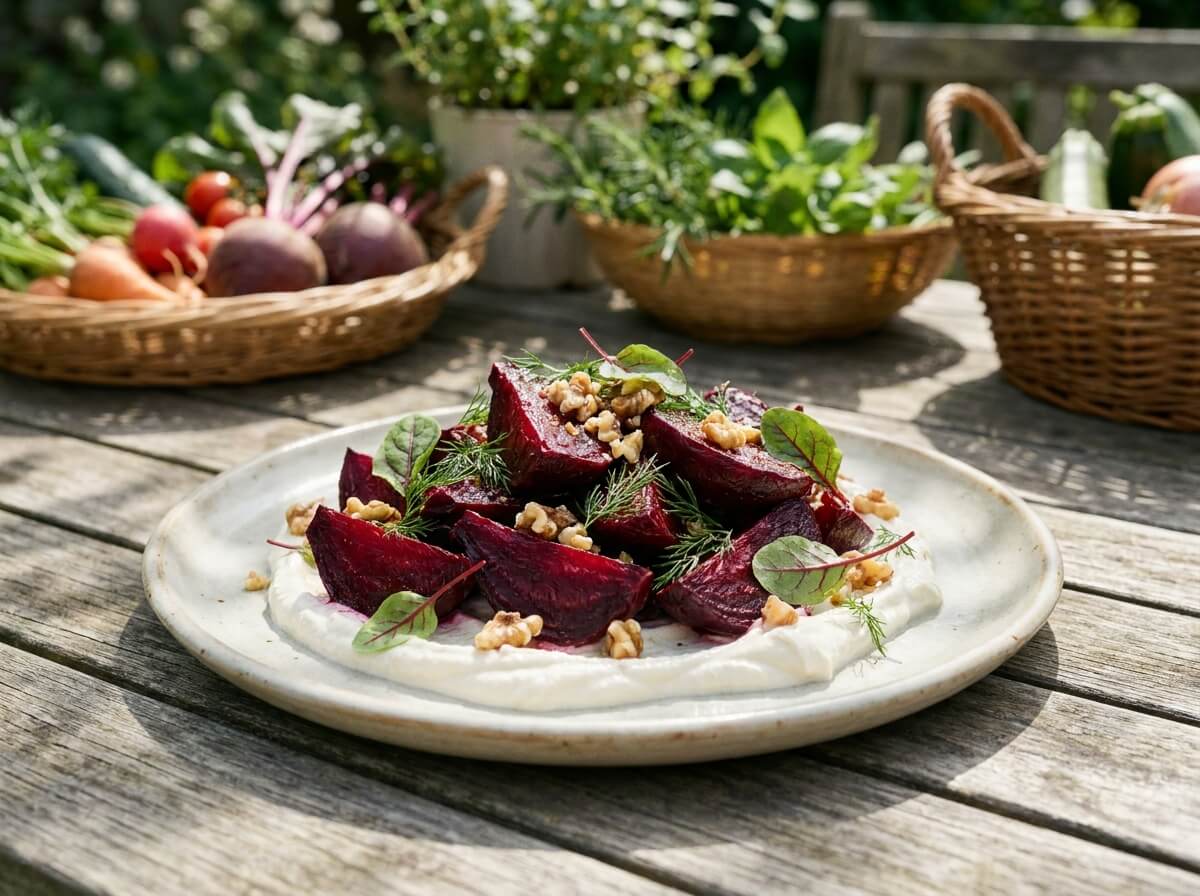
Spoon the horseradish cream onto four plates and drag it into a shallow pool with the back of the spoon. Pile the dressed beetroot on top, scatter with walnuts, dill fronds and any small beetroot leaves, then finish with the last tablespoon of olive oil, flaky salt and cracked pepper. Serve just-warm or at room temperature; straight from the fridge, the sweetness of the root goes flat.