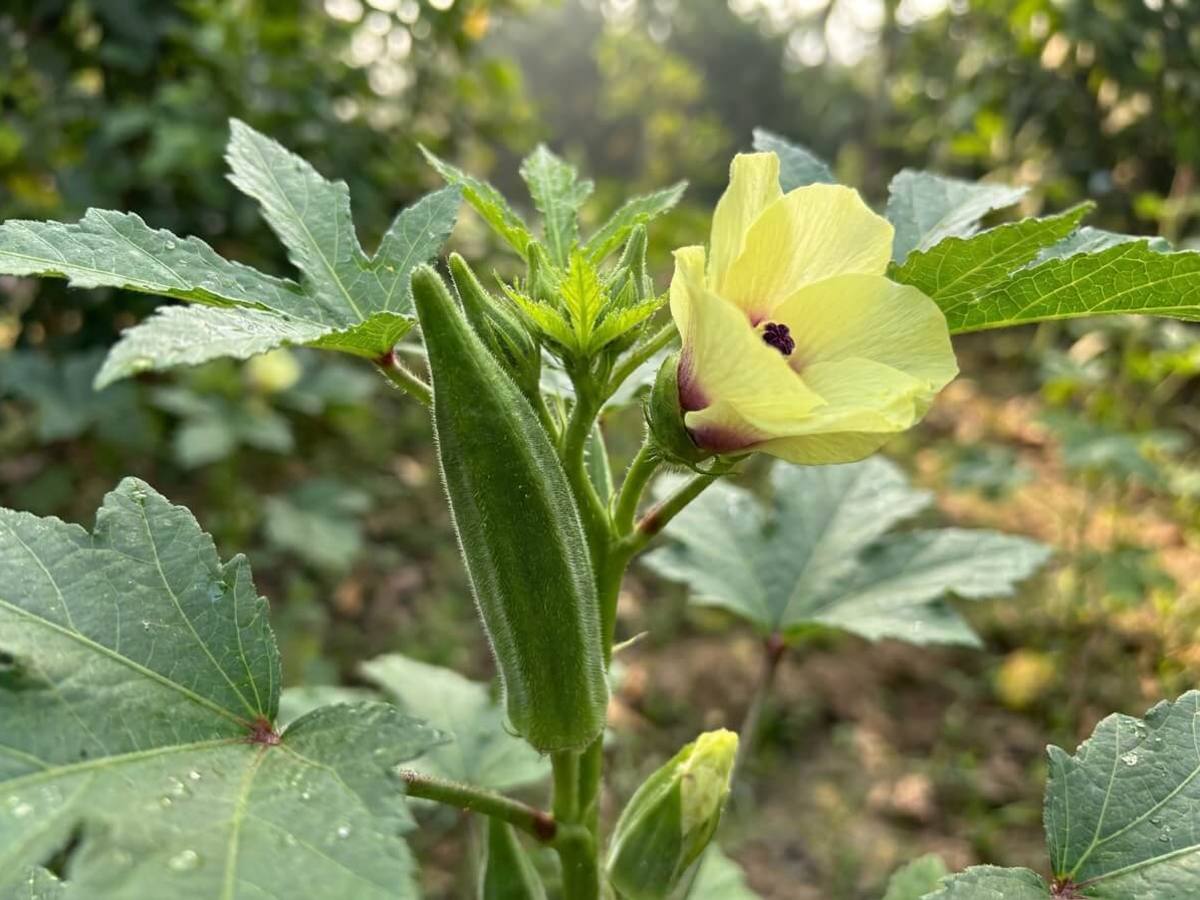
Okra is a strikingly handsome member of the mallow family, grown as much for its silky, hibiscus-like blooms as for the ribbed green pods that follow them. Upright and architectural, it earns its place at the back of a sunny vegetable bed or along the centre of a polytunnel border. Its defining quirk is speed: a pod goes from perfect to woody in little more than forty-eight hours of warm weather.
Growing conditions
Okra demands heat and unbroken sunlight. Give it the warmest, most sheltered spot you have — against a south-facing wall, in a polytunnel, or in a greenhouse border in cooler maritime climates. Plants shaded for even part of the afternoon stretch, flower sparsely and drop their buds.
Soil should be deep, fertile and free-draining, with plenty of well-rotted organic matter worked in the preceding autumn. Okra dislikes waterlogging and cold, heavy clay, which chills the roots and stalls growth. A slightly acid to neutral pH of 6.0–6.8 is ideal, though plants cope up to about pH 7.5.
Growth effectively halts below 15 °C and the plant thrives between 24 °C and 32 °C. In Britain, northern Europe and similar cool-summer regions, treat it as a protected crop; in the southern United States, the Mediterranean, India and Africa it grows happily outdoors.
How to plant Okra
Sow indoors in mid to late April, around four to six weeks before the last expected frost, and plant out only once night temperatures reliably exceed 14 °C. Direct sowing outdoors is realistic only where the soil warms to 18 °C and stays there.
Space plants 45–60 cm apart, with 75–90 cm between rows — crowded okra produces fewer side branches and far fewer pods.
Sow seed 2 cm deep in 9 cm pots of peat-free compost; okra resents root disturbance, so avoid pricking out and pot on as a whole root ball.
Soak seed in tepid water for 12–24 hours before sowing, or nick the hard coat with a nail file, to lift germination rates markedly.
Enrich the bed with garden compost plus a handful of bonemeal per square metre, then water plants in thoroughly and mulch to lock in warmth and moisture.
Okra is raised from seed only — it does not divide or root from cuttings. Save your own seed from fully mature, dried pods on open-pollinated cultivars.
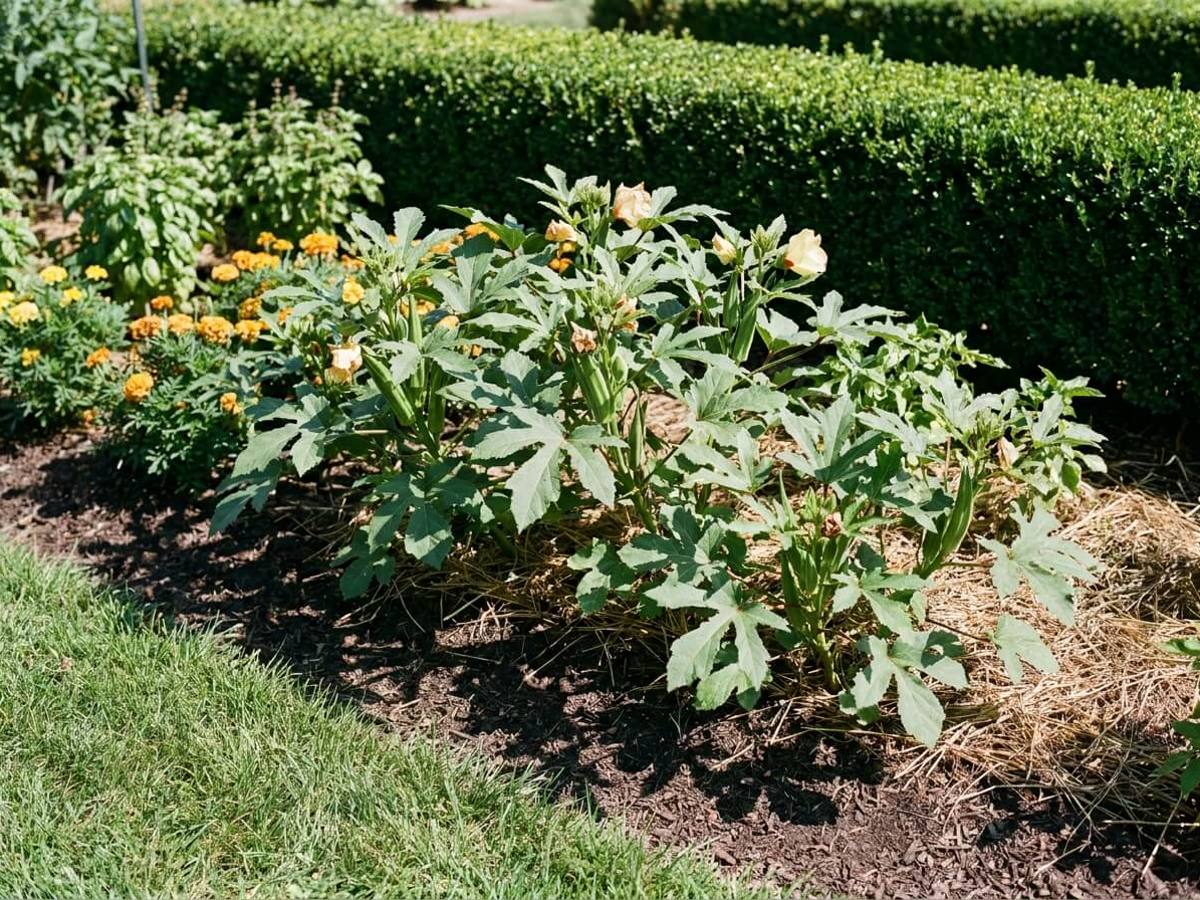
Okra growing in a naturalistic garden border
Care through the seasons
Spring: Germinate seed at 24–30 °C, on a heat mat or propagator if needed; below 18 °C germination is slow and erratic. Keep seedlings bright and never let them chill on a windowsill at night. Harden off gradually over ten days before planting.
Summer: Water deeply once or twice weekly rather than lightly each day, aiming for about 25 mm a week. Feed with a high-potassium tomato feed once the first flowers open, and avoid excess nitrogen, which gives leaf at the expense of pods. Begin harvesting when pods reach 5–10 cm, cutting every one to two days to keep plants productive.
Autumn: Pick continuously into early autumn; pods left to swell signal the plant to stop flowering. Once night temperatures slip below 12 °C, cropping tails off, so leave a few pods to ripen and dry for seed. Pull spent plants after the first frost and compost the shredded stems, which are tough and slow to break down.
Winter: Okra is killed outright by frost and is not overwintered in temperate gardens. In frost-free tropical climates plants can be cut back hard in winter and will reshoot, though yields drop in the second season.
Best varieties to grow
Choose early, compact cultivars where summers are short, and spineless types if you dislike the plant’s irritant bristles.
‘Clemson Spineless’ — the long-standing benchmark, an All-America Selections winner with straight, ridged green pods on 1.2 m plants.
‘Burgundy’ — deep wine-red stems and pods that are highly ornamental, although the colour turns green on cooking.
‘Jambalaya’ F1 — notably early and compact at around 90 cm, the best bet for a cool greenhouse or short season.
‘Pure Luck’ F1 — heavy-yielding and vigorous, with tender pods that stay usable slightly longer than most.
Pests, diseases and common problems
Aphids and whitefly: Clusters on shoot tips and sticky honeydew under glass. Hang yellow sticky traps, blast colonies off with water and introduce Encarsia formosa or lacewing larvae under protection.
Red spider mite: Fine pale stippling, bronzed leaves and webbing in hot, dry greenhouse air. Damp down paths to raise humidity above 60 per cent and release Phytoseiulus persimilis early.
Bud and flower drop: Buds yellow and fall before opening, usually after nights below 15 °C, drought stress or deep shade. Improve warmth and shelter, water consistently and thin overcrowded plants.
Fusarium and verticillium wilt: One-sided yellowing and sudden collapse in warm soils. Remove affected plants, do not compost them, and rotate okra away from tomatoes, aubergines and potatoes for at least three years.