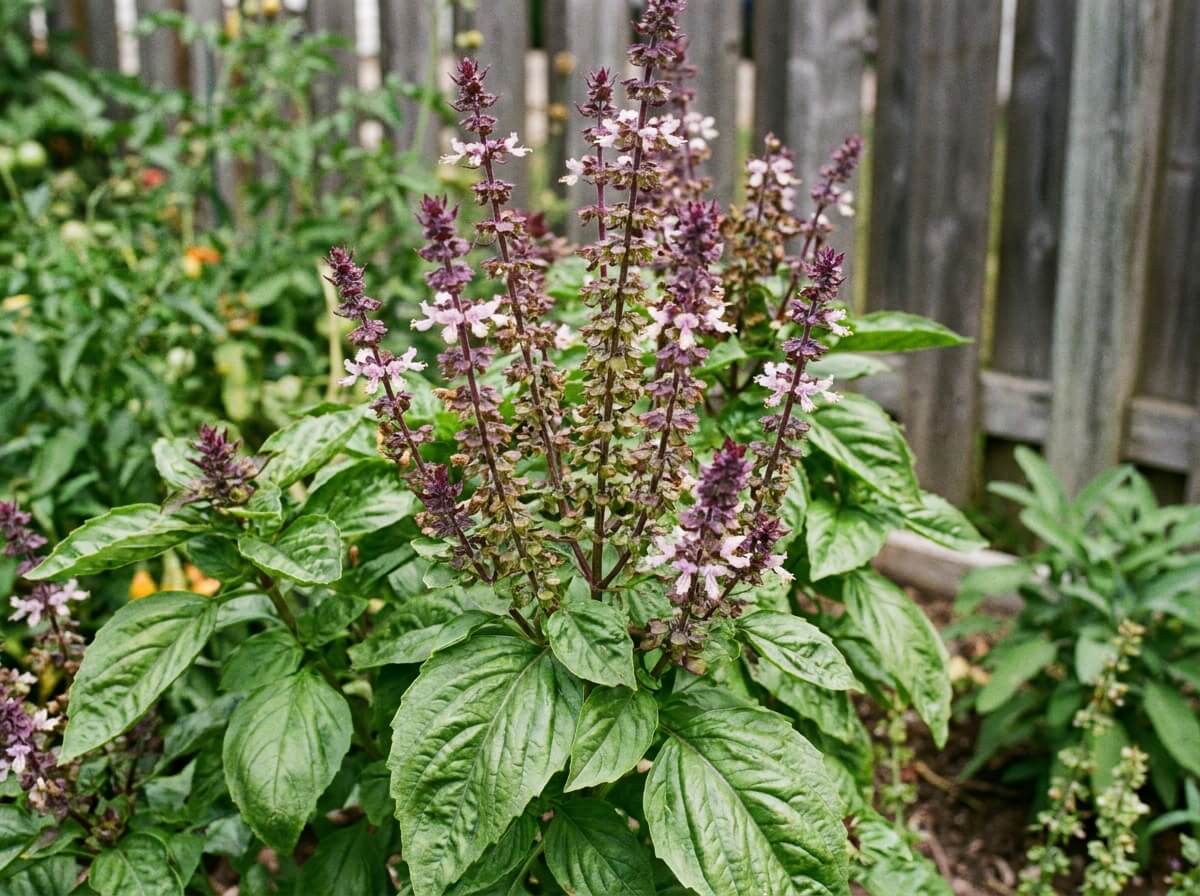
One morning your basil’s bushy and fragrant. A week later it has shot up a pale flower spike, the leaves have halved in size, and there’s a faint bitterness where there used to be sweetness.
Bolting isn’t a gardening failure — it’s biology. But getting a proper grasp on its triggers, and acting within a narrow window, is the difference between basil that lasts all summer and basil that collapses by mid-season.
Bolting means the plant has switched from vegetative growth (leaves, stems) to reproductive growth (flowers, seeds). For basil, a warm-season annual, this switch is triggered by two non-negotiable factors, combining forces: sustained heat above 27°C (80°F) and long daylight hours exceeding roughly 14 hours of light per day.
Both conditions peak in summer. The plant detects them as a signal that its growing season is ending — so it rushes to reproduce before conditions deteriorate.
From the basil’s perspective, this is entirely rational. From yours, it’s an issue.
The speed can be startling. Under continuous heat stress, a basil plant can go from first bud to open flower in 7–10 days.
Once the flowers open and pollination begins, the plant diverts almost all its energy away from leaf production. Essential oil content in the leaves drops measurably. Bolted basil, consequently, tastes sharp and medicinal rather than sweet and anise-like.
Catching bolting early — before the flowers open — gives you proper command. The signs appear in a specific sequence. Each stage matters.
Intervene at stage 3 or earlier. That tight bud cluster, still closed and green, is your window. Bang on.
And you can smell the difference in the leaves even before you see the spike; a faint sharpness creeps into the scent when you crush a leaf between your fingers at 7am, before the day’s full heat properly builds. You are getting close.
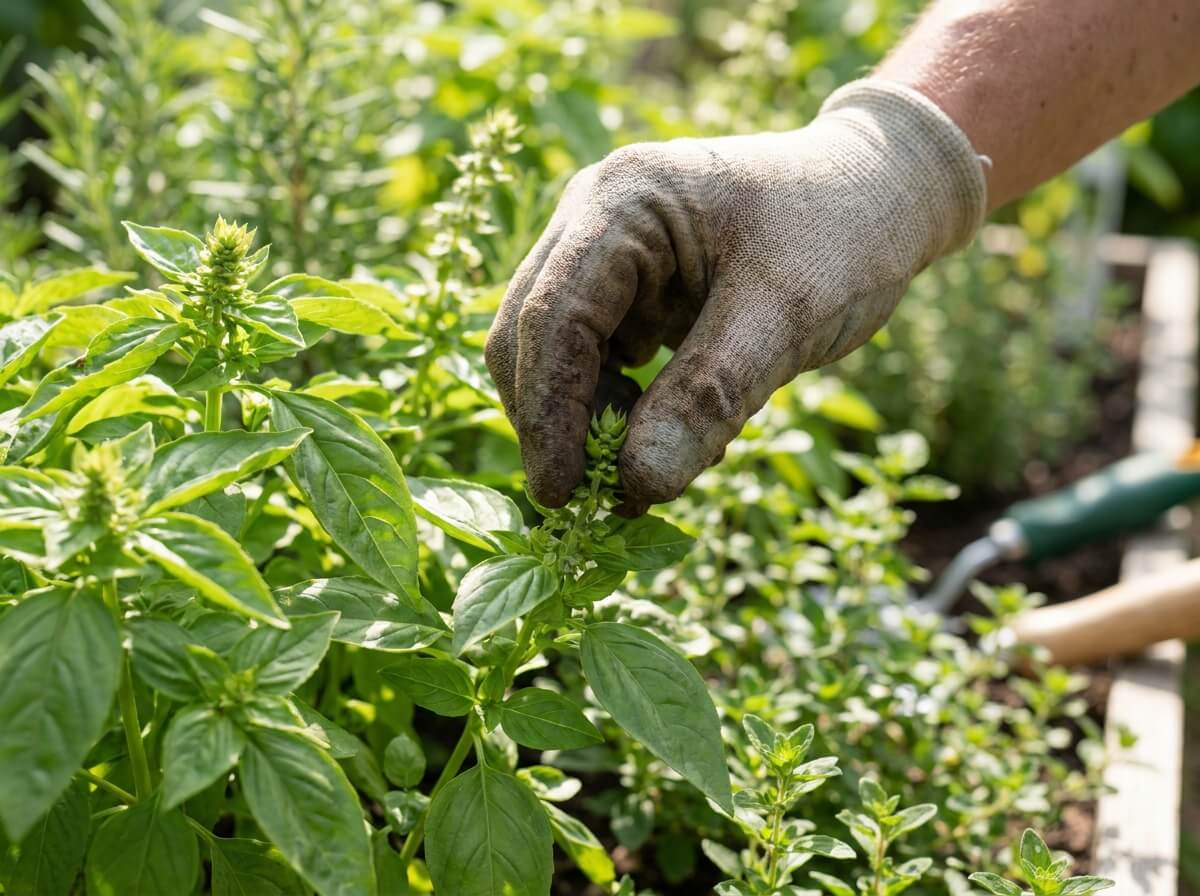
Pinching out flower spikes is the single most non-negotiable technique for extending a basil plant’s productive life. Done consistently, it does wonders for leafiness, keeping plants flavoursome for an extra 4–6 weeks beyond when they would otherwise have peaked.
Pinch correctly, not haphazardly. Excise the entire flower spike or bud back to just above a pair of healthy leaves — not just the tip, but the whole stem carrying it. And this forces the plant to branch outward from that leaf node, producing two new stems where there was one. Over several rounds of pinching, the plant becomes increasingly bushy. Sorted.
Do this every 5–7 days throughout the hottest part of summer. Yes, it’s fiddly. Worth it.
Do it anyway — the difference is night and day.
A few practical details that matter:
Pinching buys time. These additional tactics extend the season further, especially during proper heat waves.
Afternoon shade is underrated. Basil needs 6–8 hours of sun. But scorching afternoon sun above 32°C (90°F) accelerates bolting dramatically.
Moving pots to a spot with dappled afternoon shade — or placing taller plants nearby as a buffer — significantly reduces heat stress without compromising growth.
Consistent watering is non-negotiable. It matters more than most growers realise. A basil plant under drought stress bolts faster; water shortage reads, biologically, as season-end.
Water at the base, not overhead. Aim for soil that stays evenly moist but never waterlogged — roughly every 2–3 days in properly hot weather, checking with a finger 2cm into the soil before each watering.
Avoid high-nitrogen feeds once summer heat arrives. Nitrogen pushes leafy growth early in the season. But in peak summer heat, it can paradoxically push a stressed plant toward reproduction faster.
Switch to a diluted balanced liquid feed (such as a general-purpose tomato fertiliser at half strength) fortnightly rather than a high-nitrogen product weekly. It’s the sensible choice.
If you cultivate basil in containers — and most kitchen gardeners do — keep the pot size ample. It’s non-negotiable. A 20–25cm (8–10 inch) pot holds enough soil volume to buffer temperature swings. Small 10cm pots overheat rapidly, stressing roots and triggering bolting within days of a heat spike. If you’re dealing with a similar heat-stress issue in other summer annuals, the same logic applies: refer to the article on SunPatiens wilting in the heat for parallel techniques.
Variety selection is the one decision that pays dividends before the season even starts. Not all basil bolts at the same pace. The differences are significant.
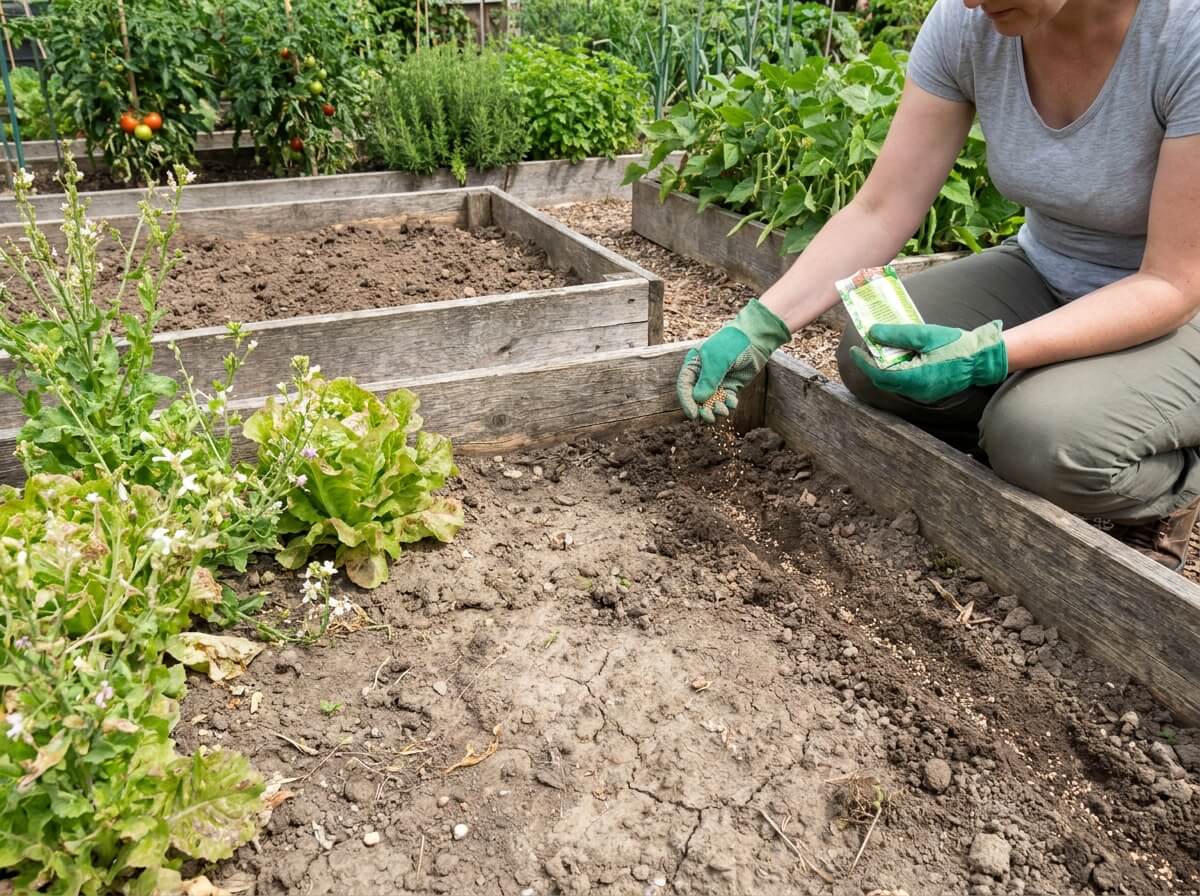
If Genovese is the only variety you can source, plant in succession — sow a fresh batch of seed every 3–4 weeks from late spring through early summer. That way, as one plant bolts, a younger plant’s coming into peak production. The RHS recommends this succession approach specifically for extending harvest into early autumn.
The plant is flowering. The leaves are already smaller and slightly bitter.
Not all is lost. Not quite right to give up, mind.
If the flowers have just opened, act fast. Harvest the entire plant hard — cut all stems back by half, to just above a strong leaf node. Water well, relocate it out of full afternoon sun, and feed lightly.
Some plants recover and produce a second flush of usable leaves over the following 2–3 weeks. Not all do, but it’s worth attempting before giving up.
Use the flowers. Basil flowers are edible and truly versatile. They taste like a lighter, more floral version of the leaves — scatter them over tomato salads, steep them into olive oil for 48 hours at room temperature, or freeze them into ice cubes for cocktails. The University of California’s ANR extension notes that basil flowers retain much of the volatile oil profile of the leaves, making them culinarily worthwhile rather than just decorative.
If the plant’s entirely spent — woody-stemmed, sparse-leafed, mostly seed-heads — pull it. Compost it. Start fresh.
A new basil seedling at this point in the season will be harvestable within 3–4 weeks. It will be far more productive than a dying plant being coaxed along.
Readers in Australia, New Zealand, and South Africa: your basil season runs October through March. The bolting issue described here is your midsummer concern — apply this guidance in your December and January, when daylight hours peak and temperatures soar to their highest.
The variety choices and pinching techniques are identical; only your calendar differs. Simple as that.
So, smart tip: Pinch basil flower spikes every 5–7 days at the stem base — never just the tip of the flower.
Yes, but expect some bitterness. Use bolted basil in cooked sauces, where heat mellows the sharpness. Avoid it fresh in salads or pesto.
Sometimes. Cut stems back hard to a healthy leaf node, water well, and reduce afternoon sun exposure. Some plants produce a usable second flush within 2–3 weeks; others don’t, and replacement is faster.
Indoors delays bolting because temperatures are more stable and daylight hours are controlled. But basil on a windowsill still needs 6+ hours of direct light and will eventually bolt. A grow light set to 12-hour cycles is the most reliable indoor method for extending the season.
Only if you have a second plant for kitchen use. Let one plant flower and set seed fully. Harvest the seed heads when they turn brown and papery, dry them for 7 days indoors, and store them in a paper envelope.
Viability stays high for 2–3 years. Solid.
Generally yes. Pots heat up faster than garden soil. And root restriction adds stress. Use the largest pot practical — 20–25cm minimum. Consider placing it inside a slightly larger outer pot filled with damp sand to buffer temperature swings.