Home » Recipes » Main Dish » Grilled Mackerel with Gooseberry Sorrel Sauce and Crushed Potatoes
Grilled Mackerel with Gooseberry Sorrel Sauce and Crushed Potatoes
0
The gooseberry bush is the least glamorous thing in any garden — thorny, sprawling, quietly loaded with green fruit most people walk straight past. Yet the French name for it, *groseille à maquereau*, mackerel currant, records a pairing older than any cookbook fashion: sour fruit against oily fish. Late-season berries, sharpened with a fistful of sorrel from a perennial patch, build a sauce that cuts grilled mackerel clean in half.
4 whole mackerel, about 10 oz (300 g) each, gutted and scaled — or 8 fillets
1 lb 8 oz (700 g) small waxy new potatoes
2 cups (250 g) gooseberries, topped and tailed
2 packed cups (60 g) sorrel leaves, stalks stripped out
1 large shallot (about 1½ oz / 45 g), finely diced
5 tbsp (70 g) cold unsalted butter, cut into cubes
1 tbsp (15 g) honey or caster sugar
3 tbsp (45 ml) olive oil, plus more for the fish
3 tbsp (10 g) chives, finely snipped
½ lemon
Flaky sea salt and coarsely cracked black pepper
The Recipe
Salt the mackerel first. Slash each fish three times on both sides down to the bone, then rub flaky salt into the skin and slashes and leave it on a rack for 10 minutes. The salt draws surface moisture out; that moisture is exactly what glues fish skin to a hot grill. Pat the fish thoroughly dry with paper towel before it goes near heat — do not skip this.
Boil the potatoes whole and unpeeled in water salted like seawater (about 1 tbsp salt per litre) for 15–18 minutes, until a thin knife slides through the largest one with no resistance at the centre. Drain, return them to the dry hot pan for 2 minutes off the heat and let them steam dry — a dry potato surface drinks up olive oil, a wet one repels it.
Put the gooseberries in a small pan with the honey and 2 tbsp water over medium heat. Cook 4–6 minutes, only until you hear the skins split with a soft tick and the berries slump into a rough, khaki-green purée with some lumps still intact. Stop there. Cooked further they turn to jam, and sweet jam is not what an oily fish needs.
In a second wide pan, sweat the shallot in 1 tbsp of the olive oil over medium-low heat for 6–8 minutes until fully translucent and slippery, with no colour whatsoever. Browned shallot brings caramel notes that blur the sharpness you have just built into the fruit; you want its sweetness clean and background.
Scrape the gooseberry pulp into the shallots, warm through, then take the pan off the heat entirely and whisk in the cold butter a few cubes at a time, swirling the pan so each addition melts into a glossy, slightly thickened sauce before the next goes in. Cold butter and no direct heat is the whole trick — boiling splits the emulsion into oily pools.
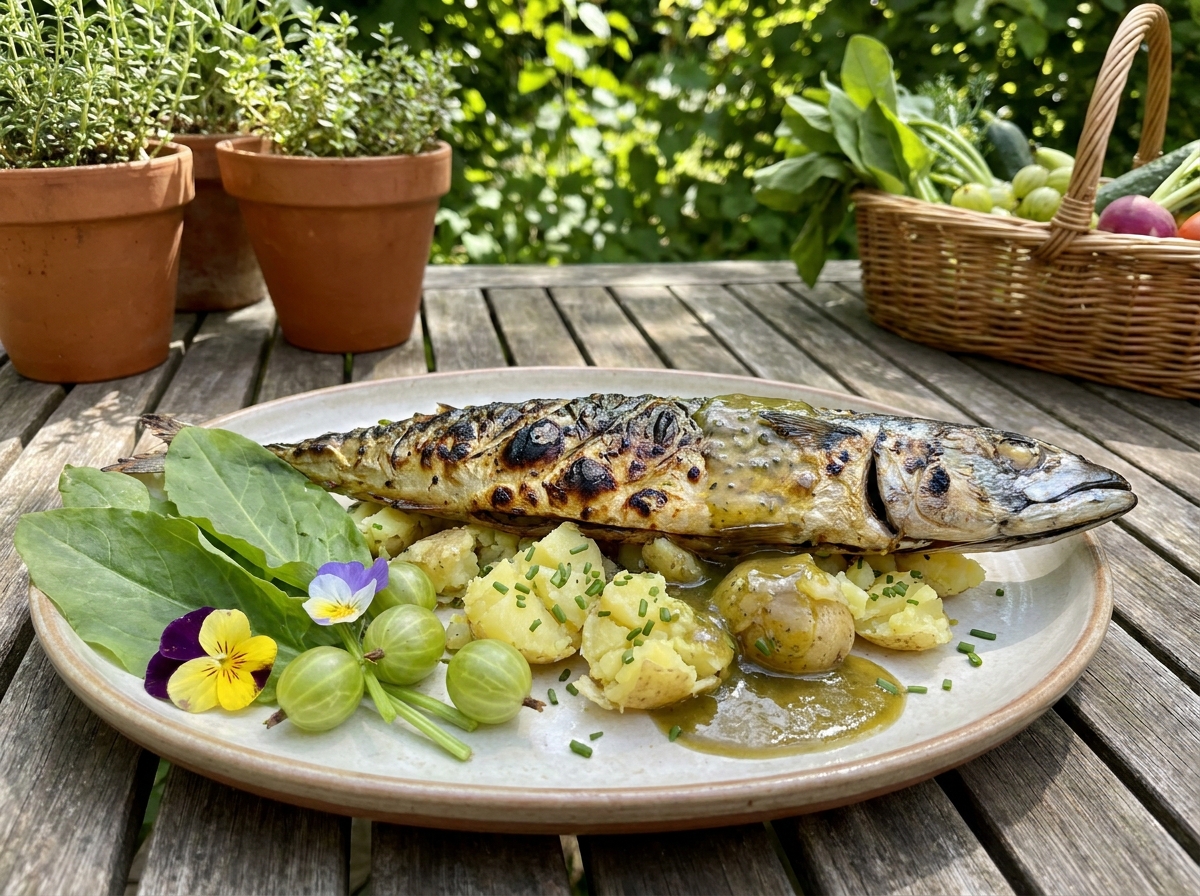
Grill or barbecue the mackerel over high heat, oiling the fish rather than the grill bars. Skin side down for 4–5 minutes: leave it alone until the skin blisters, browns in patches and the fish releases when you nudge it with tongs. If it grips, it is not ready. Turn once and give it 2–3 minutes more, until the flesh beside the backbone has turned opaque ivory and pulls away in flakes.
Crush the potatoes with the back of a fork — press just until each one cracks open into ragged pieces, never smooth. Those torn edges catch sauce that would slide off a mash. Fold through the remaining 2 tbsp olive oil, the chives, flaky salt and plenty of cracked pepper.
Shred the sorrel into ribbons and stir it into the warm sauce off the heat at the very last second, with a squeeze of lemon. It will wilt and dull to olive in about 20 seconds, which is fine — what you are protecting is its acidity, which fades if it sits over heat. Taste: the sauce should be one notch sharper than comfortable on a spoon.
Spoon the potatoes onto warm plates, lay the mackerel on top and pour the sauce over the skin and around, not underneath — the skin should stay crisp until the first cut.