Perilla frutescens: varieties, planting and garden uses
0
Few annual herbs earn their place in an ornamental border as easily as Perilla frutescens, whose quilted, frilled foliage ranges from deep burgundy-black to bright apple green. Widely known as shiso or beefsteak plant, it is grown as much for its scent — a heady mix of mint, cinnamon and cumin — as for its architectural, upright habit. Plant it once and you will likely find seedlings appearing the following spring, which is either a delight or a nuisance depending on your tolerance for volunteers.
Growing conditions
Perilla performs best in full sun, where purple cultivars develop their darkest, glossiest pigmentation. In deep shade the stems stretch, the leaves thin out and the colour fades towards muddy bronze. A little afternoon shade is welcome in hot continental or Mediterranean summers.
It asks for a moisture-retentive but freely draining soil enriched with garden compost or well-rotted manure. Slightly acid to neutral ground, around pH 5.5 to 6.8, suits it perfectly, though it tolerates chalk provided the soil does not bake dry. Waterlogged winter ground is irrelevant, since the plant will not survive the season anyway.
Treat it strictly as a summer annual in temperate gardens: growth stalls below 12 °C and the first light frost blackens it overnight. In cooler maritime climates, such as much of Britain and Ireland, a sheltered wall or a polytunnel noticeably improves leaf size and yield.
How to plant Perilla
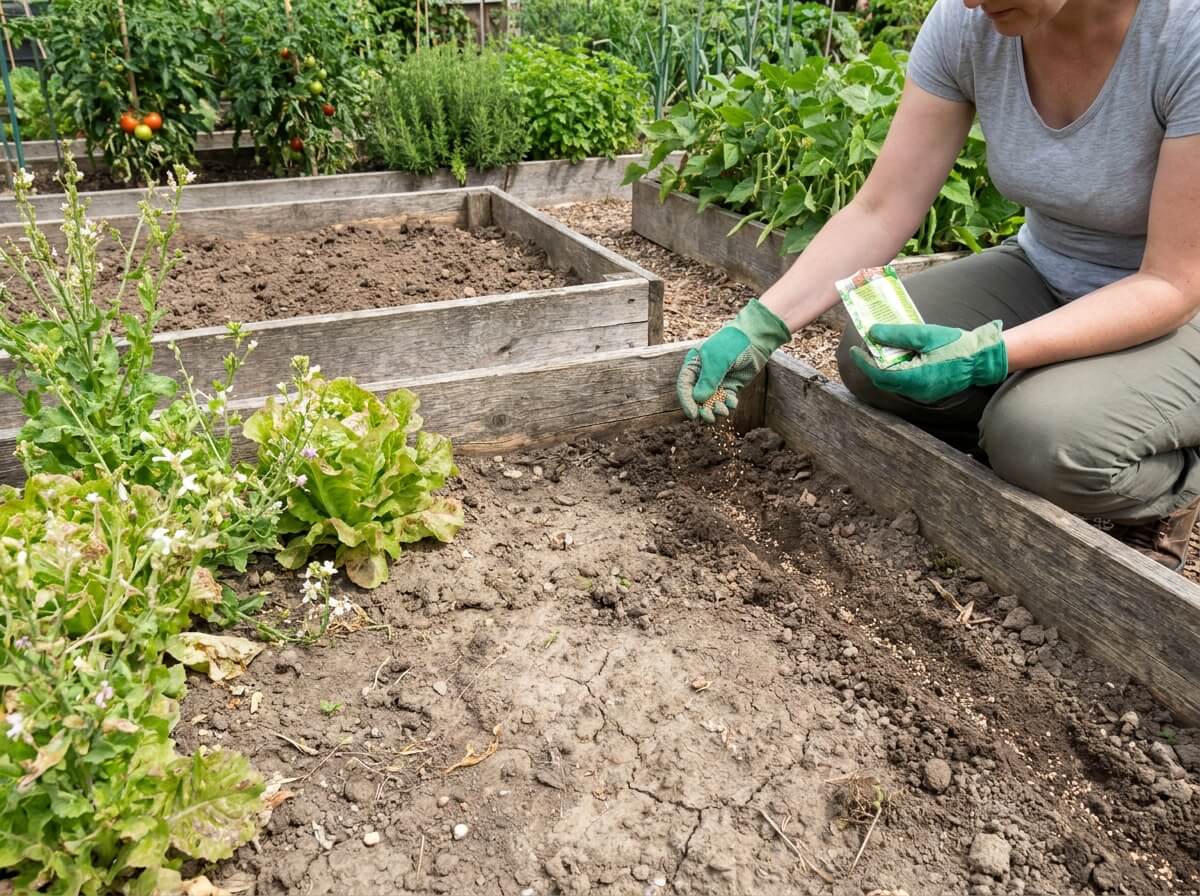
Sow indoors in early to mid-spring and plant out only once the last frost has passed and soil temperatures exceed 15 °C. Rushing tender young plants into cold May soil leads to stunted, sulky specimens that never quite recover.
Space plants 30–45 cm apart; crowded perilla traps humid air around the lower leaves and invites downy mildew.
Set the rootball so the crown sits flush with the soil surface — buried stems rot readily in cool, wet conditions.
Fork in a bucketful of compost per square metre before planting; perilla is a hungry leafy crop and rewards fertility with larger foliage.
Water in thoroughly and keep the root zone evenly moist for the first fortnight while roots establish.
Seed needs light to germinate, so press it onto the compost surface without covering. Softwood cuttings root in a jar of water within seven to ten days in summer.
Perilla frutescens growing in a naturalistic garden border
Care through the seasons
Spring: Sow under cover six to eight weeks before your last expected frost, at 20–22 °C. Pot on seedlings once they have two true leaves and harden off gradually over ten days. Pinch the growing tip at around 15 cm to encourage a bushy, multi-stemmed plant rather than a single leggy spire.
Summer: Water generously in dry spells — perilla wilts dramatically but usually recovers if rescued promptly. Feed fortnightly with a balanced liquid feed or diluted comfrey to keep new leaves coming. Keep pinching out the shoot tips every few weeks; this delays flowering and doubles the usable harvest.
Autumn: As days shorten, this short-day plant bolts into flower spikes and leaf quality declines sharply. Either harvest the final leaves and compost the plant, or leave a single specimen to set seed for next season. Collect ripe seed in October and store it cool, as viability drops quickly after twelve months.
Winter: Perilla dies with the first frost and no protection is worthwhile. Remove and compost spent plants, and hoe off unwanted self-sown seedlings the following spring.
Best varieties to grow
Choose between the ornamental, frilled Japanese forms and the broad-leaved Korean types grown chiefly for eating.
Perilla frutescens var. crispa ‘Aka Shiso’ — deep purple-red, crinkled leaves with the classic sharp, cinnamon-tinged flavour used for pickling.
Perilla frutescens var. crispa ‘Ao Shiso’ — bright green, softly ruffled leaves with a milder taste, the form served with sashimi.
Perilla frutescens ‘Britton’ — striking bicolour foliage, green above and burgundy beneath, with a lemony scent; superb as a foliage filler in containers.
Perilla frutescens var. frutescens ‘Kkaennip’ (Korean perilla) — very large, flat, toothed green leaves used as wraps; the tallest and most vigorous type.
Pests, diseases and common problems
Slugs and snails: Young transplants can be stripped in a night. Plant out at a decent size, use wool pellets or copper rings, and patrol after warm, damp evenings.
Downy mildew: Yellow angular blotches between the veins with grey-purple fuzz beneath, worst in humid, crowded plantings. Space plants widely, water at soil level in the morning and remove affected leaves immediately.
Aphids and red spider mite: Sticky, distorted shoot tips or fine stippling and webbing in hot, dry spells. Blast with water, mist regularly under glass and encourage ladybirds and hoverflies with nearby flowering herbs.
🌿 Nature & Garden Newsletter
Gardening tips, recipes & seasonal advice, twice a week.