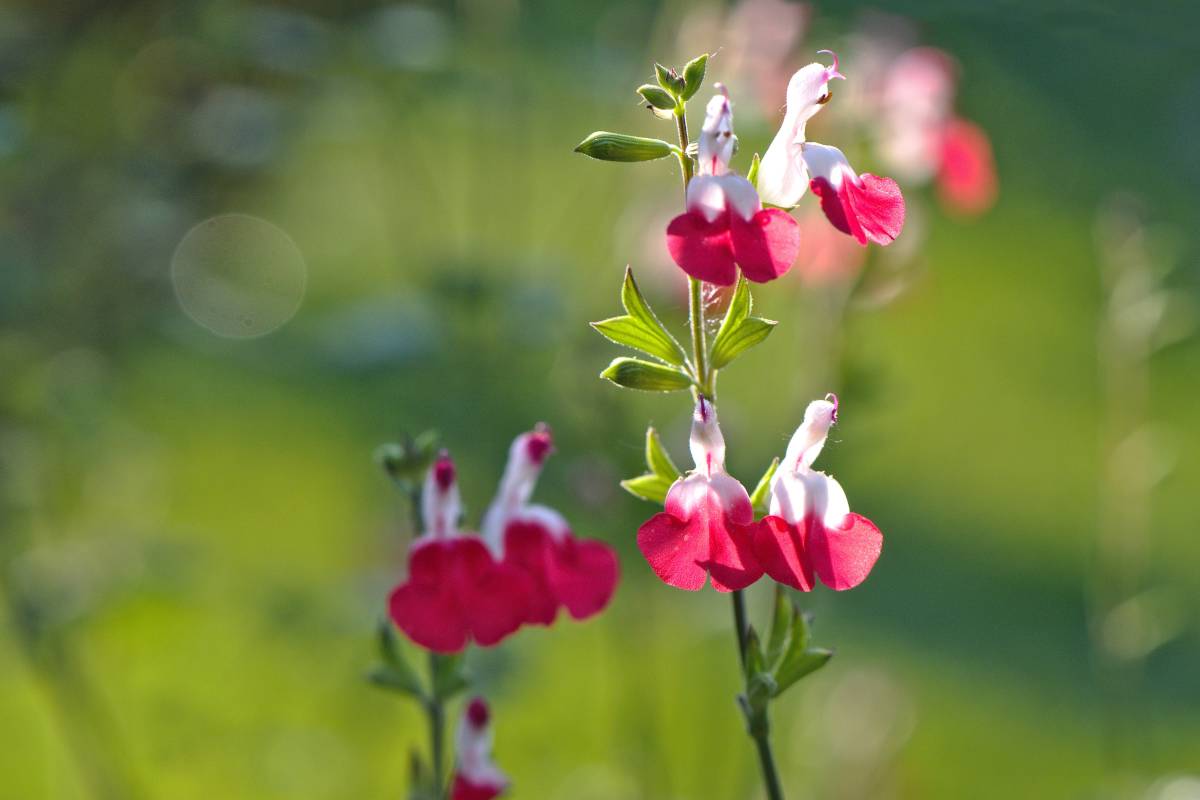
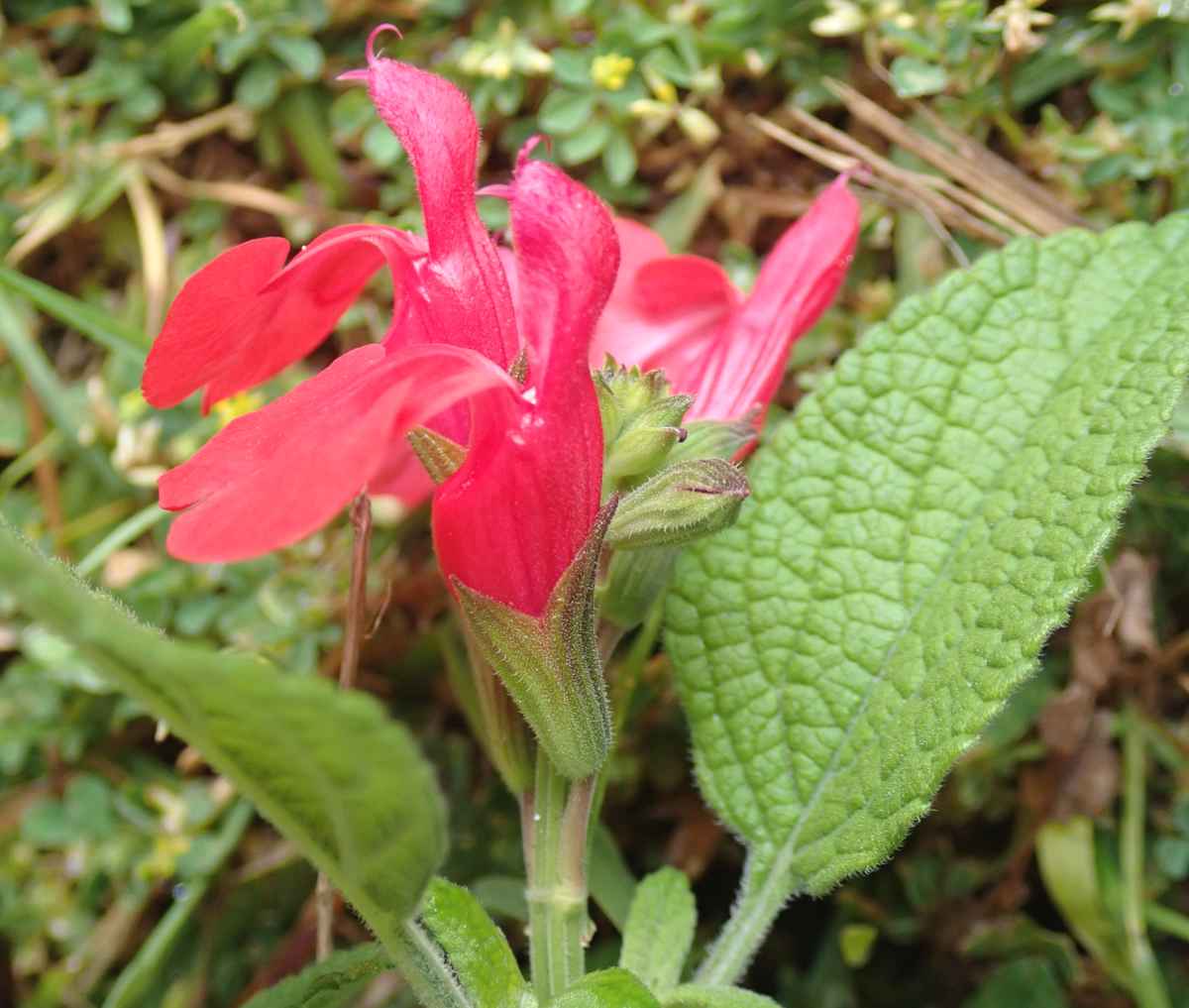
Crush a leaf of Graham’s sage (Salvia microphylla) and it smells of blackcurrant; above, pink or carmine red flowers open on a shrub of 24 to 40 inches, enough to form a low flowered hedge. Give it full sun and light, well-drained soil — winter wet kills more of these sages than winter cold — and it will bloom for years.
| Name | Salvia microphylla or grahamii |
|---|---|
| Family | Lamiaceae |
| Type | perennial |
| Height | 24 to 40 inches (60 to 100 cm) |
| Exposure | full sun |
| Soil | light, well-drained |
| Flowering | mid-spring to mid-autumn |
Pink or carmine red flowers make the Graham’s sage a cute ornamental plant.
Planting of Graham’s sage can indifferently take place either in spring or fall for specimens purchased in pots or containers.
Graham’s sage can be spread via cuttings at the end of summer on semi-hardened wood or via layering in spring or fall.
If sowing from seed, sow Graham’s sage during the month of March under a cold frame.
Graham’s sage tolerates the sun well and will survive long bouts with no rain, but will be most beautiful if watered regularly.
If growing Graham’s sage in pots, don’t wait for the soil to be completely dry before watering again; simply water often but in moderate amounts.
Winter wet kills more Graham’s sage than winter cold.
Keep a newly planted specimen watered until it has clearly put on fresh growth, after which it can cope on rainfall alone in open ground.
Once settled in, this shrub sage asks for very little, but each of the four jobs below falls at its own moment. Here is what to do and when, so that the blooming keeps improving year after year.
| Season | What to do | What it gives you |
|---|---|---|
| Late winter | Prune, cutting back really short | Vigour, a reshaped plant and better blooming |
| Early spring | A small handful of flower shrub fertiliser granules at the foot, shuffled into the ground | One year’s feeding, and significantly more flowers |
| Midsummer | Water evening or morning, in moderate amounts | Green leaves and continuous blooming if the plant grows sparse |
| Late autumn | Tip a thick mound of mulch around the base | Protection from the cold over winter |
Nothing here takes more than a few minutes, and together they explain why a well-placed plant blooms repeatedly for years.
Graham’s sage, if properly settled in, only requires reduced care and will bloom repeatedly for years. Here are the few good practices that will enhance the blooming in the long run.
Proper pruning at the end of winter will give the plant some vigor, reshape it and enhance the blooming of the Graham’s sage.
Adding flower shrub fertilizer granules will significantly increase the blooming.
If you feel your Graham’s sage is growing sparse or stops blooming, water evening or morning every day, in moderate amounts.
Prepare your Graham’s sage for winter by tipping a thick mound of mulch around its base to protect from the cold.
Grahamii sage is one of the most ornamental and flower-bearing shrub sages.
Unlike other sage varieties like medicinal sage, it isn’t edible.
It grows in the wild in the South in the United States (Arizona), as well as in Central America, more specifically Mexico.
Its name microphylla comes from Greek and means “little leaves”. Its leaves, incidentally, smell delicious when they are crumpled.
Note also that Graham’s sage is one of the most hardy sage varieties, since it resists freezing down to 5°F (-15°C).
Crush a leaf and you will smell blackcurrant, which is why the plant is also sold as blackcurrant sage.
In mild gardens it stays leafy all winter, while a hard freeze may cut it to the ground, so wait for new shoots at the base before assuming it is dead.
Graham’s sage is perfect to set up a low flowered hedge. Additionally, plant a few in your vegetable patch, since it repels cabbage white.