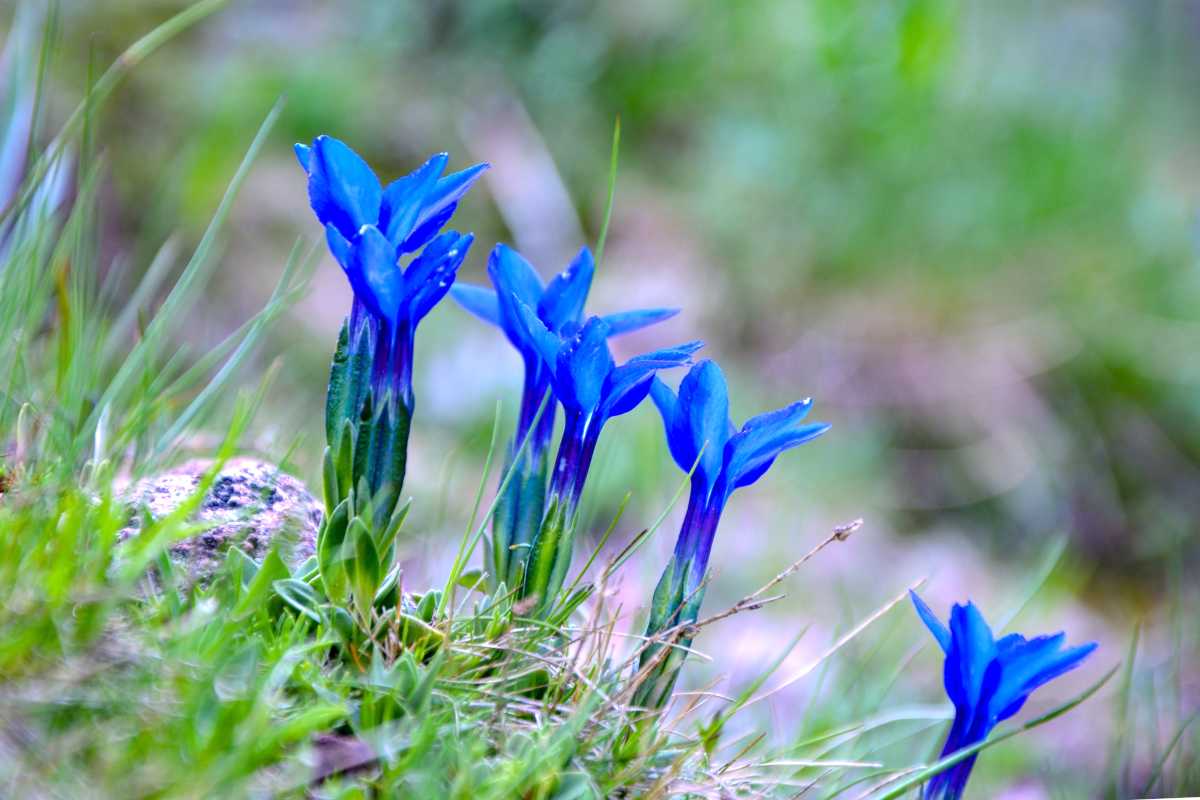
Gentiana is a superb flower with incomparable blue or yellow hues.
Often admired in the wild, it is now available for sale for the greatest joy of our gardens and terraces.
| Name | Gentiana |
|---|---|
| Family | Gentianaceae |
| Type | perennial or annual |
| Height | 4 to 20 inches (10 to 50 cm) depending on the variety |
| Exposure | full sun, part sun or shade |
| Soil | ordinary |
| Flowering | May to September |
Best plant the nursery pots in spring with a density of 5 to 10 specimens to a square yard (1 m²).
To sow annual gentiana from seed, perform the sowing at the beginning of spring, in March or April, and it will bloom from June to September.

Gentiana is a flower that requires only reduced attention, and the care it needs is summed up in the few following practices.
Eliminate wilted flowers as soon as they wilt, so that the plant won’t waste energy and instead will dedicate itself to growing new trumpet-shaped flowers.
As regards watering, only a few liters of water are enough in case of prolonged dry spells or sweltering heat waves.
Gentiana loves sun but appreciates light shade if it is in a location where the sun is scorching in summer.
Gentiana in winter
In fall, you may cut the stems and withered leaves back short.
Protecting the foot of the plant with a nice layer of dried leaves will allow your gentiana to overwinter without any issues and it will bloom back in the following spring.
Gentiana asks for very little, but the little it asks falls at set moments of the year. Here is the whole cycle, from planting to winter protection.
| Season | What to do | Why it matters |
|---|---|---|
| Spring | Plant nursery pots, 5 to 10 specimens per square yard (1 m²) | The recommended density for beds and edges |
| March to April | Sow annual gentiana from seed | Flowering follows from June to September |
| Flowering season | Remove wilted flowers as soon as they fade | The plant stops wasting energy and makes new trumpet-shaped flowers |
| Hot, dry summer weeks | Give only a few litres of water | Enough for prolonged dry spells or sweltering heat waves |
| Fall | Cut the stems and withered leaves back short | Clears the clump before the cold sets in |
| Winter | Cover the foot of the plant with a layer of dried leaves | It overwinters without issues and blooms back in spring |
No fertiliser is needed at any point in this cycle.
Gentiana is a herbaceous perennial or annual native to Asia, with solitary flowers that are a deep, rare and magnificent blue. Several species belong to the Gentianaceae family.
It is mostly distributed in its native mountain regions but it now has come down to flower our beds, edges, rocky terrain and garden boxes.
Species and varieties of gentiana
Gentiana acaulis – Blue flowers.
Gentiana asclepiadea – Blue flowers.
Gentiana lutea – Yellow flowers.
Gentiana sino-ornata – Striped blue flowers.
Gentiana nivalis – Yellow flowers.
Gentiana pneumonanthe – Marsh gentiana, large blue flowers.
The growing and caring for this plant requires no fertilizer whatsoever.