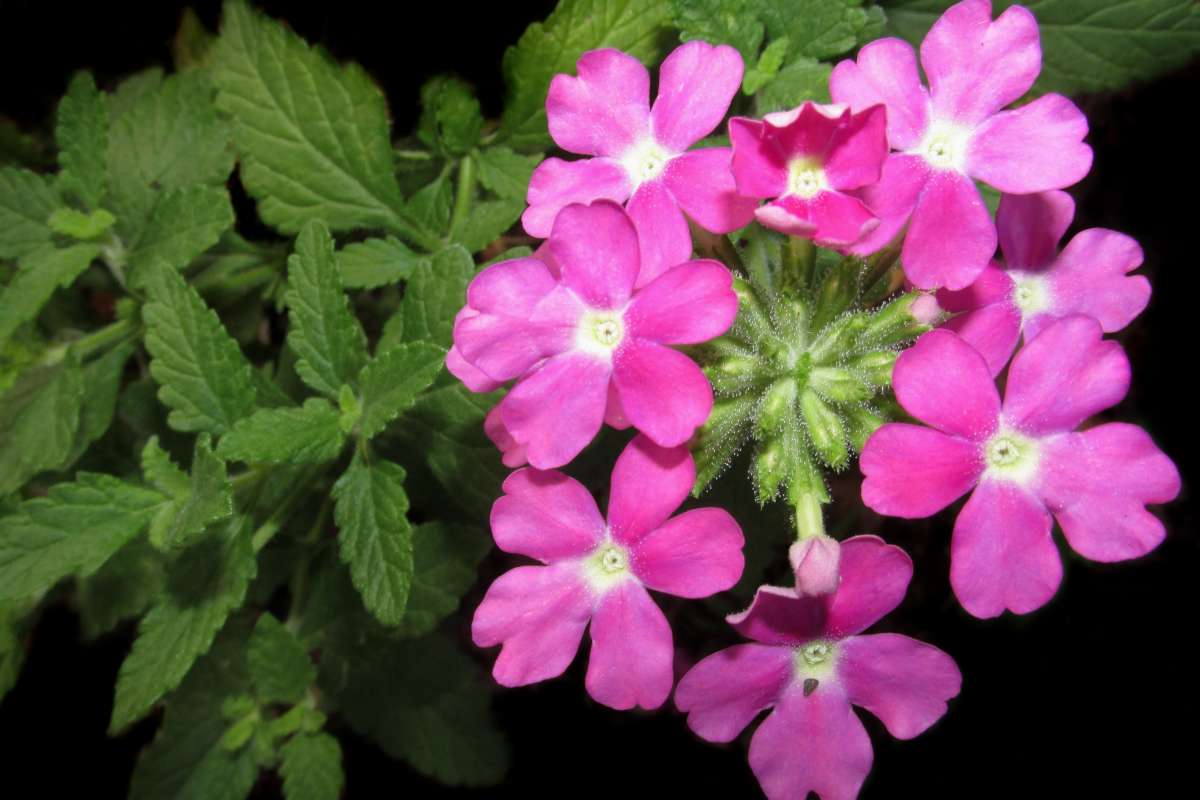
Flowers in shades from pinkish white to violet, touched with blue and red: garden verbena (Verbena x hybrida) earns its place along edges, in flower beds and in garden boxes or hanging pot arrangements. Give it full sun and light, well-drained soil, keep removing the faded blooms, and it simply carries on flowering.
| Name | Verbena x hybrida |
|---|---|
| Family | Verbenaceae |
| Type | Perennial or annual |
| Height | 12 to 40 inches (30 to 100 cm) |
| Exposure | Full sun |
| Soil | Light, well-drained |
| Flowering | From early summer to early autumn |
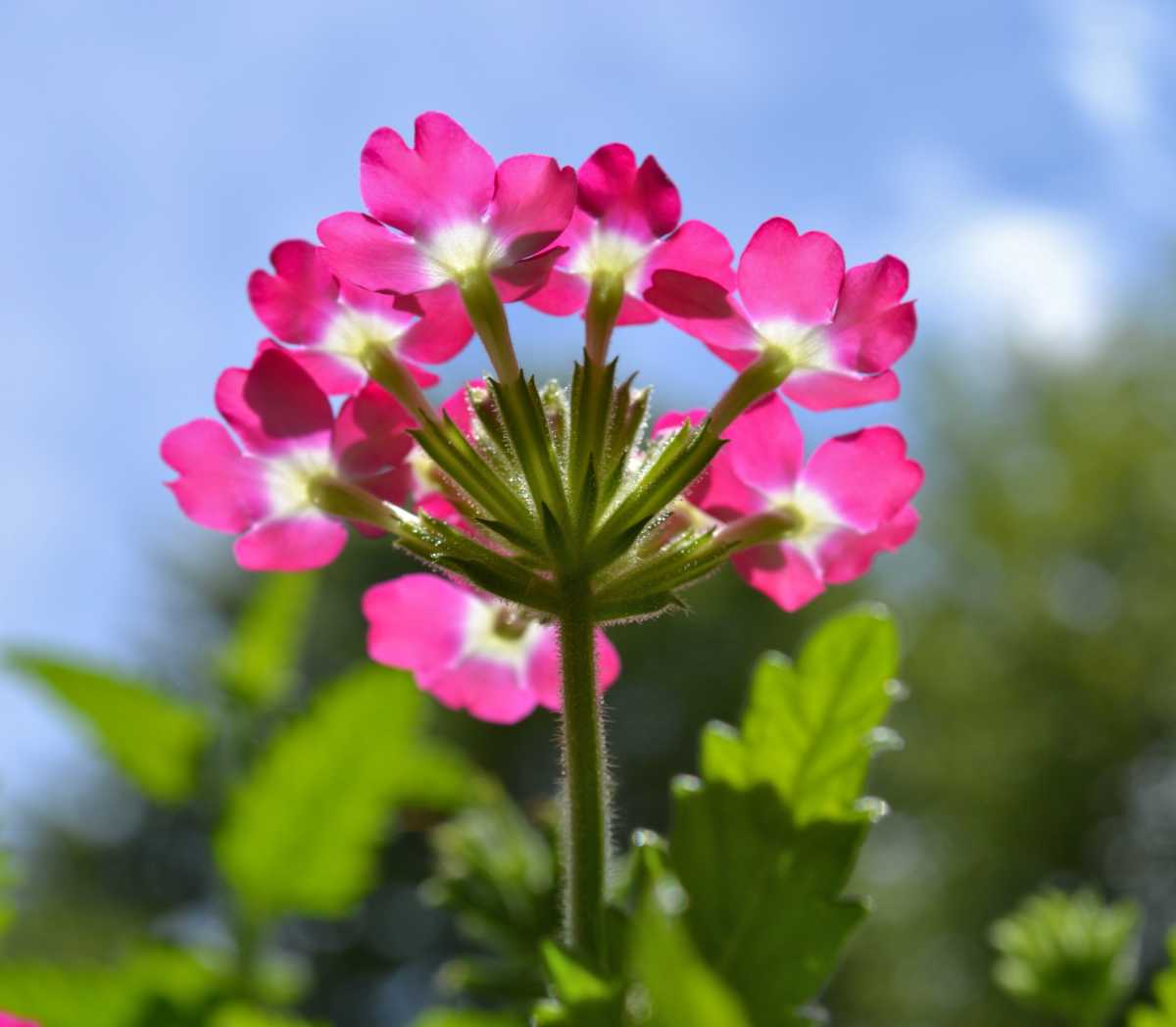
From planting and care and from spring to winter, follow our gardening tips to increase blooming.
Plant your garden verbena preferably in fall, but you can also plant it until spring as long as it doesn’t freeze.
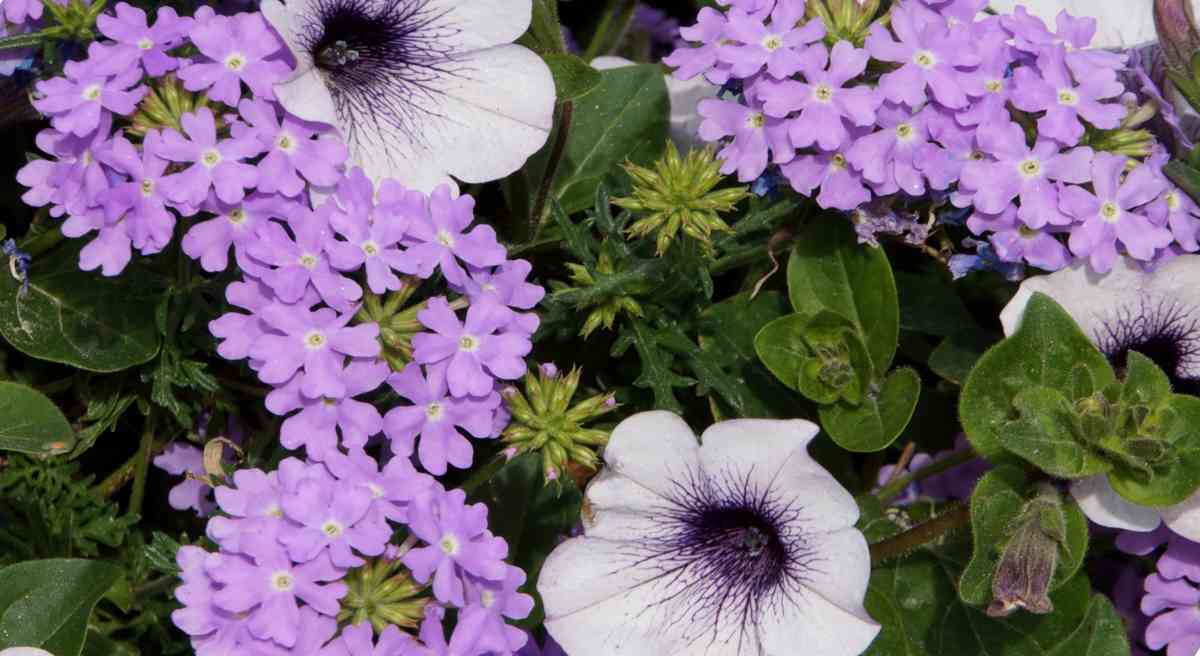
You can start your covered sowing early in early spring and mid-spring or directly in the ground starting from late spring.
Garden verbena can be planted as a young plant or raised from seed, under cover or straight into the ground. Here is how the season breaks down, stage by stage.
| Stage | When | Conditions | What to do |
|---|---|---|---|
| Planting young plants | Preferably autumn, and until spring | Frost-free spell | Blend the soil with compost or special flower plant soil mix |
| Sowing under cover | early spring and mid-spring | Minimum 60°F (15°C) | Broadcast seeds and cover with a shallow layer of seedling soil mix |
| Sowing in the ground | From late spring | Open ground, once mild | Sow directly where the plants are to grow |
| Thinning | As soon as the first leaves appear | Seedling tray or bed | Thin to 1¼ to 1½ inches (3 to 4 cm) |
| Potting on | At 4 or 5 leaves | Under shelter | Transplant the seedlings to a nursery pot |
| Planting out | Towards late spring | Last frosts past | Transplant to the ground |
Whichever route you take, the aim is the same: strong plants in place for a flowering season that runs from early summer to early autumn.
Verbena x hybrida, although it’s a perennial, is grown as an annual.
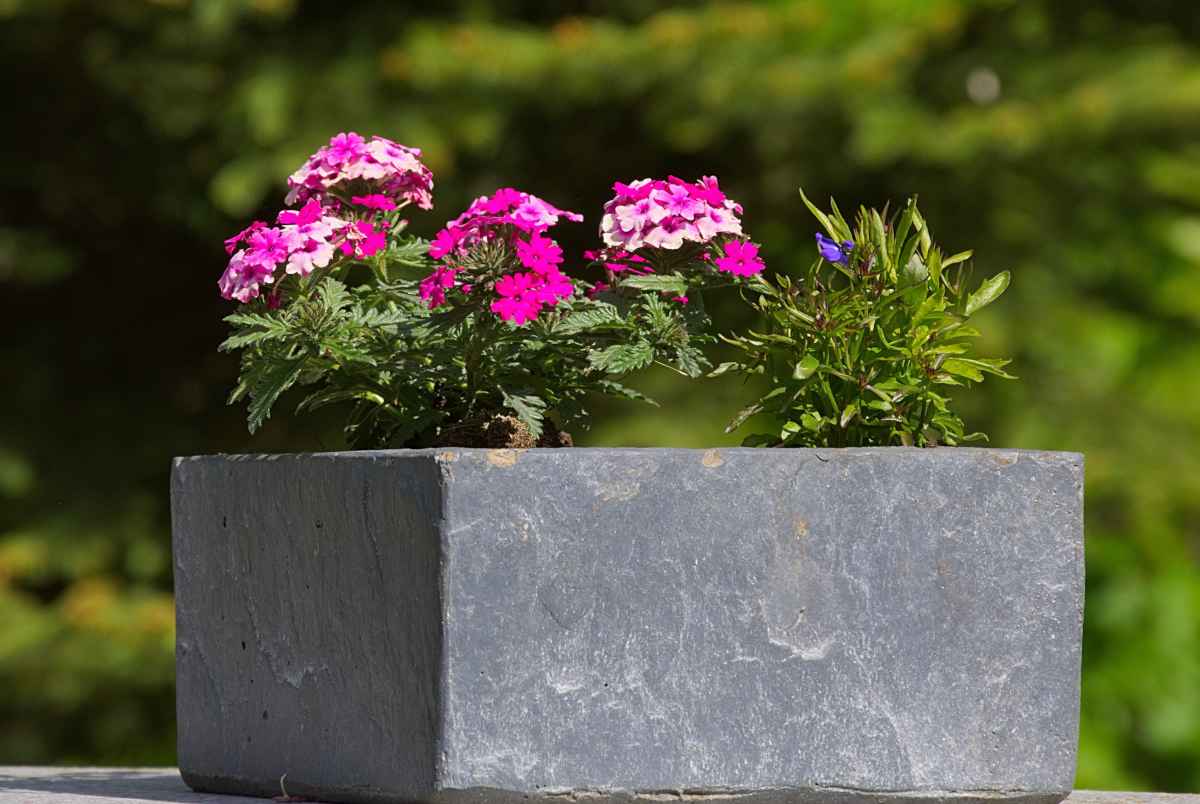
Vervain is a plant that requires rather little care but some attention must be given in order to extend the blooming for a while.
After the first fall frost spells, you can pull your garden vervain out; the following year’s blooming will be insignificant.
Since it is vulnerable to aphid attacks, read up on how to treat against aphids if need be.
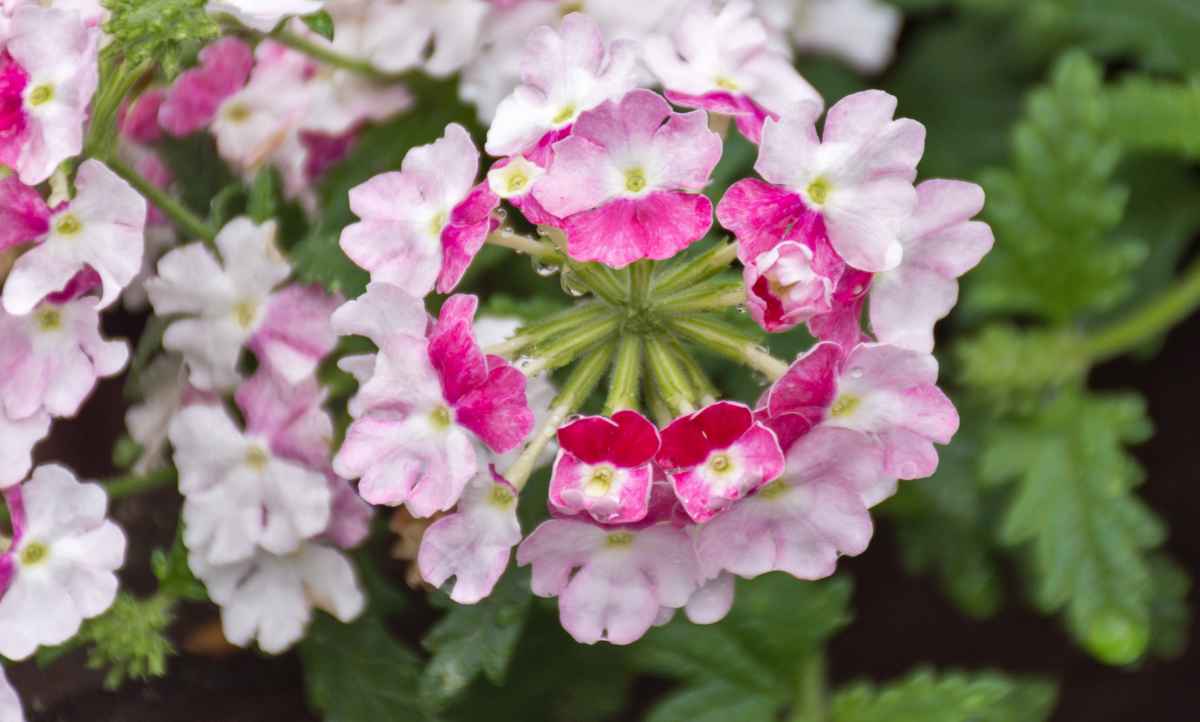
This perennial plant which is grown as an annual counts many different varieties (over 200).
These plants are mostly ornamental and aren’t used for infusions, even though they’re all edible. Usually, medicinal or lemon verbena are used for infusions or herbal tea.
Lemon verbena (Aloysia triphylla, Aloysia citriodora) is the species most used by herbal tea manufacturers.
Garden verbena bears flowers that range from pinkish white to violet, with touches of blue and red depending on the variety.
You can plant them along edges, in flower beds and they’ll also look great in garden boxes or hanging pot arrangements.
Plant some near your vegetable patch since it repels caterpillar-causing white butterflies.