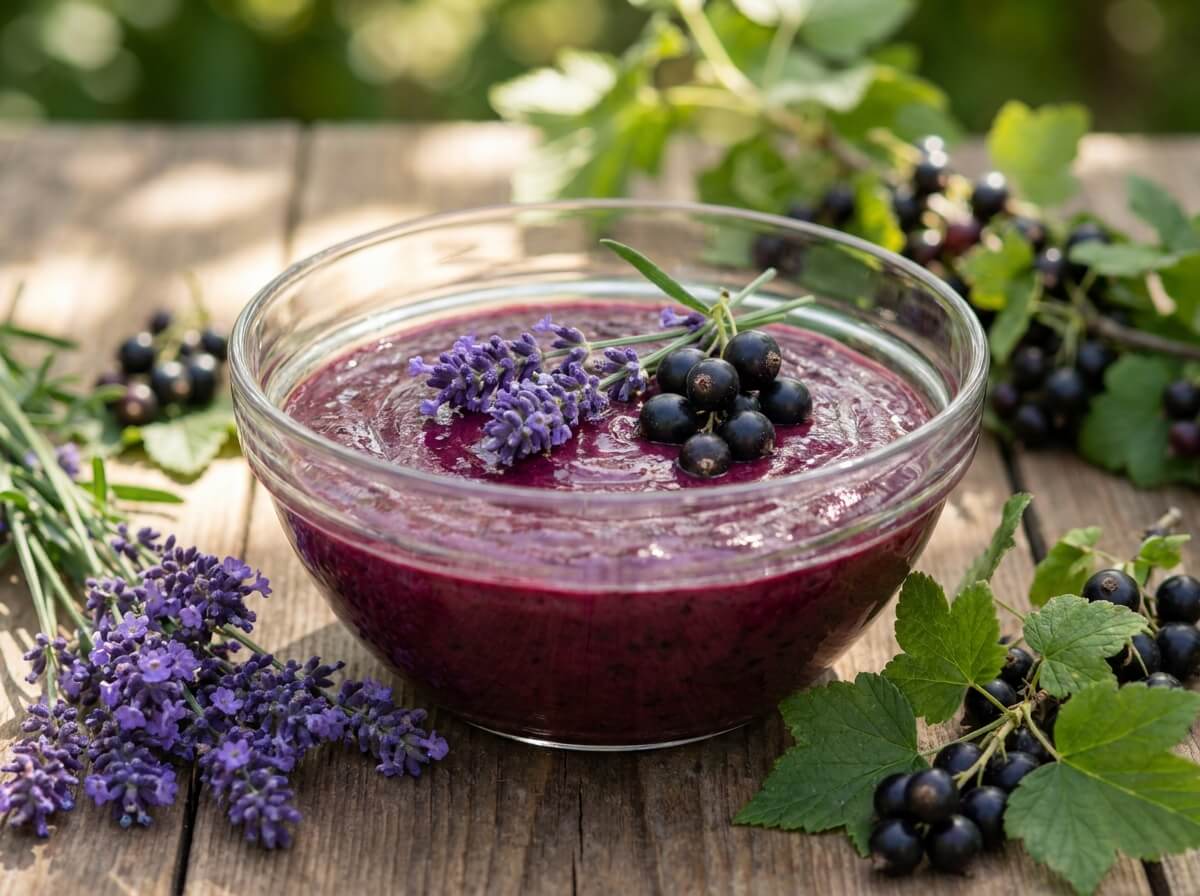
Right now, your blackcurrant bush is jewelled with deep purple fruit and the lavender is at full, humming bloom. These two plants peak together for barely two weeks.
This fool — barely 20 minutes of work, no oven, no fuss — is the most beautiful, most effortlessly seasonal thing you can make with them. The colour alone stops people mid-conversation.
The pairing sounds ambitious. It is not.
Blackcurrants carry an almost resinous tartness, sharp enough to cut through thick cream without any help. Lavender brings a floral lift that softens the fruit’s intensity without sweetening it artificially.
Together they land somewhere between a kitchen garden and a parfumerie — in the best possible way.
The science backs the instinct. Both contain linalool, a fragrant compound that makes them chemically complementary, not competing. According to the RHS, blackcurrants ripen fully between late June and August — exactly when English lavender (*Lavandula angustifolia*) is at its most aromatic peak. And this is not a coincidence you should ignore.
One caution. Use culinary lavender only — *Lavandula angustifolia* varieties like ‘Hidcote’ or ‘Vera’. Lavandin (*Lavandula × intermedia*), grown widely for oil production, tastes of camphor and will ruin the dessert. If you are harvesting your own, pick flower spikes just as the lowest blooms begin to open — that is when the oils are most delicate and least bitter. And if you want to know exactly when to cut for optimal flavour, Harvest Your Herbs Before Summer Heat Steals Their Flavour tells you precisely what to look for.
The quantities below serve 4. Scale up freely — the fool keeps refrigerated for 24 hours, which is actually better than fresh because the flavours deepen overnight.
Tip the blackcurrants and caster sugar into a small saucepan. Cook over medium heat for 7-8 minutes, stirring occasionally, until the fruit has fully collapsed and the liquid is thick and glossy. Pull off heat. Add the lavender flower heads immediately and let them steep in the hot fruit for exactly 8 minutes — no longer. Pull them out, press gently through a sieve to pull off skins and seeds, and leave the purée to cool completely. The thing is, it will be almost black. That colour is everything.
Whip the double cream with the icing sugar to soft, billowing peaks. Not stiff — soft.
Stiff cream will not ripple, it will just sit there looking sulky.
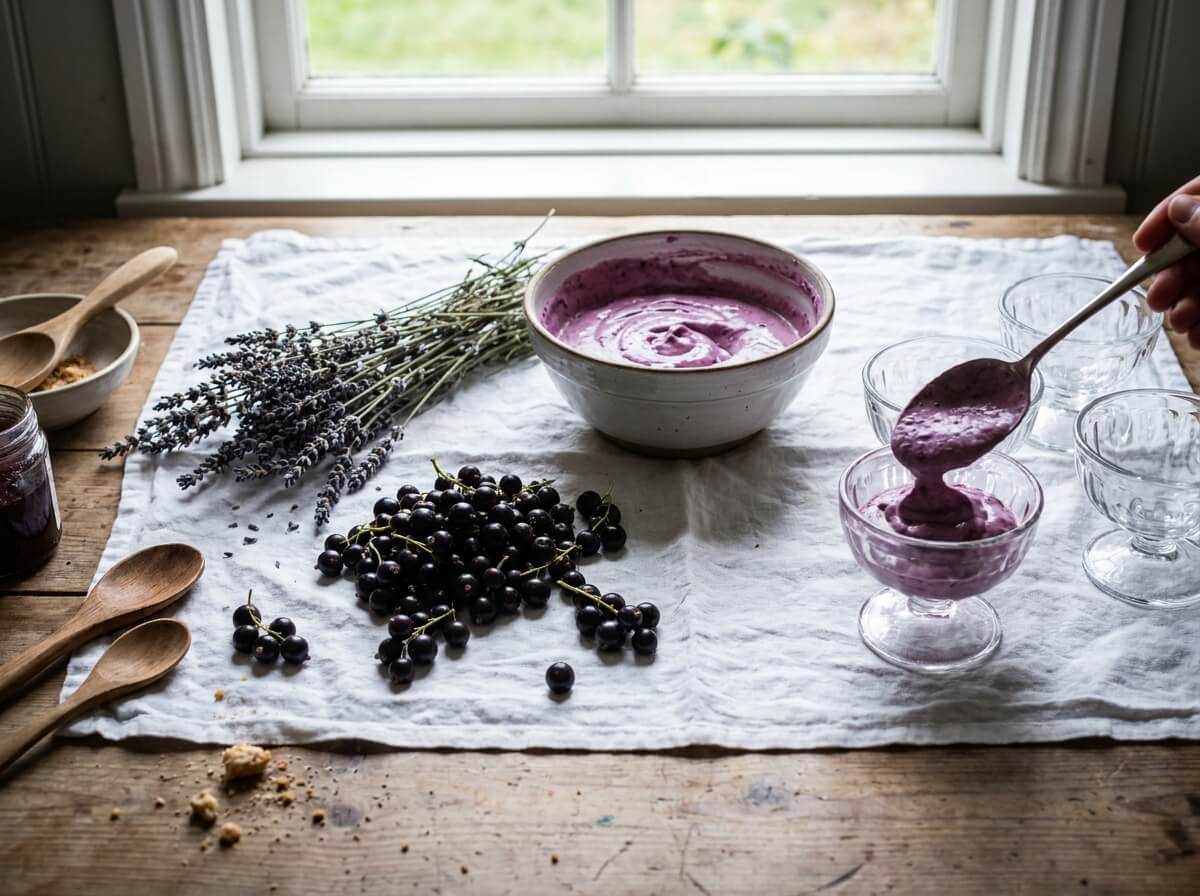
Drop spoonfuls of the cold purée into the cream. Fold three or four times only.
Stop before it is fully combined. The streaks of deep violet through pale cream are the point.
Spoon into glasses and refrigerate for at least 30 minutes before serving.
Garnish with a single fresh lavender sprig and a few raw blackcurrants. That is it.
Done.
Lavender is aggressive. Three flower heads is the upper limit for this quantity of cream — four if your lavender is freshly picked and mild.
Go beyond that and the dessert starts tasting like soap, then like a drawer liner, then like something that is not quite right.
The purée needs to be genuinely cold before it meets the cream. Warm purée deflates whipped cream in seconds.
Give it at least 20 minutes in the fridge after straining. Yes, it is fiddly. Worth it.
If your blackcurrants are properly tart (common in UK gardens after a cool, wet summer), add an extra teaspoon of sugar to the purée rather than adding more lavender to balance it. More lavender will not fix sourness.
More sugar will.
For a lighter version, fold in 150ml of plain Greek yogurt with the cream — it cuts the richness and imparts a beautiful sharpness that interplays directly against the floral notes. The Gooseberry and Elderflower Breakfast Compote Yogurt Bowl uses a similar instinct for pairing garden fruit with yogurt.
Serve with thin shortbread fingers, which shatter against the cream, bang on. A handful of toasted flaked almonds on top imparts a warm nuttiness that lifts the whole thing.
Cold prosecco alongside is non-negotiable.
The fool also works beautifully layered in a trifle dish with crushed meringue. Fold in the meringue pieces just before serving so they stay slightly chewy rather than dissolving entirely. So for a garden party spread, consider making individual portions in small jam jars the morning before. They look spectacular arranged on a board with fresh lavender laid between them, everything sorted.
Southern Hemisphere gardeners: this recipe applies perfectly to your December-January season when summer blackcurrants and lavender coincide for you.
Smart tip: Cool the blackcurrant purée completely before folding — warm purée collapses whipped cream instantly and ruins the texture.
Yes — frozen blackcurrants work well and are available year-round. Thaw them fully first, drain off excess liquid, then cook the same way.
The colour and flavour are almost identical to fresh.
Dried culinary lavender from a supermarket or deli works perfectly — use ½ teaspoon and steep it in the hot purée for the same 8 minutes. Avoid lavender labelled only as “decorative” or sourced from a florist, as it may be treated with pesticides.
Completely — in fact the fool is better after 12-24 hours in the fridge, as the lavender flavour infuses more gently through the cream. Cover tightly with cling film (plastic wrap) to prevent the cream absorbing fridge odours.
Single cream (light cream) will not whip — use double cream (heavy cream, at least 35% fat) or whipping cream for structure. Without that body, the fool will be a loose, pretty soup rather than a proper dessert.