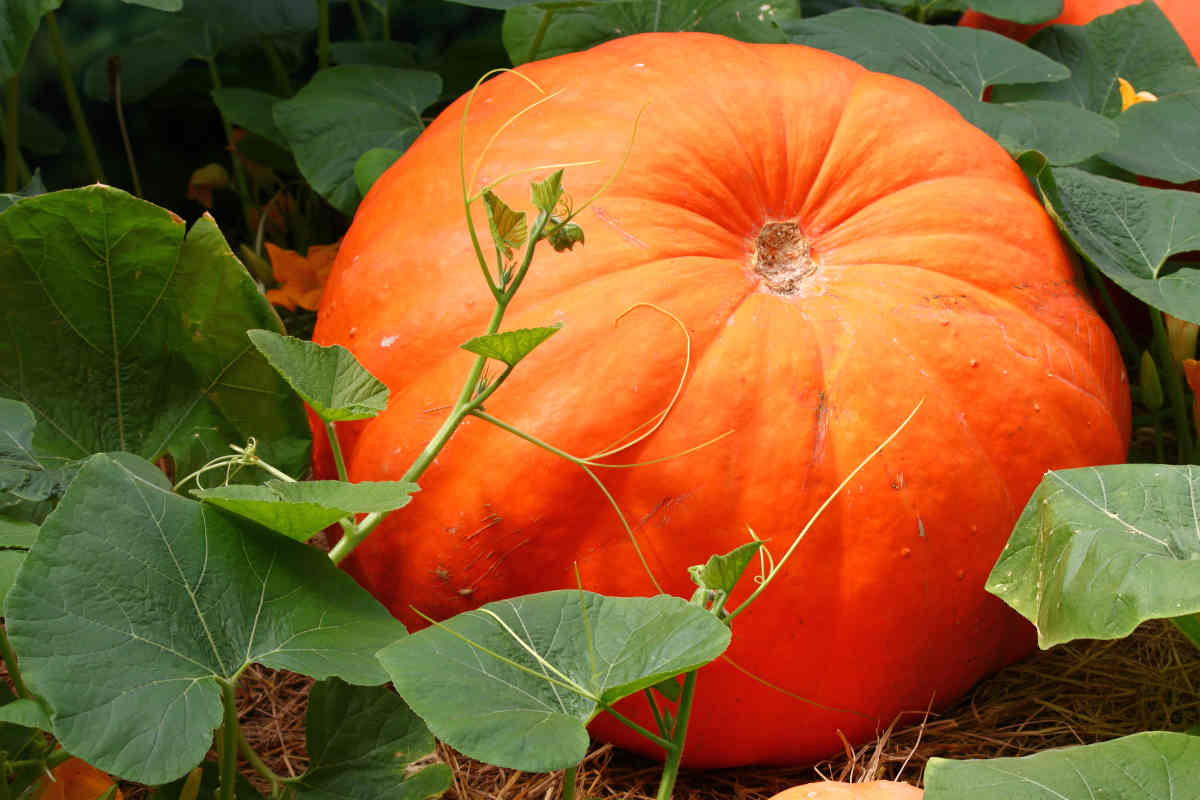
Round, bright orange and filled with fibrous flesh, the pumpkin (Cucurbita pepo) is a North American native grown for fruit that carries vitamins A, B and C and keeps for months over winter. It needs hot weather, full sun and rich, well-drained soil: the better the drainage, the more abundant the harvest.
| Name | Cucurbita pepo |
|---|---|
| Family | Cucurbitaceae |
| Type | vegetable, annual |
| Height | 8 to 20 inches (20 to 50 cm) |
| Exposure | full sun |
| Soil | rich and well drained |
| Harvest | Fall |
From sowing to harvest, each step is important and will help you to get nice pumpkins.
March is the right time to start sowing in a sheltered place followed by transplanting in May, or you can also go for direct sowing starting from the month of May.
When transplanting the seedlings or sowing the seeds directly, provide for 3 feet (1 meter) growing space on all sides to give the pumpkins enough room.
You can pinch off stems after the 3rd or 4th leaf to stimulate plant growth.
To avoid keeping the pumpkins in close contact with the soil which could lead it to rot, it is better to add a layer of mulch or plastic between the fruit and the ground.
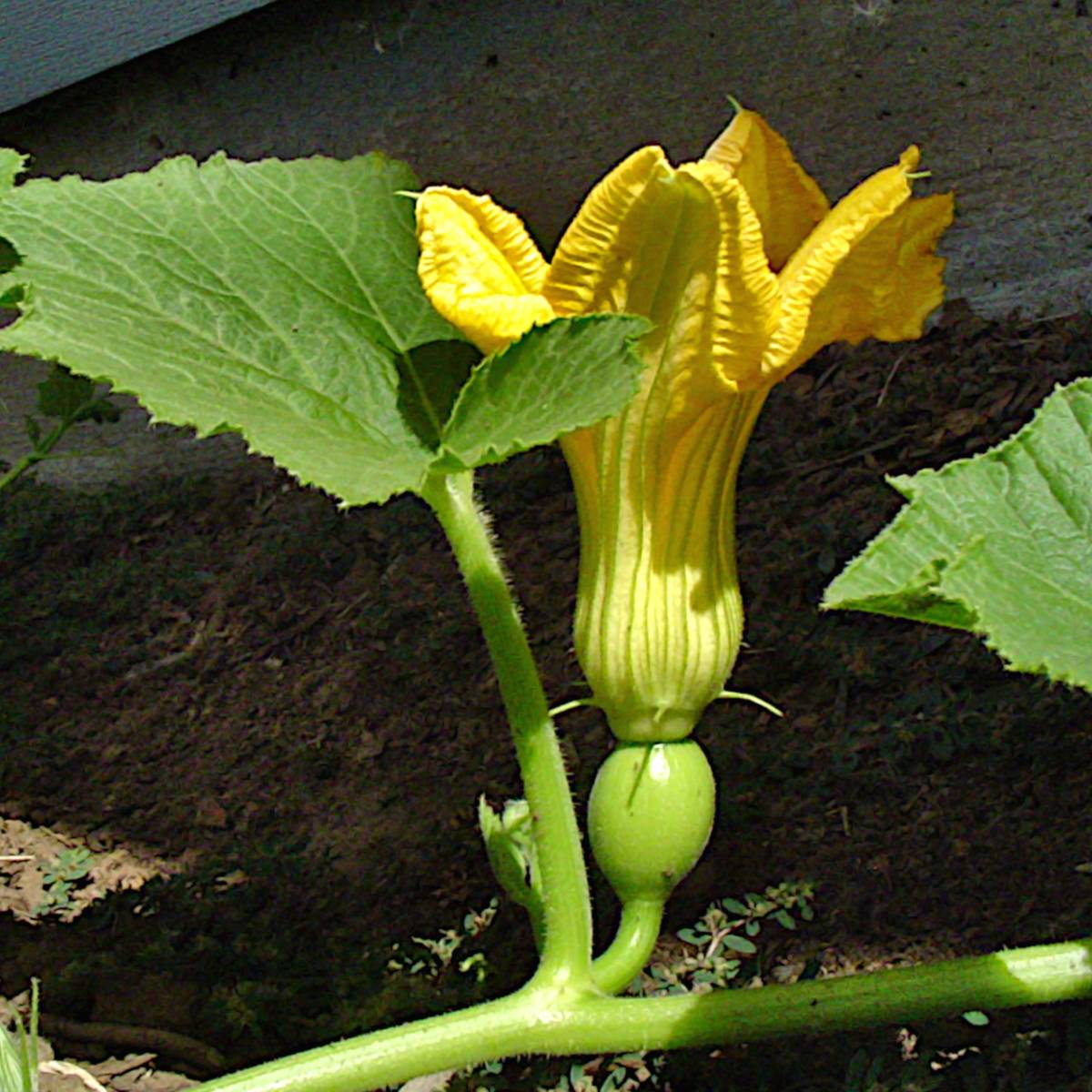
If small female flowers, recognisable by the tiny fruit behind the petals, shrivel without setting, dab pollen from a male flower onto them with a soft brush early in the morning.
A pumpkin crop runs to a fairly predictable schedule. Counting the stages back from the first frost tells you when to sow and when to expect fruit.
| Stage | When | What it involves |
|---|---|---|
| Sowing | March under cover, transplanted in May, or direct sowing from May | Sow in a sheltered place, then move plants out once frost risk has passed |
| Spacing the plants | At sowing or transplanting | Allow 3 feet (1 metre) of growing space on all sides |
| Flowering | About 60 days after sowing | Blooms appear; pinch off stems after the 3rd or 4th leaf for a better harvest |
| Fruit swelling | A further 80 days | Keep fruit off the soil with mulch or plastic so it does not rot |
| Harvest | Around 140 days, or 5 months after sowing | Cut once the leaves dry up, and always before the first frost |
Work backwards from your first expected frost and the whole season falls into place.
Not all pumpkins suit the same purpose: some are bred for carving, others for sweet, dense flesh in the kitchen. Here are widely available Cucurbita pepo varieties and what each does best.
| Variety | Fruit size band | Skin colour | Best use |
|---|---|---|---|
| Baby Bear | Small | Orange, slim handle | Pies, hulless seeds |
| Small Sugar (New England Pie) | Small | Orange | Pies, soups, purée |
| Jack Be Little | Mini, palm-sized | Deep orange, ribbed | Table decoration, stuffing |
| Wee-B-Little | Mini | Bright orange | Decoration, compact plots |
| Jack O’Lantern | Medium | Uniform orange | Carving |
| Connecticut Field | Large | Orange, slightly flattened | Carving, livestock, storage |
| Howden | Large | Orange, strongly ribbed | Carving, display |
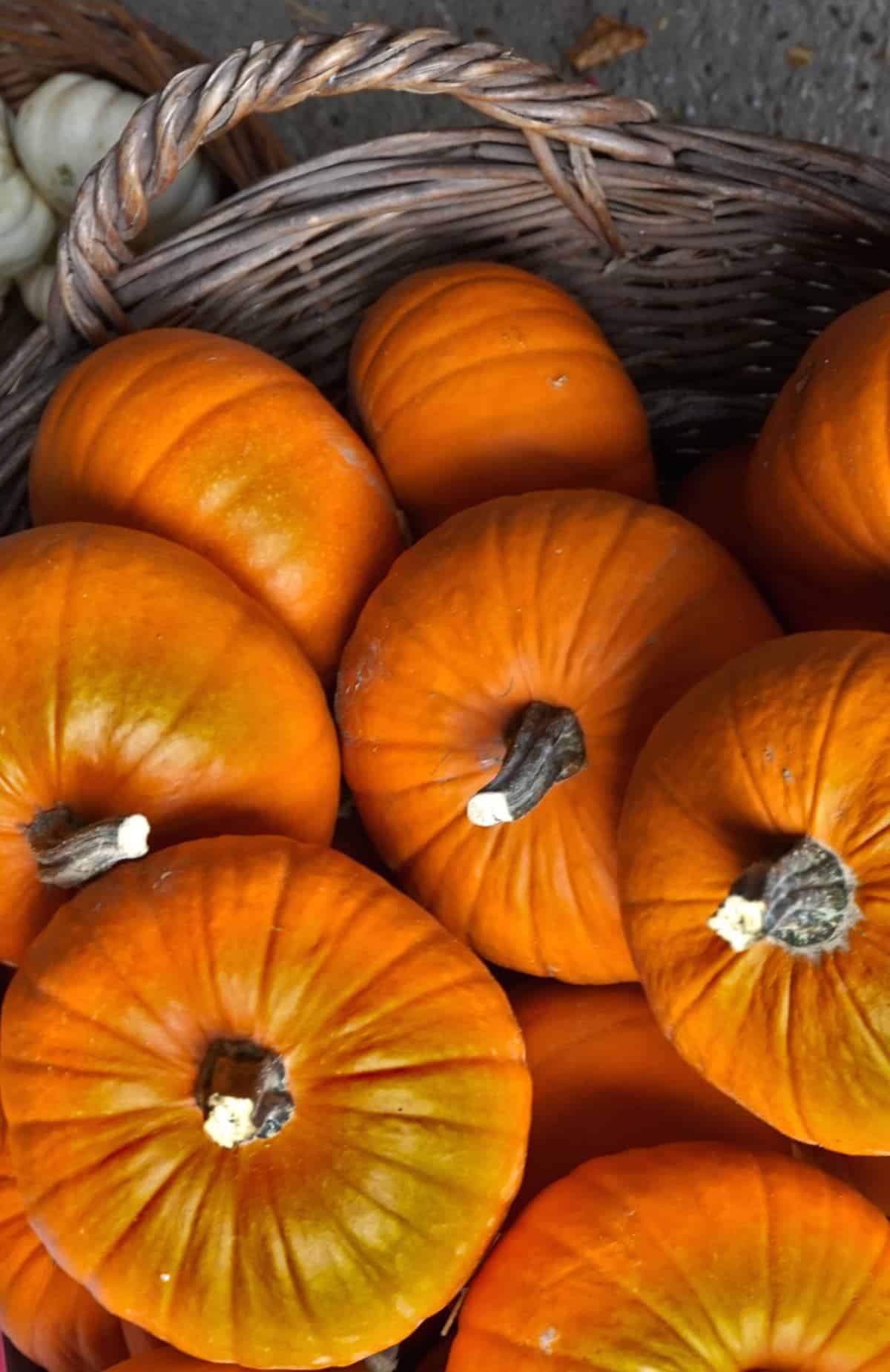
Harvest the pumpkins as soon as leaves dry up.
Most important is to harvest them before the first frost.
Generally, around 60 days are needed for flowers to appear, and then a further 80 days for the pumpkin itself to grow.
Pumpkins are harvested in fall and keep for several months when protected from moisture in a rather cool spot.
Native to North America, pumpkins are part of the same family as gourds or red kuri squash and come in a wide choice of shapes, colors and sizes.
Misleadingly, you might hear the word “pumpkin” when talking about other squash that look similar to true pumpkins.
Pumpkins are round and bright orange and their flesh is quite fibrous. Squash is flatter and colors range from orange to green.
With high levels of vitamin A, B, and C, these fruits also have the advantage of keeping for a long time over winter, ideally at temperatures of about 50 / 55°F (10 / 12°C).
Pumpkins normally weigh in at around 10 pounds (5 kg), but some specimens have been weighed at over several hundred pounds. The largest one in the world weighed in at 2632 lbs (1190 kg), in 2016 in Belgium, breaking the world record!
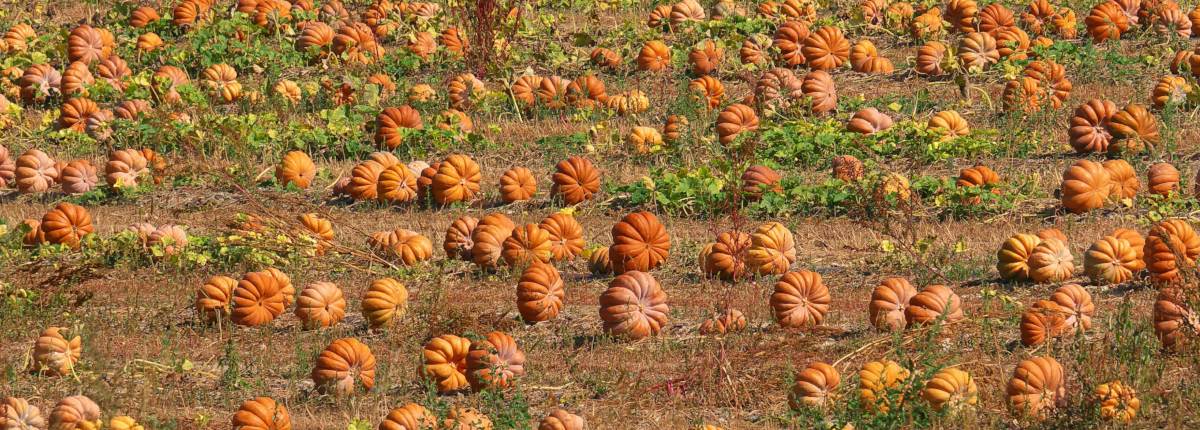
Take care not to let too many fruits develop on a single plant (at most 5 or 6), or you might reduce the quality of the entire harvest overall.
Read also: