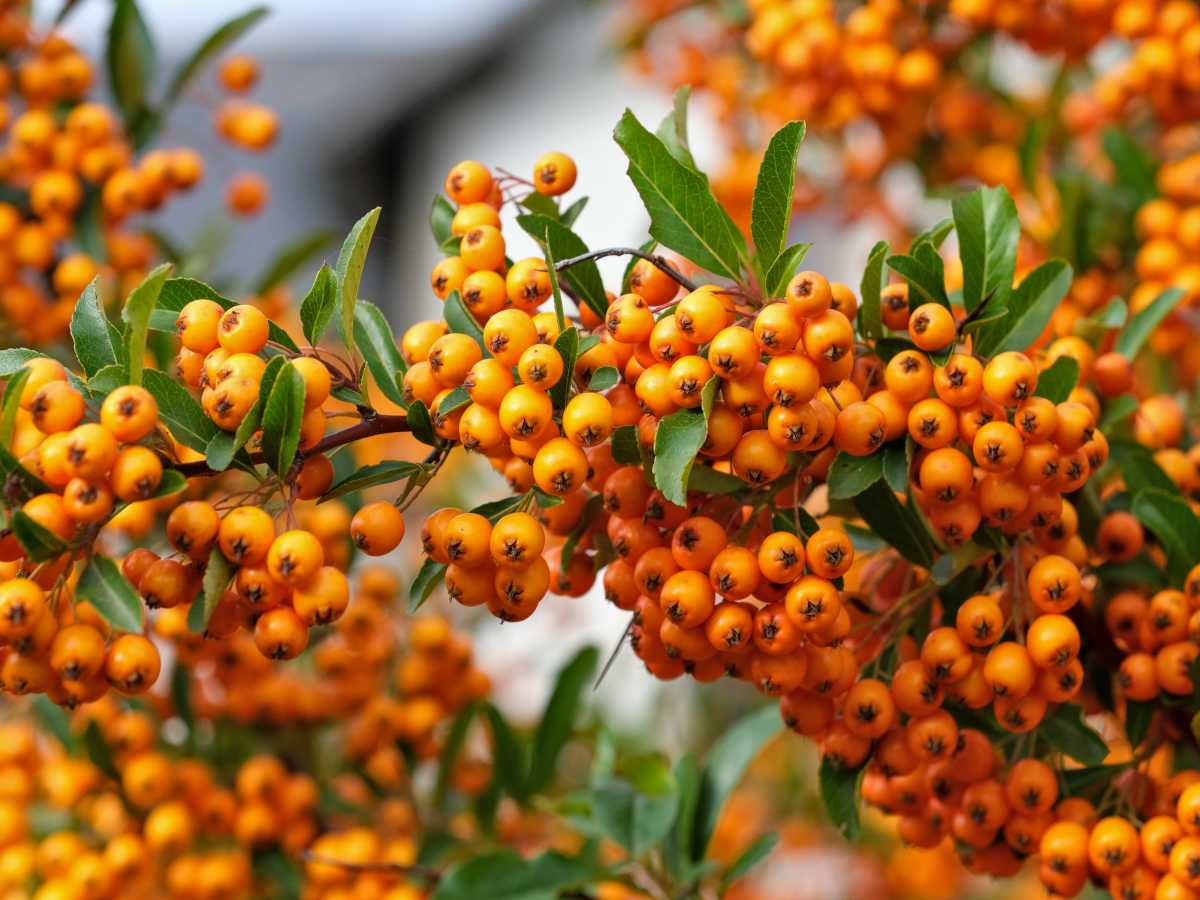
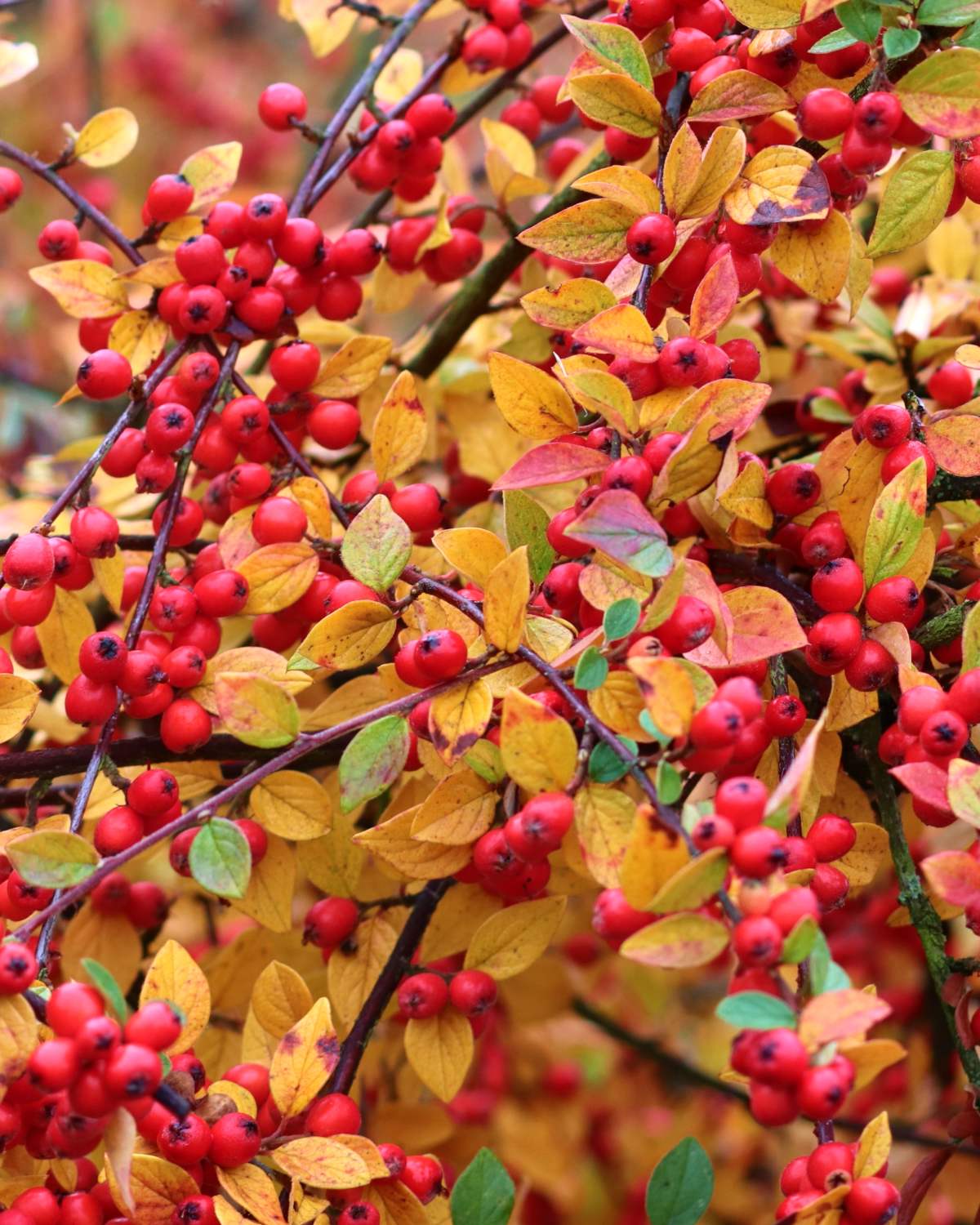
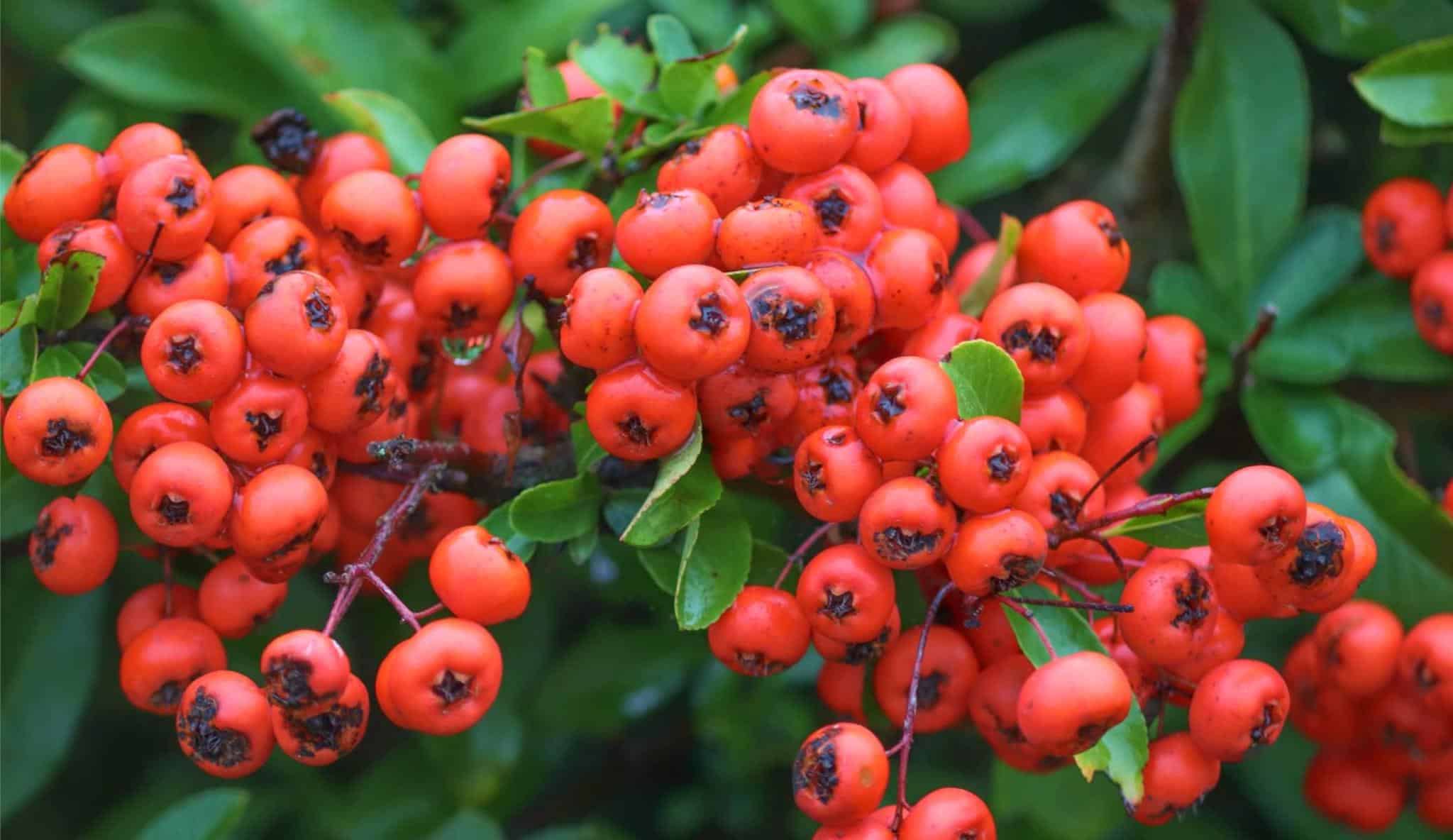
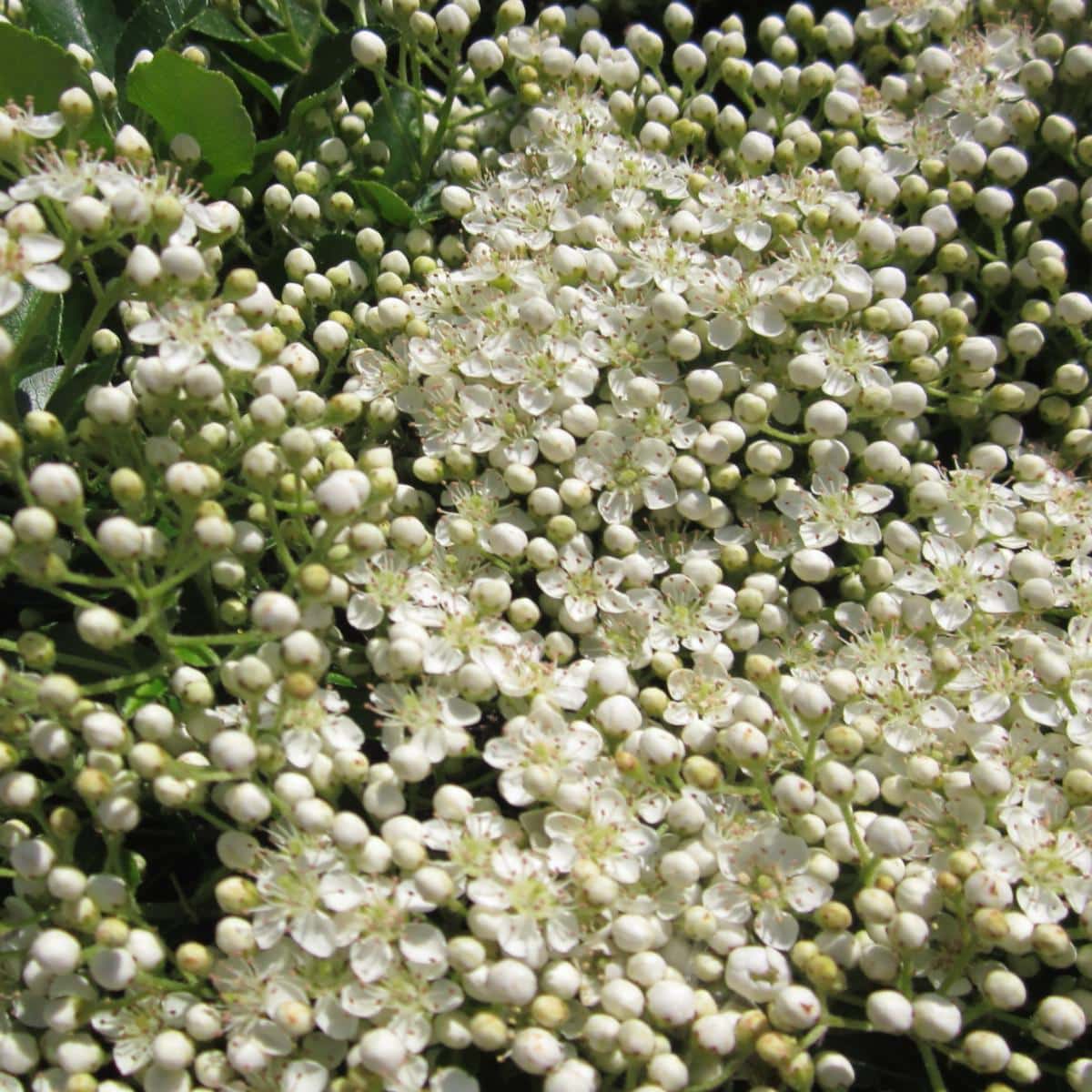
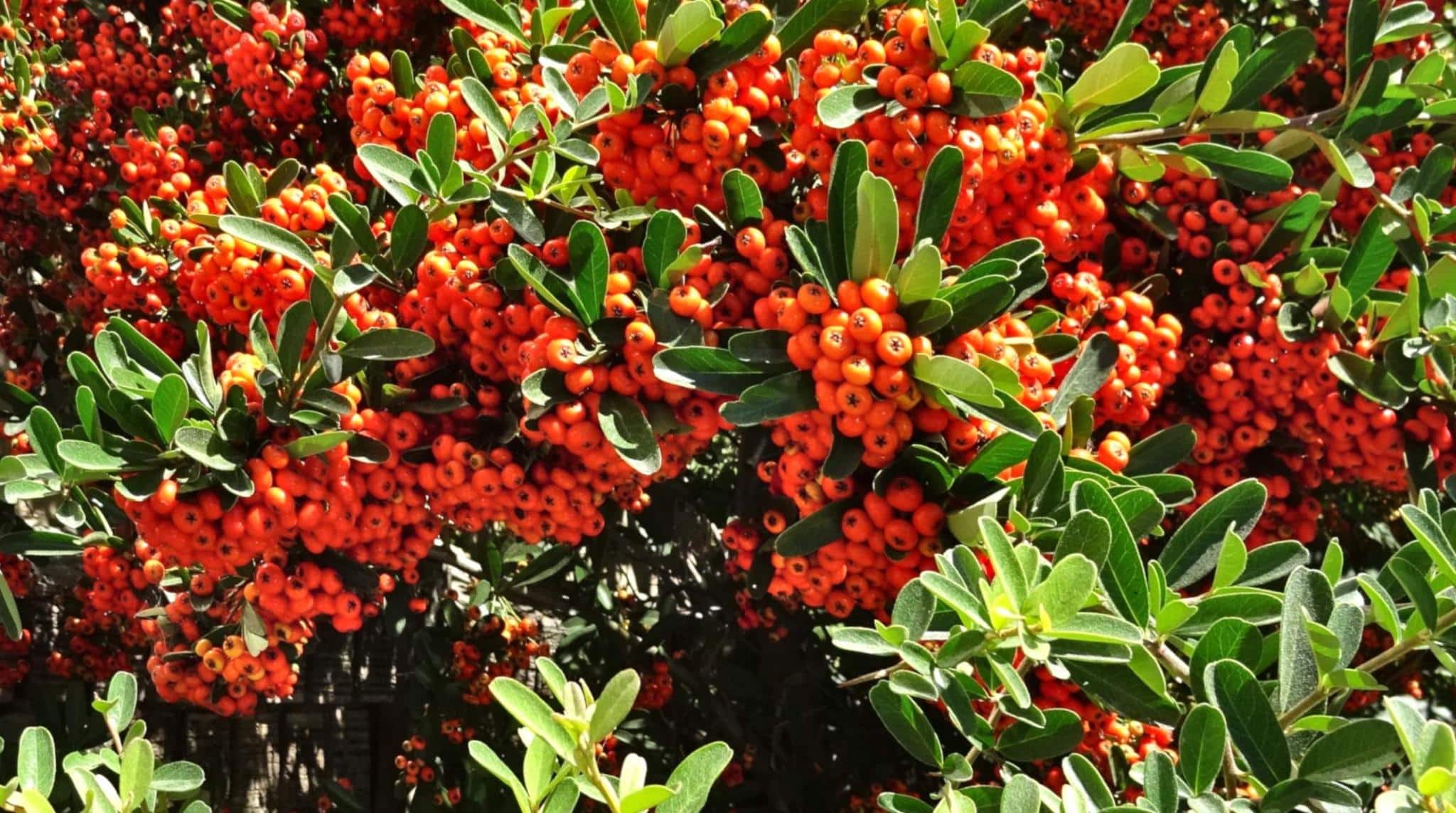
Low-key white flowers open in late spring, followed by little ornamental red or orange-yellow berries held above deep dark green evergreen leaves. Thorny and fast-growing, firethorn (Pyracantha) makes an excellent hedge; give it well drained soil in sun or part shade and it will ask for almost nothing in return.
Firethorn at a glance
Name
Pyracantha
Family
Rosaceae
Type
Shrub
Height
6 to 13 feet (2 to 4 meters)
Exposure
Full sun, part sun
Soil
Ordinary
Foliage
Evergreen
Flowering
End of spring, early summer
Planting Firethorn
It’s all the same whether firethorn is planted in spring or fall, even though planting in late autumn is best.
Any ordinary soil suits it, if well drained
Firethorn is not demanding as for soil type, but will develop best in well drained soil.
Firethorn does well in sun-filled or partly shaded locations.
Upon planting, mix garden soil with planting soil mix.
Water regularly over the 1st year after planting.
To set up a hedge with firethorn, space each plant 3 feet (1 meter) from the next.
Making cuttings in summer is the easiest and fastest option for propagating Pyracantha.
Semi-hardened summer cuttings root easily and fast
Collect your 6-inch (15 cm) cuttings at the end of summer on semi-hardened wood.
Remove lower leaves, leaving only the topmost ones.
It is possible to dip the cuttings in powdered rooting agents.
Plant the cutting in special cutting soil mix.
Put the cuttings near light, but not in direct sunlight, and keep the substrate a little moist.
Before winter comes, store your cuttings in a luminous, cool room that doesn’t freeze.
Pruning and caring for firethorn
Very hardy to the cold and freezing, resilient after sweltering heat, firethorn is a shrub that only needs little care, especially after it has properly settled in.
Prune moderately, in fall or early spring
Firethorn, or Pyracantha, can be pruned in fall and/or at the beginning of spring, moderately.
Prune lightly after the blooming to trigger branching out, which will make your Pyracantha more dense.
Severe pruning might weaken your Pyracantha, especially against fire blight.
If for some reason you must drastically prune your Pyracantha, best do it at the end of winter.
Important: Pyracantha blooms on stems grown during the previous year. This means that severe pruning will result in one year with very few blooms (and berries).
Which pruning, and when?
Firethorn takes pruning well, but the timing decides whether you keep next year’s berries. Here is what each type of cut does to the shrub.
Which pruning, and when?
Type of pruning
When
Effect on the shrub
Light pruning
Just after the blooming
Triggers branching out and makes the shrub denser
Moderate pruning
Fall and/or beginning of spring
Routine shaping, the usual way to keep it in bounds
Drastic pruning
End of winter
May weaken the shrub against fire blight, and costs a year of blooms and berries
Remember that Pyracantha blooms on stems grown the previous year, so every hard cut is paid for in berries.
Choosing a firethorn cultivar
Most garden centres carry only a handful of firethorns, but they differ a good deal in berry colour, final size and, above all, in how well they shrug off fire blight. Use the table below to match a cultivar to the job you have in mind.
Choosing a firethorn cultivar
Variety
Berry colour
Best use
Fire blight resistance
‘Orange Glow’
Orange-red
Dense hedge, wall training
Good
‘Saphyr Orange’
Orange
Low defensive hedge
Excellent
‘Saphyr Rouge’
Bright red
Hedge where blight is a risk
Excellent
‘Golden Charmer’
Orange-yellow
Free-growing screen
Moderate
‘Soleil d’Or’
Golden yellow
Wall training, mixed border
Moderate
‘Mohave’
Bright orange-red
Tall screening hedge
Good
‘Teton’
Yellow-orange
Columnar screen, narrow beds
Good
Diseases and parasites that attack firethorn
The main difficulty you’ll face with firethorn is fire blight. Leaves turn brown, dry off and die within a few months.
Nothing can be done about it, except for destroying your tree, burning it so that it won’t contaminate others.
Luckily, some firethorn or Pyracantha cultivars have developed a resistance to fire blight.
When cutting out active fire blight, disinfect your secateursbetween cuts as a precaution: tool-borne transmission of Erwinia amylovora is possible, though its importance relative to insects and rain splash is uncertain.
On Pyracantha, fire blight usually shows first as wilting, blackened blossoms and spurs; only later do infected shoot tips bend into a shepherd’s crook, their blackened leaves clinging to the wood.
Pyracantha scab is the other common trouble, speckling berries with sooty black blotches and causing leaves to drop, and the Saphyr cultivars resist it just as they resist blight.
Learn more about Pyracantha, Firethorn
A thorny shrub belonging to the Rosaceae family, a further advantage is its rapid growth and its deep dark green evergreen leaves.
Thorny growth makes it a fine defensive hedge
Particularly well suited to setting up hedges, firethorn both offers interesting spring blooming and beautiful colored berries in the other seasons.
Growing it is quite easy and it seldom requires attention.
Fall is when it is most remarkable, as it bears little ornamental red or orange-yellow berries.
Its blooming, in spring, is low-key, cute white flowers that appear during the month of late spring or early summer, depending on the area.
Select the ‘Coccinea‘ variety for red berries and the ‘Golden’ for yellow berries.
Are firethorn berries poisonous?
Berries aren’t toxic to humans, contrary to popular belief. Some even include the berries in jams, too.
As with many edible wild berries, though, eating significant amounts (a bowlful or more) can lead to an upset stomach (light diarrhea).
Research has shown that tiny, minute amounts of cyanide-related compounds exist in fruits. Luckily, the quantities are so small that these won’t have any impact whatsoever on either humans or pets.
Since it is thorny, it is perfect for defensive hedges.
Images: own work: Rosalyn & Gaspard Lorthiois; Pixabay: Manfred Richter, Nicky, Bishnu Sarangi; Public Domain: Andreas
Written by Gaspard Lorthiois | Loves helping out, especially when it comes to growing things. Worked in herbal medicine, runs a farm, and dabbles in tech. Master's degree and engineer.