Dandelion leaves with the bite of arugula, elder flowers turned into fritters, nettle tops standing in for spinach in an omelette: hedges, fields and woodland paths hide a free larder. Foraging costs nothing but care, so identify each plant accurately with a botanical guide and pick only where the ground is unpolluted.
Picking and collecting your own food is quite trendy nowadays. Of course, in your own garden this is common, but what do you know about roads and paths in the countryside? There are many wild plants that are edible and grow within arm’s reach along pathways, in fields, hedges and in the woods. Leaves, flowers, berries: depending on the plant, all or some of the parts are edible and add flavor, vitamins and definitely score for creativeness in your meal preparations!
Take note though, because becoming a proper gatherer does come with a few rules to follow. Accurately identifying the plant is the first requirement. Use a reference botanical guide for that. Collect only the portion you need by snipping it off, no need to pull out the entire plant. Also, only harvest in areas that are free of pollution, rather far from cultivated fields.
If you need help and advice, there are many nature-lovers groups and charities that organize discovery walks to learn how to harvest wild plants.
The plants named in this article grow in very different places, and each one gives up a different part of itself. Use this table to know what to look for and what to do with it once it is in the basket.
| Wild plant | Where to look | Part to pick | How to use it |
|---|---|---|---|
| Dandelion | Weedy ground, often the garden itself | Young leaves, flower buds | Salads, as a substitute for arugula |
| Nettle | Weedy ground, often the garden itself | Leaves, chopped | Omelette, soup, pie in place of spinach |
| Fleawort | Weedy ground, often the garden itself | Leaves | Cooked like nettle, in place of spinach |
| Elder | Countryside hedges | Flowers, then berries | Fritters and syrup, then jam |
| Dog rose | Countryside hedges | Rose hips (the fruit) | Syrup and jam, as for elder |
| Wild garlic | Forest underbrush | Leaves | Seasoning for savoury dishes |
| Violet | Forest underbrush | Flowers | Colour in fruit salad, sugar candy |
| Daisy | Open countryside along paths | Flowers | Fritters |
| Poppy | Open countryside along paths | Flowers | Mixed salads, cakes, jams, syrup |
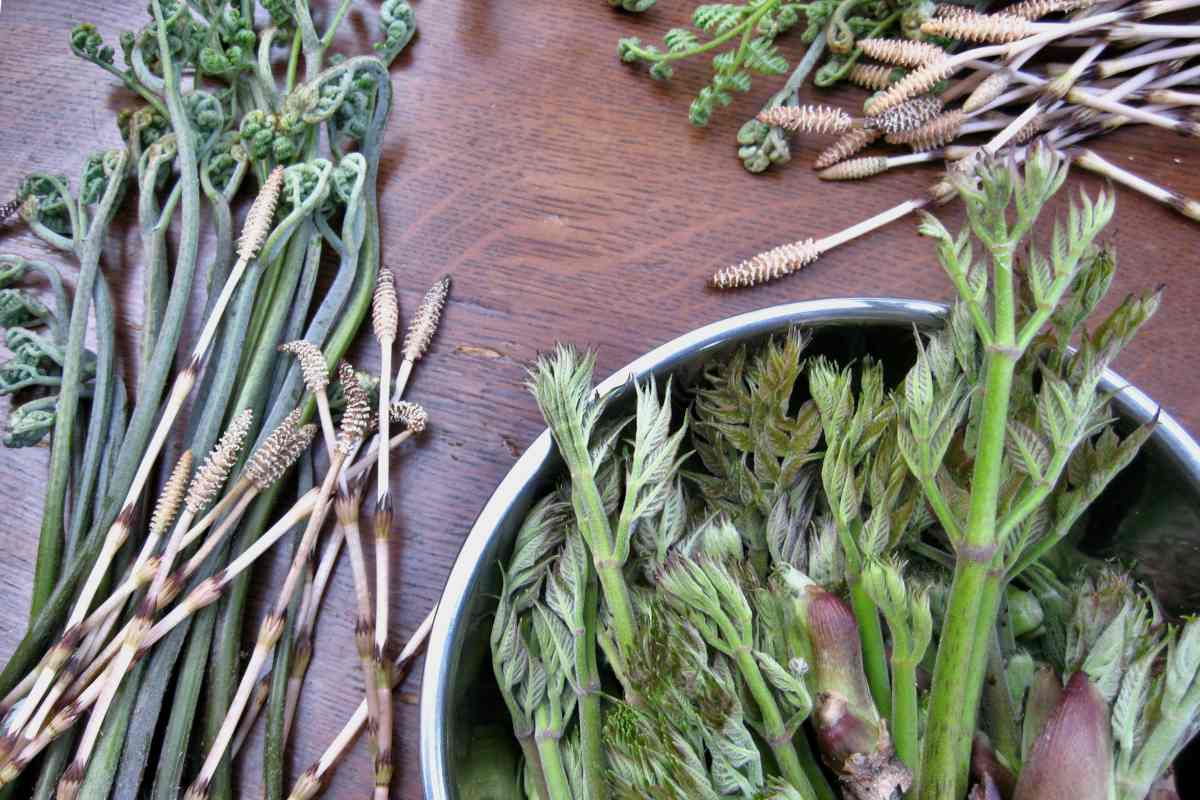
| Fern and horsetail | Damp woodland and banks | Young shoots | Eaten only while the shoots are still young |
Whatever the plant, the same two rules apply: be certain of the identification, and take only what you will actually use.
Among the most easy plants to recognize, you’ll find the typical “weeds” like dandelion, nettle or fleawort which all have various applications in cooking. You might not even have to leave your garden to pick them!
Young dandelion leaves taste quite similar to arugula and are eaten in salads, together with its flower buds. Leaves from the nettles are chopped. With a very high mineral content, they easily replace spinach in any recipe: omelet, soup, pie… Same thing for the fleawort leaves.
In hedges along the countryside, collect the flowers from the elder to prepare them as delicious fritter or syrup, and then the berries themselves make for delicious jam. The rose hip, fruits that are born by the dog rose, can also be used similarly.
→ Read also: health benefits and therapeutic properties of dog rose.
In forest underbrush, collect wild garlic to spice up your meals. You’ll also find violets which are perfect to add color to a fruit salad or make sugar candy.
Along the countryside, walking at a leisurely pace, pick the flowers from daisies and poppies. The first of the two can be eaten as fritters, and the second ones are delicious in mixed salads, cakes, jams or syrup.
Shown in the main picture above: fern and horsetail are both edible when shoots are picked young.
Laure Hamann