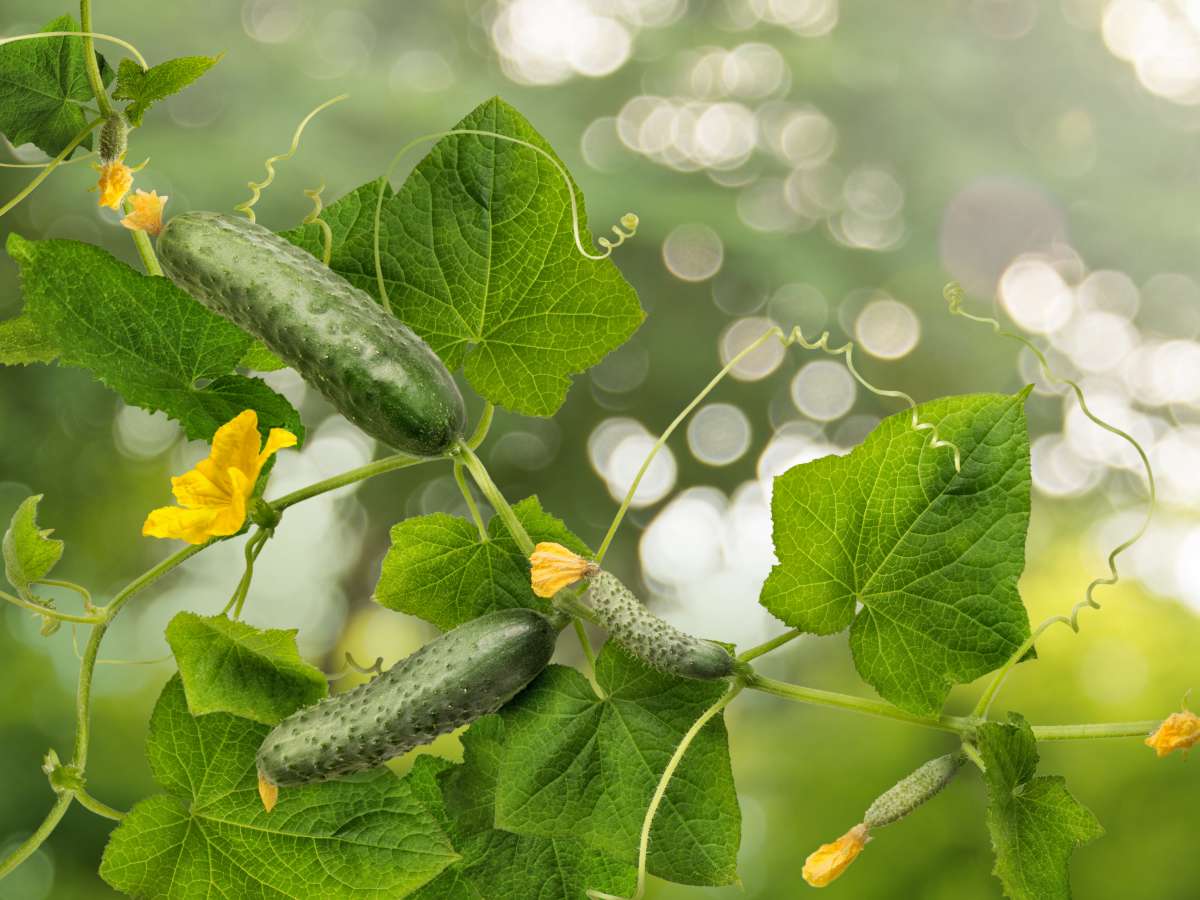
Running flat along the ground or climbing to great heights, cucumber (Cucumis sativus) gives two harvests from one plant: picked tiny it is a pickle, picked palm-sized a gurken, left to swell a salad cucumber. It wants heat, full sun and regular but sparing water at the base — meet that and the picking goes on for months.
| Name | Cucumis sativus |
|---|---|
| Family | Cucurbitaceae (gourds) |
| Type | vegetable, annual |
| Height | 1 ½ to 6 ½ feet (0.5 to 2 m) |
| Exposure | full sun |
| Soil | ordinary but well drained |
| Harvest | 3 to 4 months after sowing, from late spring to mid-autumn |
Caring for your cucumber from seed to harvest will require you to diligently carry out a few key steps to develop well.
Also, it helps to know that cucumber and pickle are exactly the same plant! You can harvest young cucumbers and turn them into pickles!
Sowing seeds is the most common option, but it’s also increasingly easy to find cucumber plants in nurseries and garden stores.
Sow in seed holes with 3 seeds per hole from Early spring to early summer.
Transplant to the growing bed in late spring at the earliest, since freezing still occurs before that.
If you purchase cucumber seedlings from a nursery, plant them directly in the ground when the last frosts are past, after the Late spring.
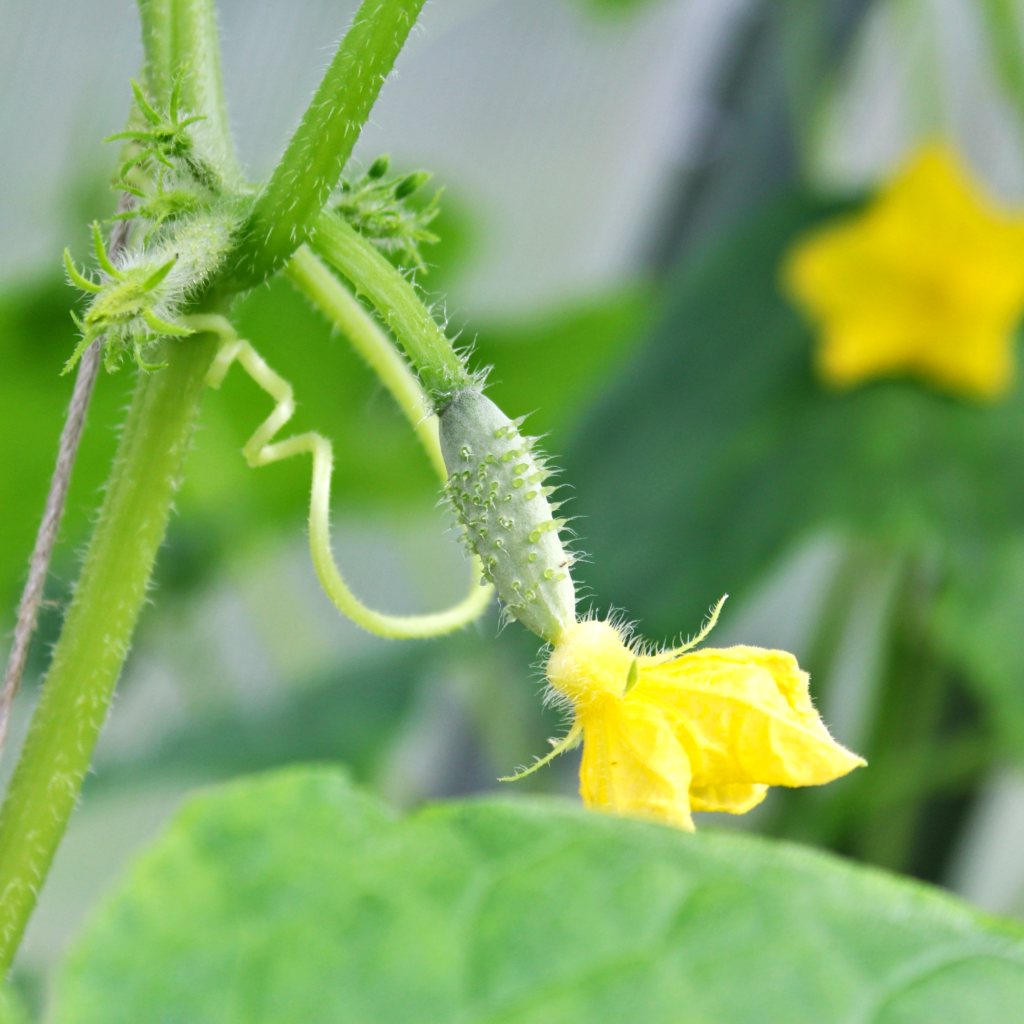
Growing and caring for cucumbers is quite easy if adequate growing conditions are set up.
The trickiest step is pruning. If well pruned, a cucumber plant will grow well and the harvest will be plentiful.
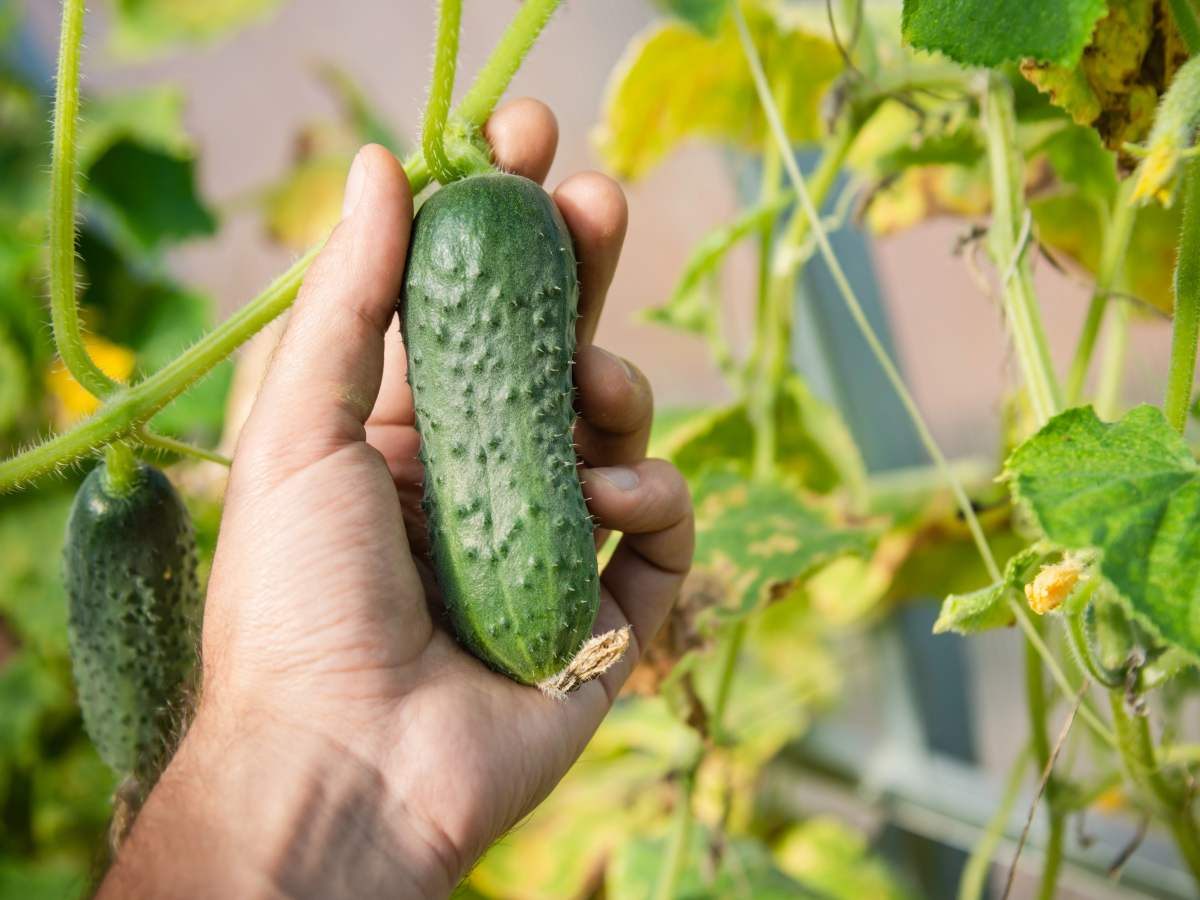
This is for cucumber plants grown directly in the ground.
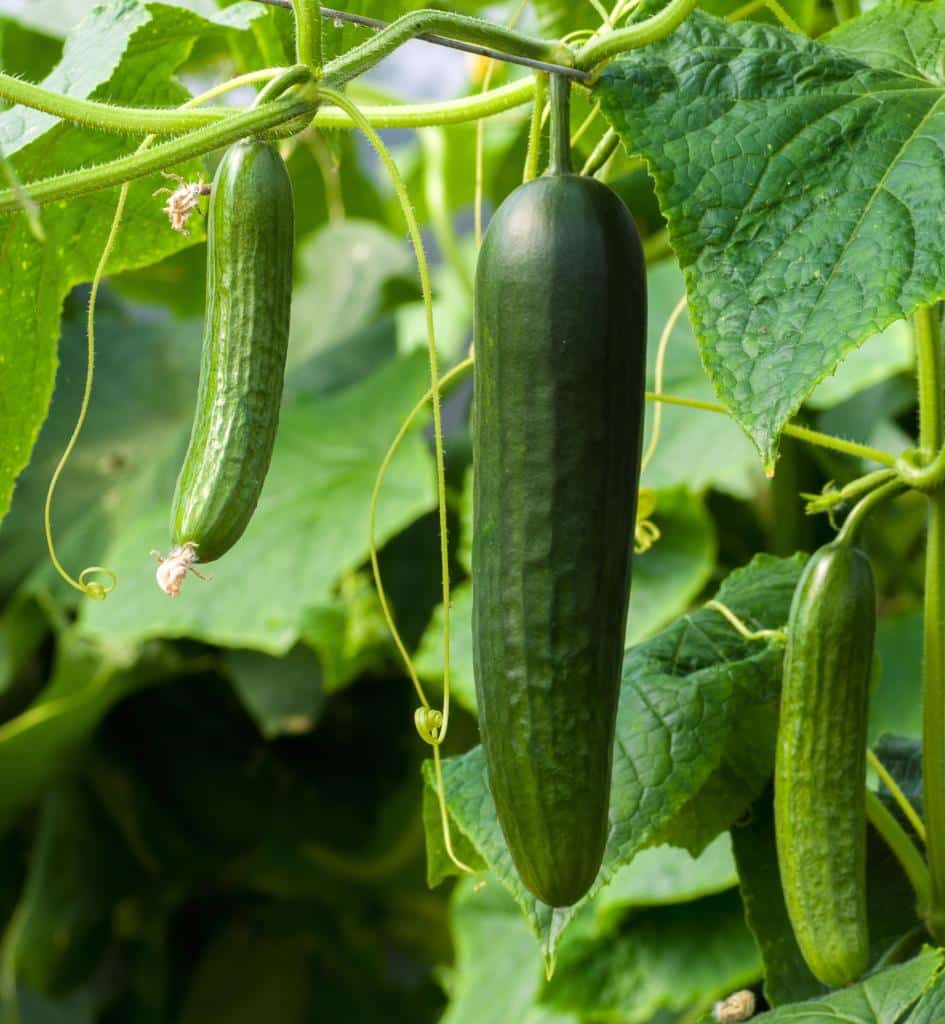
Often the case for cucumber plants grown vertically in greenhouses.
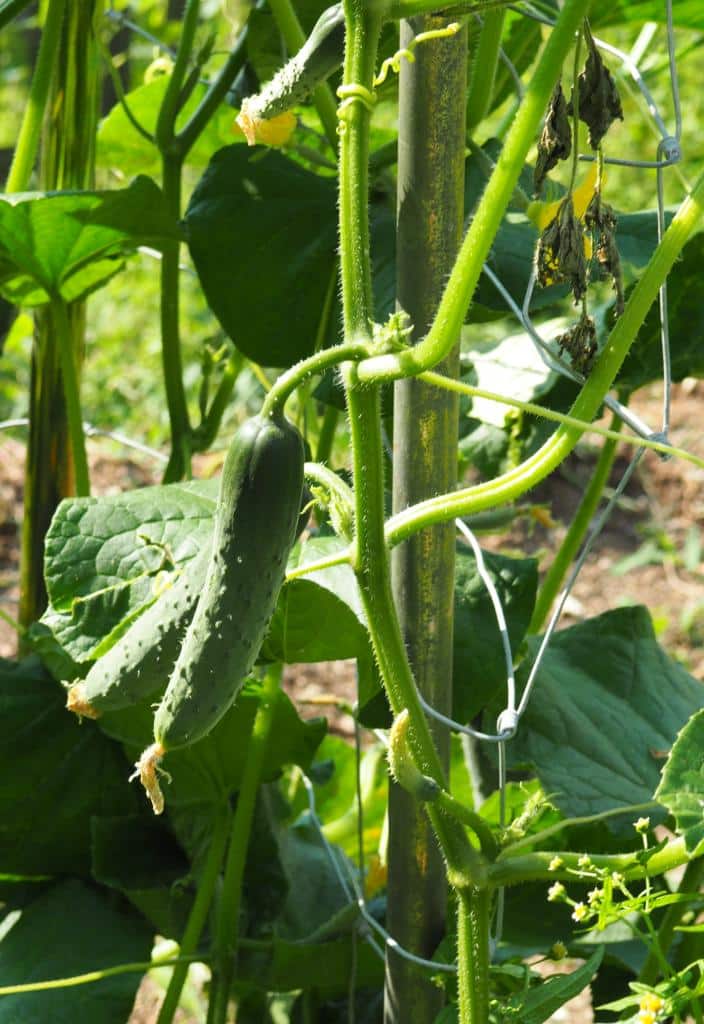
Pruning is the trickiest step, and it changes with the way the plant is grown. Find your situation in the table and follow that line only.
| Growing style | Where it suits | How to pinch | Fruit expected |
|---|---|---|---|
| Sprawling along the ground | Plants grown directly in the open ground | Pinch above the 2nd leaf, let two stems form, pinch each after the 4th leaf, then prune following branches one leaf after each fruit | Full-size cucumbers |
| Single vertical stem | Plants grown upwards in a greenhouse | Let the main stem reach 6 ½ feet (2 m) then pinch the tip; along the lower 28 inches remove suckers and any fruit on the stem | Full-size cucumbers on a clean lower stem |
| Pickles | Anywhere small fruits are wanted | Simply pinch the head off just after the second leaf, and pick often | Pickles when small, gurken at palm size |
Whichever style you choose, regular picking keeps the plant productive.
To avoid this, avoid wetting leaves. Cucumber is very vulnerable to diseases, especially powdery mildew.
In order to avoid such illnesses, water directly at the base of the plants to keep them from catching it.
Water in the morning so any drops that do reach the foliage dry off quickly instead of sitting overnight.
Pick off the first mildewed leaves as soon as you spot them; they can go in a hot, active compost heap, but bin them if your heap stays cool and slow.
Mottled, puckered leaves with stunted, bitter fruit point to cucumber mosaic virus, which no spray cures: pull the plant and control the aphids that carry it.
Do not plant cucumbers where courgettes, melons or squash grew previously, as the same soil-borne fungi carry over.
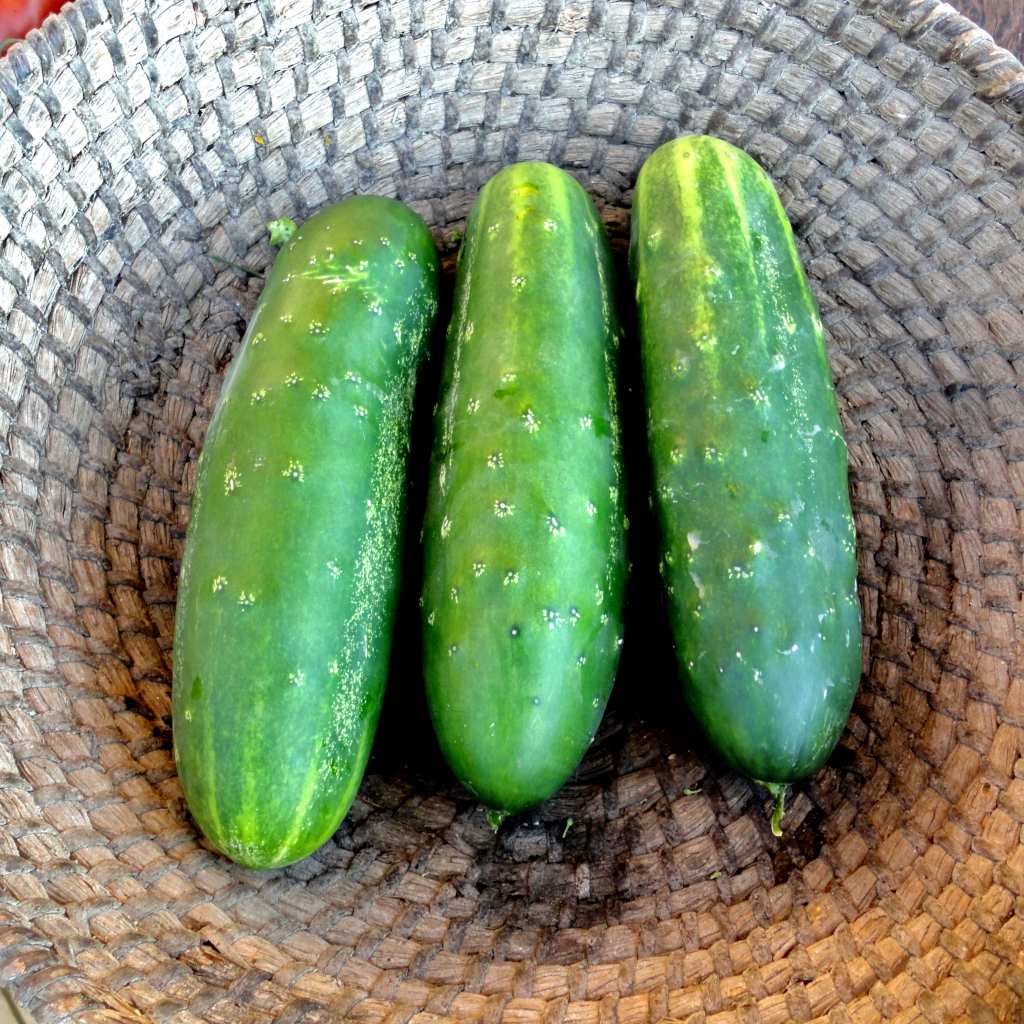
Native to Asia, running along the ground or climbing to great heights, this exact same plant produces both pickles and cucumbers.
Cucumber likes heat and requires regular but reduced watering.
Planting cucumber in hot weather will stimulate growth.