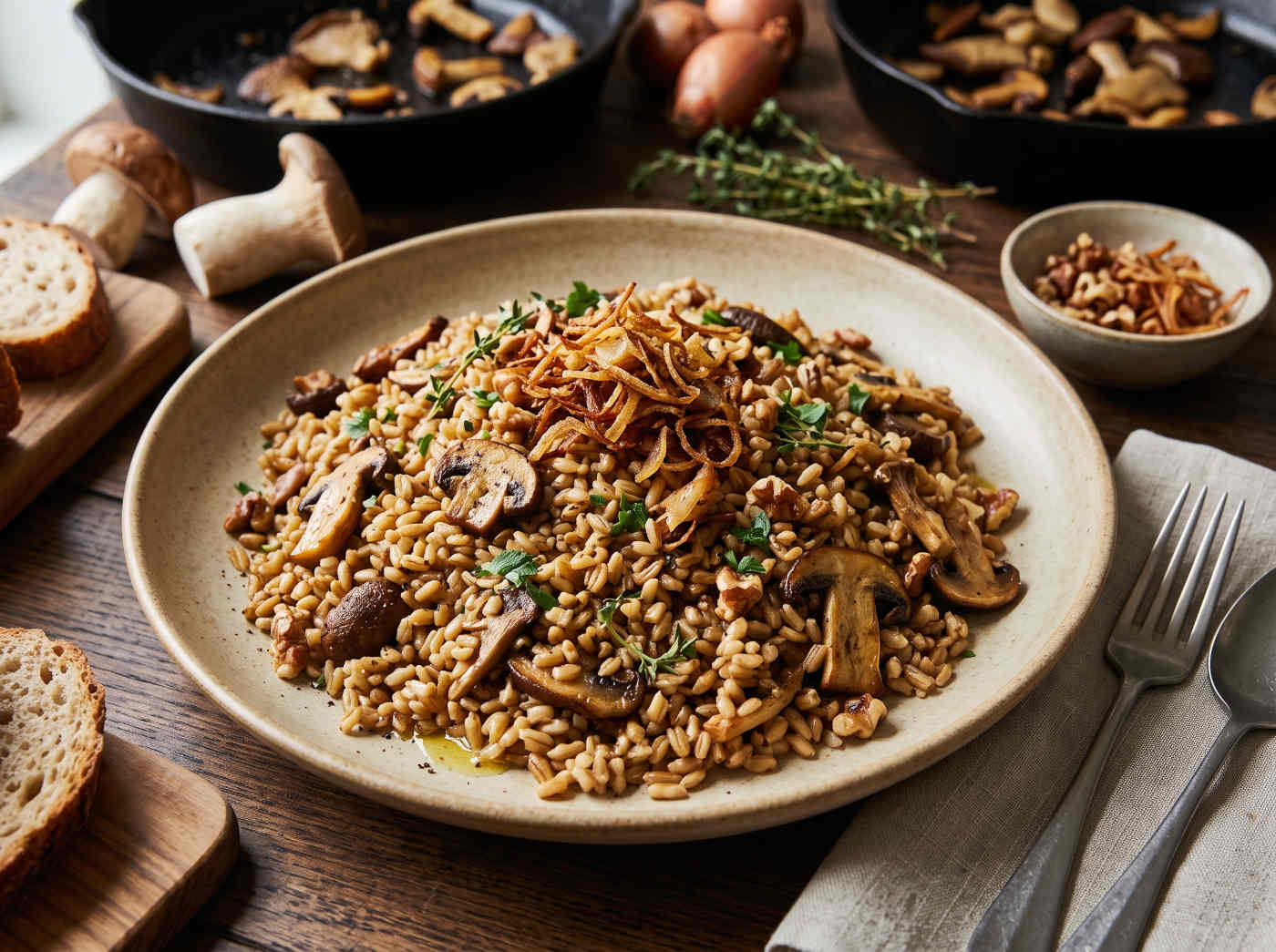
Mushrooms are the only crop that arrives rather than ripens — the mycelium threads through leaf litter all year, then pushes up fruiting bodies once October rain follows a drop in soil temperature. Whether you gather them under birch and pine, grow oysters on a damp log by the shed, or buy a mixed tray, this pilaf treats them properly: dry-seared until they squeak and brown, then folded through rice that has steamed in thyme-scented stock.
Rinse the rice in a bowl of cold water, swirling with your fingers and pouring off the cloudy water four or five times until it runs nearly clear, then leave it to soak for 20 minutes. Do not skip this step — the loose surface starch is what glues grains together, and pre-soaked grains absorb stock evenly instead of blowing out at the ends while the centres stay chalky.
Slice two of the shallots into thin rings. Put them in a small pan with the oil and set over medium heat, starting them in cold oil so they dehydrate slowly rather than scorching. Stir occasionally for 8–10 minutes; when the sizzle quietens from a vigorous fizz to a lazy crackle and the rings turn pale gold, lift them onto kitchen paper. They will darken and crisp as they cool — pulling them at deep brown means bitter shallots on the plate. Keep the shallot oil.
Toast the walnuts in a dry pan over medium heat for 4–5 minutes, shaking often, until they smell of warm toast and the papery skins crack. Tip them straight onto a cold plate; left in the hot pan they carry on cooking and turn acrid. Chop roughly once cool.
Tear or thickly slice the mushrooms — never chop them small, as they shrink by more than half. Heat a wide frying pan over high heat and add the mushrooms in two batches with no fat and no salt. Let them sit untouched for 2 minutes at a time: they will release water, hiss loudly, then fall silent as the pan dries. Only when that squeaky, dry rattle starts should you add 1 tbsp of the shallot oil per batch and brown them for 2–3 minutes until the edges are mahogany. Salting early draws out water and steams them grey.
Finely chop the remaining four shallots. In a heavy saucepan with a tight lid, melt the butter with 1 tbsp shallot oil, add the shallots and a good pinch of salt, and cook over medium-low heat for 8 minutes until completely soft and translucent but not coloured — browning here makes the base taste scorched rather than sweet. Add the garlic and thyme and cook 1 minute more, just until the garlic smells nutty.
Drain the rice thoroughly and stir it into the pan, turning the grains in the fat for 2 minutes until each one looks glossy and the tips turn opaque white. This fat coat is what keeps the grains separate as they steam. Pour in the hot stock — hot, so the pan never loses momentum — add 1 tsp salt, and bring to a fast boil.
As soon as craters appear on the surface and the liquid sits level with the rice, clamp on the lid, drop the heat to its lowest setting and cook for 11 minutes. Then slide the pan off the heat and leave it, lid on, for 10 minutes. Do not lift the lid at any point: the trapped steam finishes the grains, and releasing it leaves wet rice at the bottom and dry rice on top.
Uncover, scatter over the seared mushrooms, walnuts, lemon zest and most of the parsley, and fold through with a fork held flat, lifting rather than stirring so the grains stay whole. Taste and correct with salt and plenty of cracked pepper. Pile onto a warm platter and finish with the crisp shallots and remaining parsley, adding them at the last second so they stay audibly crunchy.