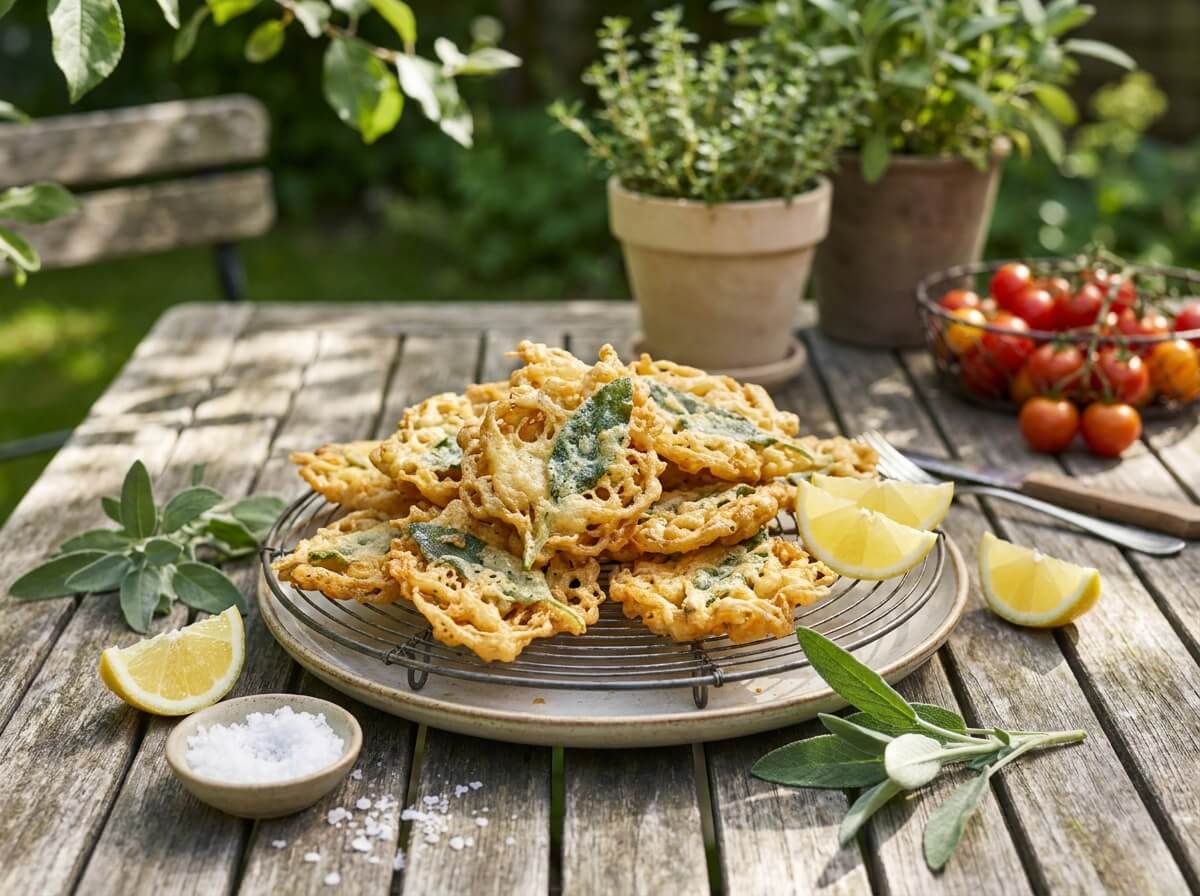
A sage bush holds its ground through October, the leaves turning firmer and more resinous once nights drop below 10 °C — just as basil and dill collapse. Those grey-green leaves are too assertive raw, but sealed in pairs around a sliver of anchovy and fried in ice-cold beer batter, they go silky, nutty and faintly camphorous. Two bites, a squeeze of lemon, eaten standing up with something cold in the other hand.
⏱ Prep 20 min🔥 Cook 15 min👥 Serves 4–6 as a tapa (makes about 24 fritters)📊 Level Medium
Ingredients for 4 people
48 large sage leaves (about 1 oz / 30 g), stalks removed, ‘Berggarten’ or any broad-leaved type
12 anchovy fillets in oil (about 1½ oz / 40 g), halved lengthways
¾ cup (100 g) plain / all-purpose flour
2½ tbsp (20 g) cornflour / cornstarch
¾ cup (180 ml) very cold lager, or cold sparkling water
2 tbsp (30 ml) chilled vodka or dry white wine
½ tsp fine sea salt
Freshly ground black pepper
2 cups (500 ml) sunflower, peanut or light olive oil, for frying
1 unwaxed lemon: finely grated zest, plus wedges to serve
Flaky sea salt, to finish
1 tbsp capers, rinsed and finely chopped, plus 1 tbsp finely grated pecorino (meat-free alternative to the anchovy)
The Recipe
Pick the sage in the morning, choosing flat, unblemished leaves from the middle of the stems — tip growth is thin and tears, old basal leaves are leathery. Wash only if dusty, then dry each leaf completely between two tea towels. Do not skip this step: a damp leaf sheds its batter in the pan and makes the oil spit violently.
Whisk the flour, cornflour, fine salt and a good grind of pepper in a bowl, then pour in the cold beer and vodka all at once and whisk for no more than 15 seconds. Leave the small lumps — they are fine. Overworking builds gluten and gives you a bready jacket instead of a lacy shell. Chill the batter for 15 minutes; it should coat a spoon like single cream and slide off slowly.
Pair the leaves by size, vein side facing inwards. Lay half an anchovy fillet (or a pinch of chopped capers and pecorino) along the centre of one leaf, press the second leaf on top and squeeze firmly for a second or two — the leaf resins are slightly tacky and will hold the sandwich shut. Inside the pocket, the anchovy melts to a saline cream that seasons the fritter from within rather than slapping salt on the outside.
Pour the oil into a deep, narrow pan to a depth of 1½ in (4 cm) and heat to 350–355 °F (175–180 °C). No thermometer? Drop in a bead of batter: it should sink briefly, rise within two seconds and fizz steadily around the edges. Below that temperature the batter drinks oil; above it, the crust browns before the sage has time to perfume it.
Working with five or six at a time, hold each sage sandwich by the stalk end, dip into the batter, let the excess run off for two seconds, then lower it away from you into the oil. Crowding the pan drops the temperature sharply and the fritters go pale and greasy.
Fry for 60–90 seconds, turning once with chopsticks or tongs, until the batter is the colour of pale straw with a few blistered golden freckles. Listen rather than watch: the loud, wet crackle quietens to a soft hiss once the leaf’s moisture has gone, and that is your signal.
Lift onto a wire rack set over a tray — never onto paper towel, which traps steam and softens the underside within a minute. Scatter immediately with flaky salt and lemon zest while the surface oil is still hot and open; salt applied to a cool fritter simply falls off.
Pile loosely on a warm plate with lemon wedges and serve within ten minutes, while the centre is still steaming and the shell shatters. Resting them in a stack flattens the crust, so let people take them straight from the rack if you are feeding a kitchen full of people.