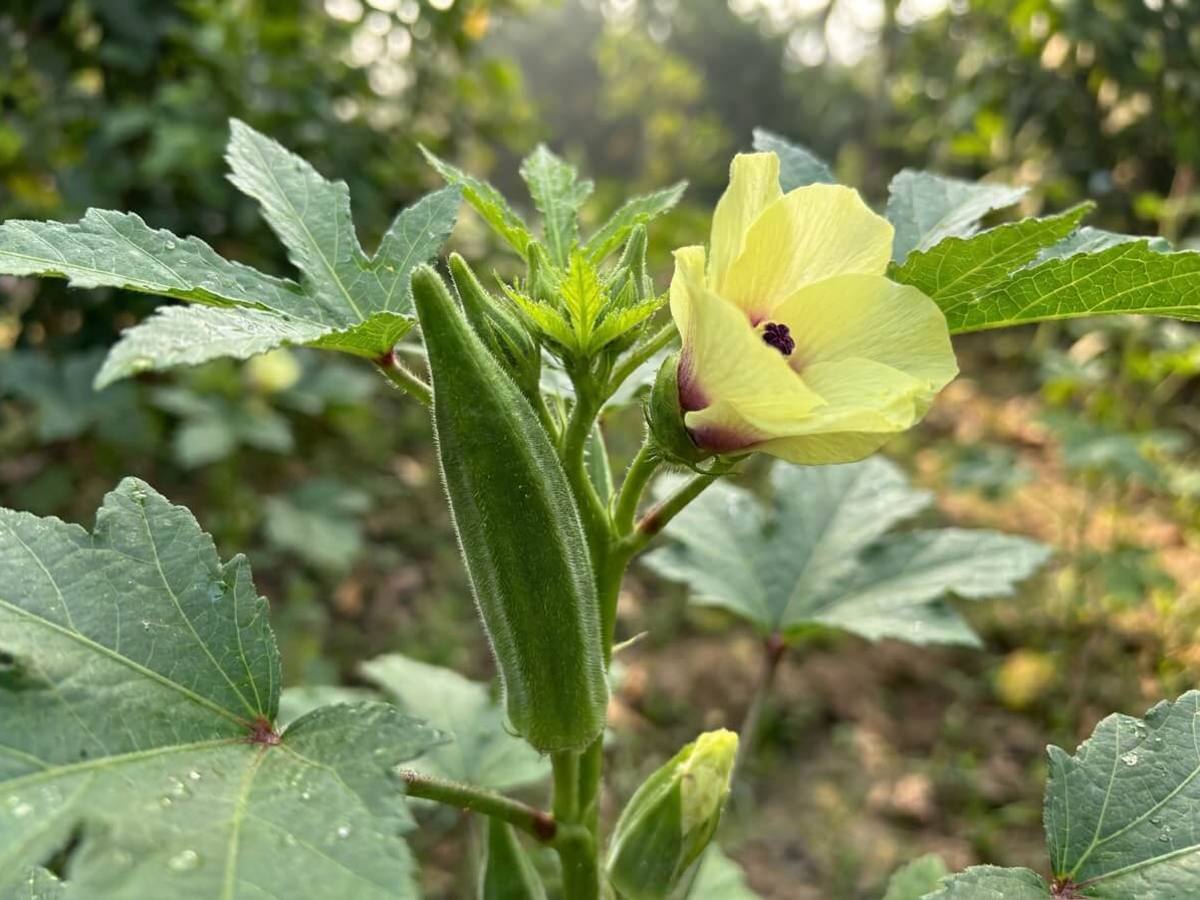
Every beetroot in the garden descends from sea beet, a glossy wild plant that still grows along Atlantic and Mediterranean shingle, foraged for its leaves long before anyone bothered with the root. Lifted before the ground hardens in late autumn, those roots keep their sugars best when cooked whole and undressed. Burying them in a salt crust concentrates everything instead of leaching it into water — the flesh comes out dense, sweet and almost smoky, ready for sharp horseradish.
⏱ Prep 20 min🔥 Cook 80 min👥 Serves 6📊 Level Easy
Ingredients for 6 people
6 medium beetroot, about 2 lb (900 g) total, each roughly the size of a tennis ball
5 cups (1.2 kg) coarse sea salt or rock salt
2 egg whites
1/4 cup (60 ml) cold water
6 sprigs thyme, plus 2 bay leaves
1/2 cup (120 g) crème fraîche (sour cream or thick Greek yoghurt both work)
Scrub the beetroot under cold water with a brush, then trim the stalks to 3/4 in (2 cm) and leave the thin root tail attached. Do not peel and do not cut into them — every wound is an exit route for the betalain pigment and the sugars, and a cut beetroot bleeds itself pale in the oven.
Tip the salt into a large bowl, add the egg whites and water, and work it with your hands for a minute until it holds the texture of damp sand and clumps when squeezed. The egg white is structural, not seasoning: it sets as it bakes and turns loose salt into a sealed shell that traps steam around each root.
Spread a 1/2 in (1 cm) bed of the salt mixture in a roasting tin, scatter the thyme and bay over it, and settle the beetroot on top with a finger’s gap between them. Pack the remaining salt over and around, pressing firmly so there are no gaps — any opening lets steam escape and the beetroot will roast dry on that side.
Bake at 400 °F (200 °C) for 70 to 80 minutes. The crust will go from white to pale biscuit-beige, harden like plaster and develop a few hairline cracks. To test, push a thin skewer straight through the crust into the largest root: it should meet no resistance at the centre, like pushing into soft butter. If it drags, give it another 10 minutes.
Rest the tin on the counter for 15 minutes before cracking. Do not skip this step — the beetroot continues cooking in the trapped heat and, more importantly, the skins loosen as the steam settles, which is what makes the next stage painless.
Crack the crust with the back of a heavy spoon and lift the roots out, brushing off clinging salt. While they are still hot enough to be awkward to hold, rub the skins away with a rough cloth or paper towel; they slip off in sheets. Wear gloves unless you want pink fingers for a day.
Quarter the beetroot into wedges, put them in a bowl while steaming hot and toss with 1 tbsp of the cider vinegar and all the olive oil. Hot beetroot drinks acid and oil into its flesh; cold beetroot simply wears them on the surface, which is the difference between seasoned and merely dressed.
Grate the horseradish and stir it straight into the remaining 1 tbsp vinegar, then fold that into the cold crème fraîche with a pinch of salt. Keep it cold and never heat it — horseradish heat is volatile and vanishes above about 105 °F (40 °C), leaving nothing but a woody taste.
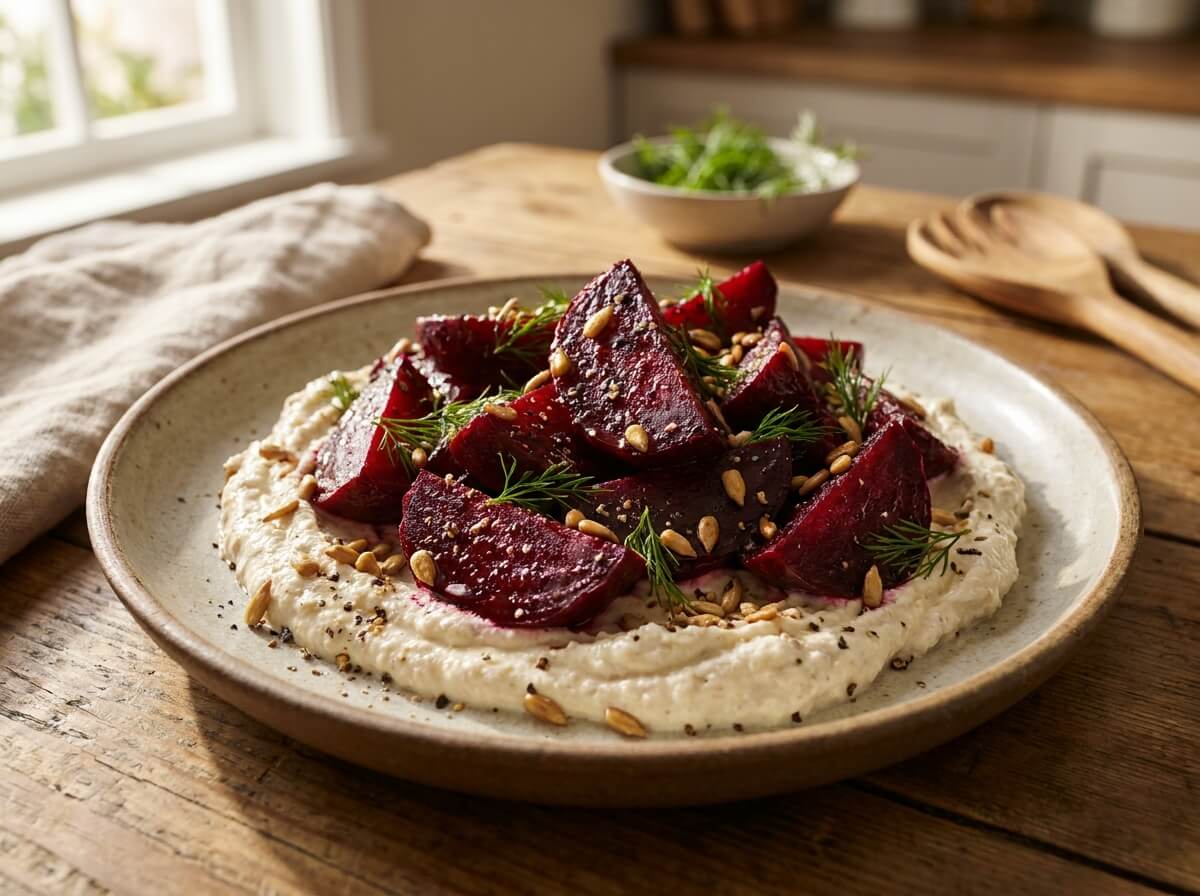
Toast the sunflower seeds in a dry pan over medium heat for 3 to 4 minutes, shaking often, until they smell nutty and a few start to pop and colour. Spoon the horseradish cream onto a wide plate, pile the warm beetroot over it, and finish with dill, the seeds, flaky salt and cracked pepper.