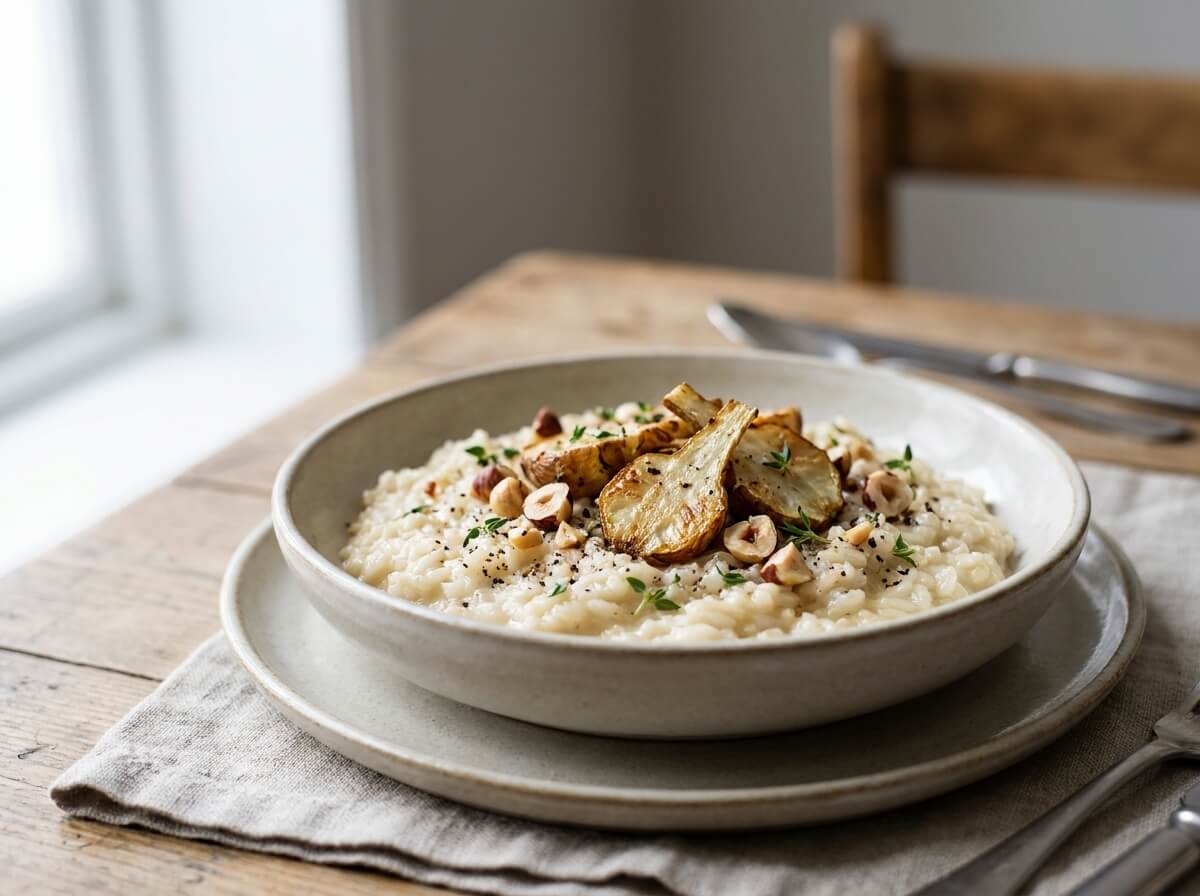
Jerusalem artichokes are sunflowers with a secret: three metres of yellow-flowered stalk above ground, and a knot of knobbly tubers below that you dig from November onward, once frost has sweetened them. They keep better in the soil than in any cellar, so you lift only what you need. This risotto uses them twice — roasted for nutty depth, puréed for silk — and finishes with hazelnuts and lemon thyme for crunch and lift.
Halve 9 oz (250 g) of the tubers lengthwise, toss with 2 tbsp olive oil and a good pinch of salt, and roast cut side down at 400 °F (200 °C) for 25–30 minutes. Leave them until the cut faces are properly bronze and the edges catch dark — Jerusalem artichoke is mild to the point of vagueness until the Maillard browning gives it that chestnut-and-mushroom character. Do not skip the browning.
Meanwhile, slice the remaining 9 oz (250 g) thinly and simmer in the milk with the crushed garlic clove and a pinch of salt over low heat for 20–25 minutes, until a slice collapses under the back of a spoon. The length of this simmer is deliberate: it softens the inulin, making the purée sweeter and far kinder on the digestion than a brisk 10-minute boil.
Blend the simmered tubers with their milk until completely smooth, then add a squeeze of lemon juice — about 2 teaspoons. The acid brightens a vegetable that otherwise tastes slightly flat, and it keeps the purée from greying as it stands. Set aside, covered.
Toast the hazelnuts in a dry pan over medium heat for 4–5 minutes, shaking often, until they smell like warm biscuit and are blond-gold at the centre when you cut one. Tip them out immediately onto a cold plate — left in the hot pan, they go from toasted to bitter in under a minute. Chop and toss with the lemon thyme and a pinch of flaky salt.
In a wide heavy pan, sweat the shallots and chopped garlic in the last 1 tbsp olive oil over medium-low heat for 8 minutes, until translucent and slack but with no colour at all. Browned shallot turns sharp and dominates the delicate tuber flavour you worked to build in step 1.
Add the rice and stir for 2 minutes until the grains turn glassy at the edges with an opaque white dot in the middle — this *tostatura* firms the outside of each grain so the risotto stays al dente rather than dissolving. Pour in the wine and stir until the alcohol smell has gone and the pan is almost dry.
Add the hot stock a ladleful at a time, stirring often and only adding more when the previous addition has been absorbed and the spoon leaves a clear trail across the pan base. Expect 17–19 minutes. The rice is ready when a grain crushed between finger and thumb is creamy through with a single thread of resistance at the core — no chalk, no mush.
Pull the pan off the heat. Beat in the cold butter, then the Parmesan, then the warm purée, working briskly for a full minute — off-heat agitation with cold fat is what emulsifies a risotto into gloss rather than porridge. Loosen with a splash of stock until it ripples when you shake the pan; it should spread slowly, not stand in a mound. Spoon into warm shallow bowls, top with the roasted halves, scatter the hazelnut-thyme mix, finish with black pepper and a grating of lemon zest.