Rudbeckia laciniata: varieties, planting and garden uses
0
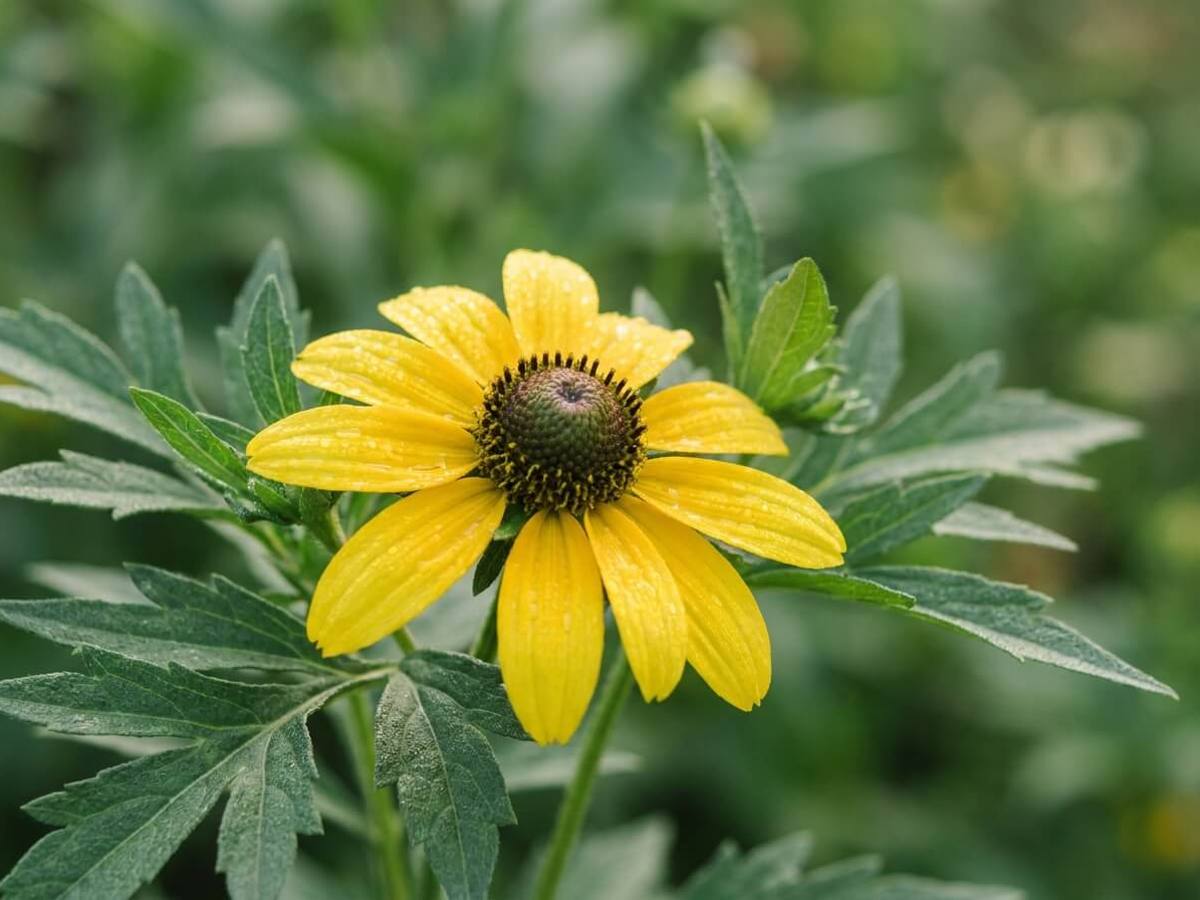
Rudbeckia laciniata is the giant of the coneflower clan, throwing up airy stems of two metres or more topped with lemon-yellow daisies whose petals sweep backwards from a domed, distinctly green centre. It is the plant to reach for at the back of a late-summer border, in a damp corner, or anywhere a prairie-style planting needs height without heaviness. Unlike most rudbeckias, it thrives in soil that stays reliably moist, and it will colonise slowly by rhizome to form a generous clump.
Growing conditions
Full sun gives the sturdiest stems and the heaviest flowering, but this is one of the few rudbeckias genuinely happy with three or four hours of shade a day. In deeper shade it still flowers, simply more sparsely and with stems that lean towards the light. Shelter from strong wind is worth arranging, as the tall flowering stems catch a gale like a sail.
Soil matters more than sun here. Choose ground that stays cool and moist through summer — heavy loam, clay, the edge of a pond or a ditch bottom all suit it perfectly. It is unfussy about pH, performing well from mildly acidic to slightly alkaline, though thin chalk that bakes dry will stunt it.
Hardiness is not a concern in any part of Britain, Ireland or northern Europe; the roots survive well below −25 °C. In hotter, drier continental climates, plant it on the shaded side of a hedge or building to reduce midsummer wilting.
How to plant Rudbeckia
Plant in mid-spring, from March to May, so the rhizomes root into warming soil ahead of the flowering surge. Autumn planting, in September and early October, also works well on free-draining ground.
Spacing: allow 60–90 cm between plants — the clump widens each year and crowded plants mildew badly.
Depth: set the crown level with the surrounding soil, never buried, with the pale rhizome buds just under the surface.
Preparation: fork in two bucketfuls of garden compost or well-rotted manure per square metre to hold summer moisture.
Watering in: soak thoroughly at planting, then water weekly for the first two months until new leaves appear.
Propagation: lift and split established clumps in spring with a spade — each section with three or four buds and a fist of root will flower the same summer.
Rudbeckia laciniata growing in a naturalistic garden border
Care through the seasons
Spring: Fresh shoots push through from March; mulch around them with compost before they reach 20 cm. Apply a balanced organic feed only on poor soil, as over-feeding produces soft stems that flop. Late May is the moment for the Chelsea chop — shortening stems by a third gives bushier, self-supporting plants that flower a fortnight later.
Summer: Water deeply in prolonged dry spells; wilting foliage recovers, but drought-stressed plants mildew and drop their lower leaves. Stake tall un-chopped clumps by early July, before the flower buds add weight. Deadhead the first flush in August to encourage a second wave into early autumn.
Autumn: Leave a proportion of the seedheads standing for goldfinches and for winter structure. Cut the remainder to 15 cm once frost blackens the foliage. Early autumn is also the moment to slice away any rhizomes that have wandered beyond their allotted space.
Winter: The plant dies back completely and needs no protection whatsoever. A light mulch of leaf mould over the crown simply improves the soil for the following season.
Best varieties to grow
A handful of selections tame the height or double the flowers without losing the species’ late-season generosity.
‘Herbstsonne’ (Autumn Sun) — the classic, reaching 2 m with single lemon petals and a tall green cone; holds an RHS Award of Garden Merit.
‘Goldquelle’ — a compact 90 cm double with shaggy, chrome-yellow pompon flowers that rarely needs staking; also AGM-awarded.
‘Hortensia’ (Golden Glow) — the heirloom double, vigorous to 2 m, sterile and superb for cutting.
‘Juligold’ — opens from early July, several weeks ahead of the species, extending the display considerably.
Pests, diseases and common problems
Powdery mildew: white felting on lower leaves in dry late summer; improve air flow by thinning stems, water at the root and divide congested clumps every third spring.
Slugs and snails: shredded emerging shoots in April can set a plant back badly; use wool pellets, nematodes or evening hand-collection during damp weather.
Flopping and lodging: stems splay outwards after summer storms, especially in rich soil or shade; pre-empt it with a Chelsea chop or ring supports installed in May.
🌿 Nature & Garden Newsletter
Gardening tips, recipes & seasonal advice, twice a week.