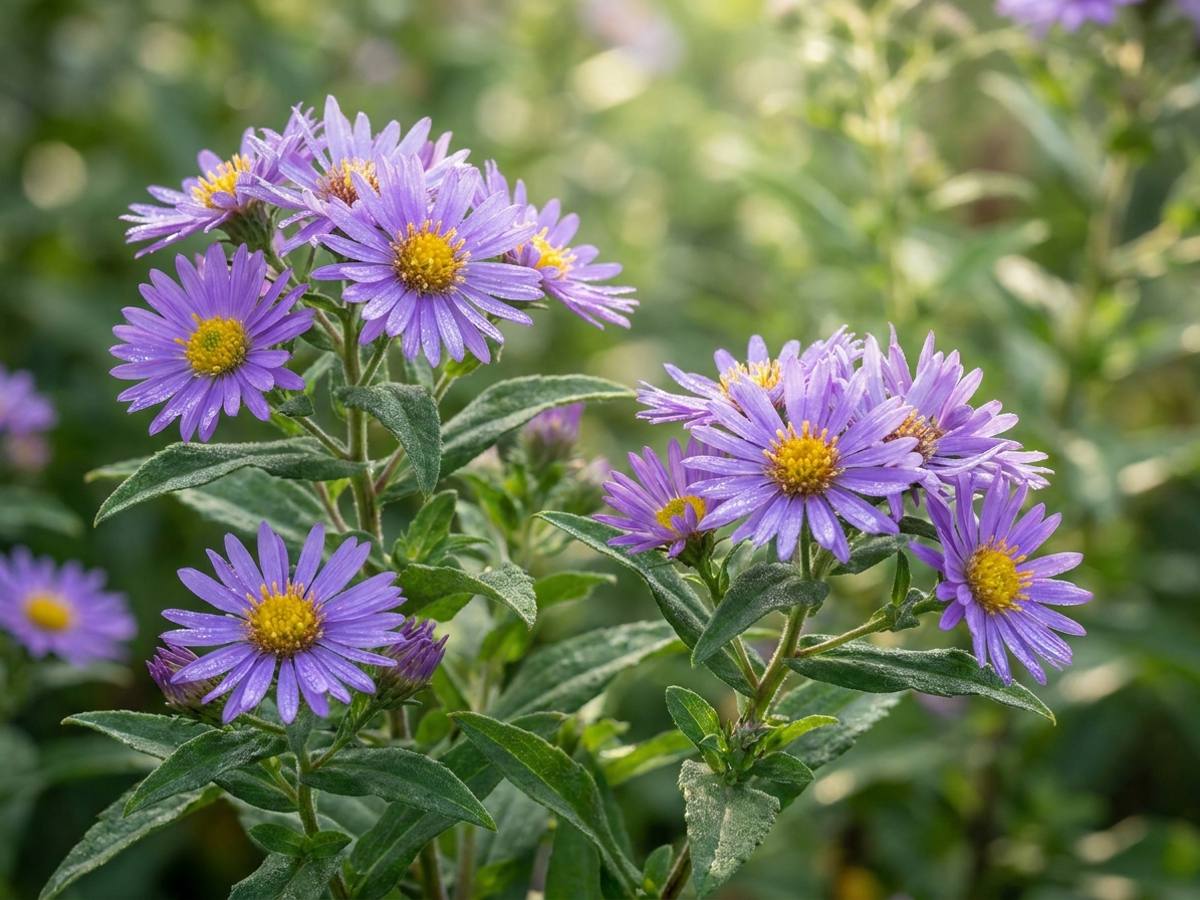
The European Michaelmas daisy, Aster amellus, is a compact, clump-forming perennial that smothers itself in lavender-blue daisies from late summer well into autumn. Unlike its taller North American cousins, it stays neat and self-supporting, rarely needing staking, and it is notably resistant to the powdery mildew that plagues so many asters. It thrives on chalk and thin, dry soils where more thirsty perennials struggle, making it a superb late-season nectar plant for bees and butterflies.
Give Aster amellus the sunniest spot you can spare — at least six hours of direct sun a day. In shade the stems stretch, flop and produce far fewer flowers. Good air circulation around the plant also helps keep the foliage clean and healthy.
This is a limestone plant in the wild, so it revels in free-draining, neutral to alkaline soil and copes cheerfully with chalk, gravel and thin, stony ground. Fertility needs only be moderate; overly rich, heavy soil produces soft growth that collapses in autumn rain. On clay, dig in plenty of grit before planting or grow it on a slight mound.
It is fully hardy across the British Isles and most of northern Europe, tolerating around −20 °C. Winter wet, not cold, is the real killer — in high-rainfall regions of western Britain and Ireland, sharp drainage is non-negotiable.
Spring is by far the best planting time, from March to May, so roots establish through the growing season before facing their first winter. Autumn planting is possible on light, sandy soils but risks rot on anything heavy.
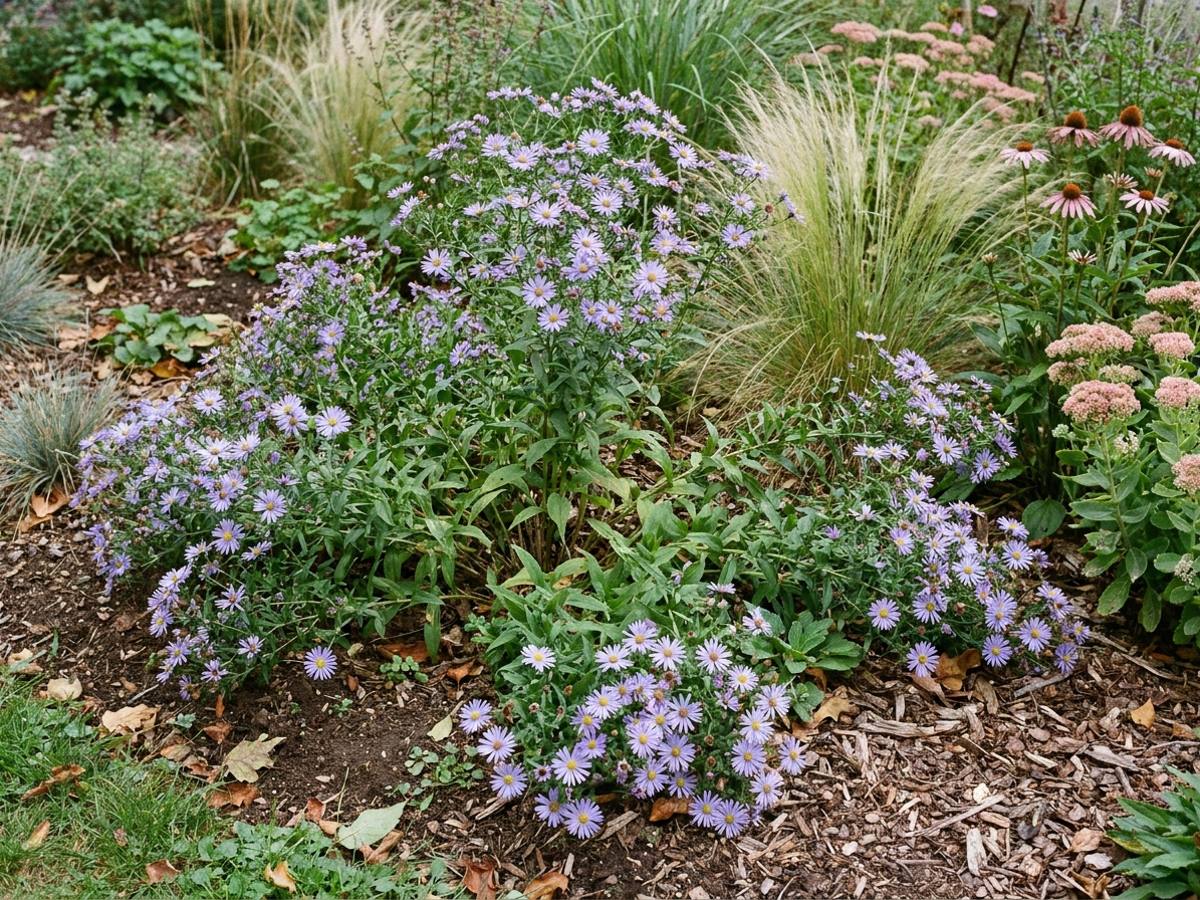
Almost everything this plant asks for is a matter of doing the right job at the right moment, and the wrong one at the wrong moment is what kills it. The table below sets out the four key periods side by side.
| Period | Main jobs | Watch out for |
|---|---|---|
| Early to late spring | Best planting time; divide clumps, light feed or thin compost mulch, pinch out shoot tips in late spring | Shoots emerge late, so mark the crown before hoeing |
| Early to late summer | Water only in prolonged drought; push twiggy supports in before stems reach 30 cm | Slugs on young growth; soggy summers do more harm than dry ones |
| Early to mid-autumn | Deadhead for a modest second flush; leave seedheads standing or cut back to 10 cm | Do not divide now — divisions rarely root before winter |
| Late autumn to late winter | Nothing needed; scatter grit around the crown on heavy soil | Crown rot from winter wet, not cold |
Keep to this rhythm and the plant looks after itself for years.
Spring: New shoots emerge late, often not until mid-April, so mark the position to avoid hoeing through the crown. Apply a light dressing of general-purpose fertiliser or a thin mulch of garden compost kept clear of the crown. This is also the moment to divide clumps and to pinch out shoot tips in late May for bushier, more compact plants.
Summer: Water only during prolonged drought — this is a genuinely drought-tolerant perennial once settled, and soggy summers do more harm than dry ones. Slugs may target young growth in June, so check regularly. Taller cultivars in exposed gardens benefit from a few discreet twiggy supports pushed in before the stems reach 30 cm.
Autumn: Deadheading spent flowers in September can coax a modest second flush from vigorous plants. Leave the seedheads standing for birds and winter structure, or cut back to 10 cm once the stems blacken. Avoid autumn division; the plant’s late growth cycle means divisions rarely root before winter.
Winter: The plant dies back completely to a low basal rosette and needs no protection in normal British winters. On heavy soil, a scatter of grit around the crown helps shed surface water and prevent rot.
Several long-established cultivars outperform the wild species for flower size and colour intensity.