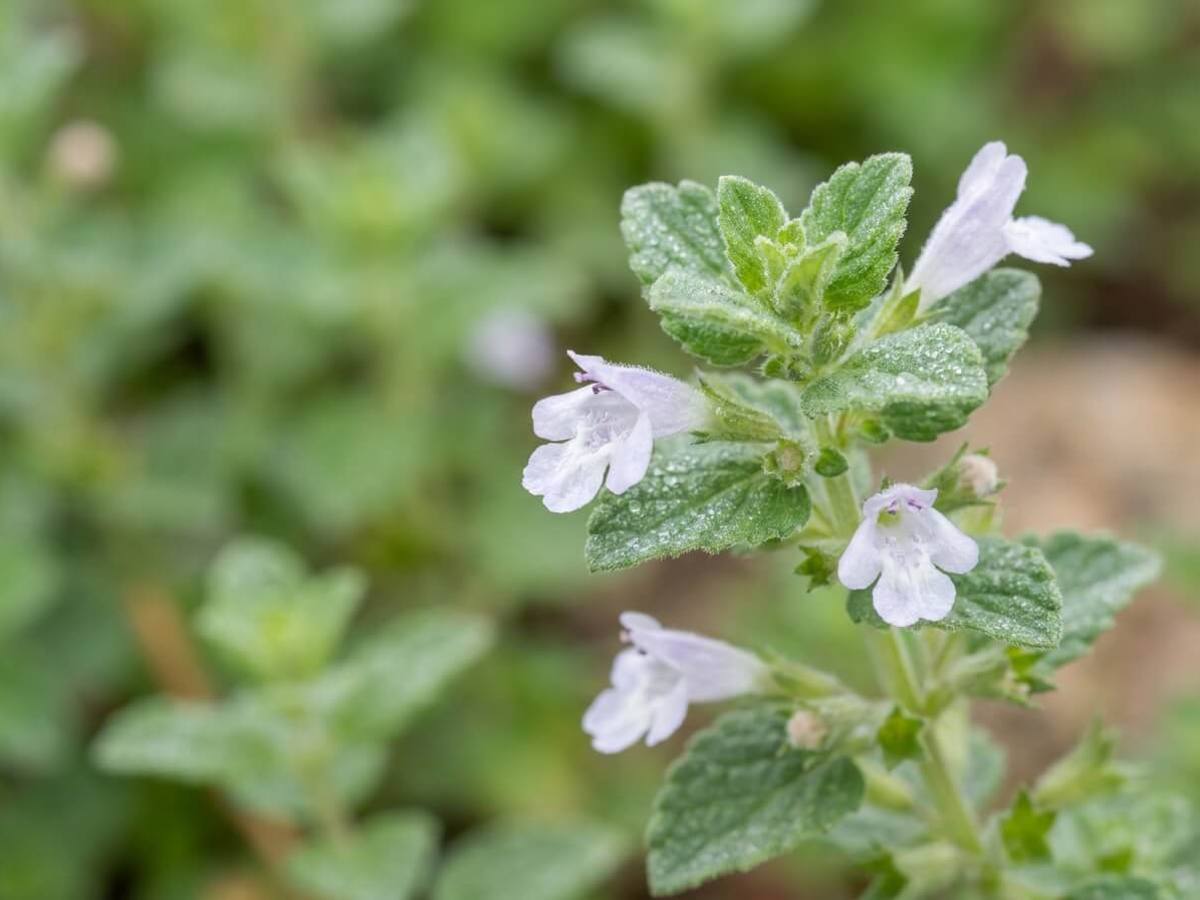
Few perennials work as hard for as little as Calamintha nepeta, a low, billowing cushion of tiny mint-scented leaves that disappears beneath a haze of pale lilac-white flowers from midsummer until the first frosts. It is the plant to reach for when a border edge needs softening, a gravel garden needs filling, or a bee-friendly companion is wanted for roses and grasses. Brush past it and the foliage releases a sharp, minty-camphor scent that deer and rabbits pointedly ignore.
Growing conditions
Calamintha is a Mediterranean plant at heart and wants as much sun as you can give it — six hours a day is the minimum for compact growth and dense flowering. In too much shade the stems stretch, flop open at the centre and produce far fewer blooms. A warm, open position with good air movement suits it perfectly and helps keep mildew at bay.
Drainage matters far more than fertility. It thrives in thin, stony, sandy or chalky soils and is genuinely excellent on alkaline ground, though it accepts neutral and mildly acidic soils too. Rich, heavily manured beds produce soft, floppy growth, whilst cold wet clay in winter is the one condition that reliably kills it.
Once established it is impressively drought-tolerant, making it a strong choice for gravel gardens, dry banks and hot south-facing borders. In wetter, milder regions, plant on a slight mound or add sharp grit to the planting hole to lift the crown clear of standing moisture.
How to plant Calamintha
Spring is the safest planting season, from late March to May, once the soil has begun to warm and the risk of waterlogging has passed. Early autumn planting also works well in warm, free-draining gardens, giving roots time to settle before winter.
Spacing: set plants 40–45 cm apart so the mounds knit into a continuous drift without trapping stagnant air between them.
Depth: plant with the crown level with the soil surface — never buried, as a sunken crown rots quickly in winter wet.
Soil preparation: fork in horticultural grit or coarse sand on heavy ground, but skip the compost and fertiliser; lean soil gives sturdier plants.
Watering in: soak thoroughly at planting, then water weekly for the first six to eight weeks only during dry spells.
Propagation: divide congested clumps in spring, or take 8 cm softwood cuttings in late May and June — they root readily in gritty compost within three weeks.
Calamintha nepeta growing in a naturalistic garden border
Care through the seasons
Spring: Calamintha is late to wake, so resist the urge to dig up a bare patch before May. Cut away any remaining old stems as the new shoots appear at the base, and pinch the tips once in late spring for a bushier, self-supporting mound. A light mulch of grit around the crown looks smart and keeps the collar dry; avoid rich mulches piled against the stems.
Summer: Flowering begins in July and continues without interruption for three months or more, with no deadheading required. Water only in prolonged drought — established plants cope remarkably well on their own — and never feed, as fertiliser simply produces lax growth. If a plant flops open after heavy summer rain, shear the whole mound back by a third and it will regrow and reflower within a month.
Autumn: Leave the seedheads and skeletal stems standing through October and November for structure, frost interest and overwintering insects. This is also the moment to pull up any unwanted self-sown seedlings, which appear generously in gravel and open soil. Division is best avoided in autumn on heavy ground — wait for spring.
Winter: The plant dies back completely to a woody basal crown and is fully hardy in most temperate gardens. No protection is needed beyond sharp drainage, which is the single most important factor in winter survival.
Best varieties to grow
Most named forms differ in flower colour intensity and habit rather than in care requirements.
Calamintha nepeta subsp. nepeta — the classic form, an RHS Award of Garden Merit holder, with clouds of tiny near-white flowers and the strongest scent.
‘Blue Cloud’ — softer lavender-blue flowers on a slightly looser, taller mound, lovely threaded through ornamental grasses.
‘White Cloud’ — pure white and exceptionally free-flowering, brilliant for lighting up a border edge at dusk.
‘Marvelette Blue’ — a compact seed-raised selection reaching only about 25 cm, with deeper blue-violet flowers and excellent container manners.
Pests, diseases and common problems
Root and crown rot: plants collapse or fail to reappear in spring after a wet winter, usually on clay. Improve drainage with grit, plant on a raised mound and avoid mulching over the crown.
Powdery mildew: a greyish-white bloom on leaves in hot, dry late summer, especially on crowded plants. Shear affected growth back hard, water the roots rather than the foliage and thin overcrowded plantings to improve airflow.
Excessive self-seeding: seedlings pop up freely in gravel paths and bare soil. Simply hoe them off when small, or shear the plant lightly in early October before seed is shed.