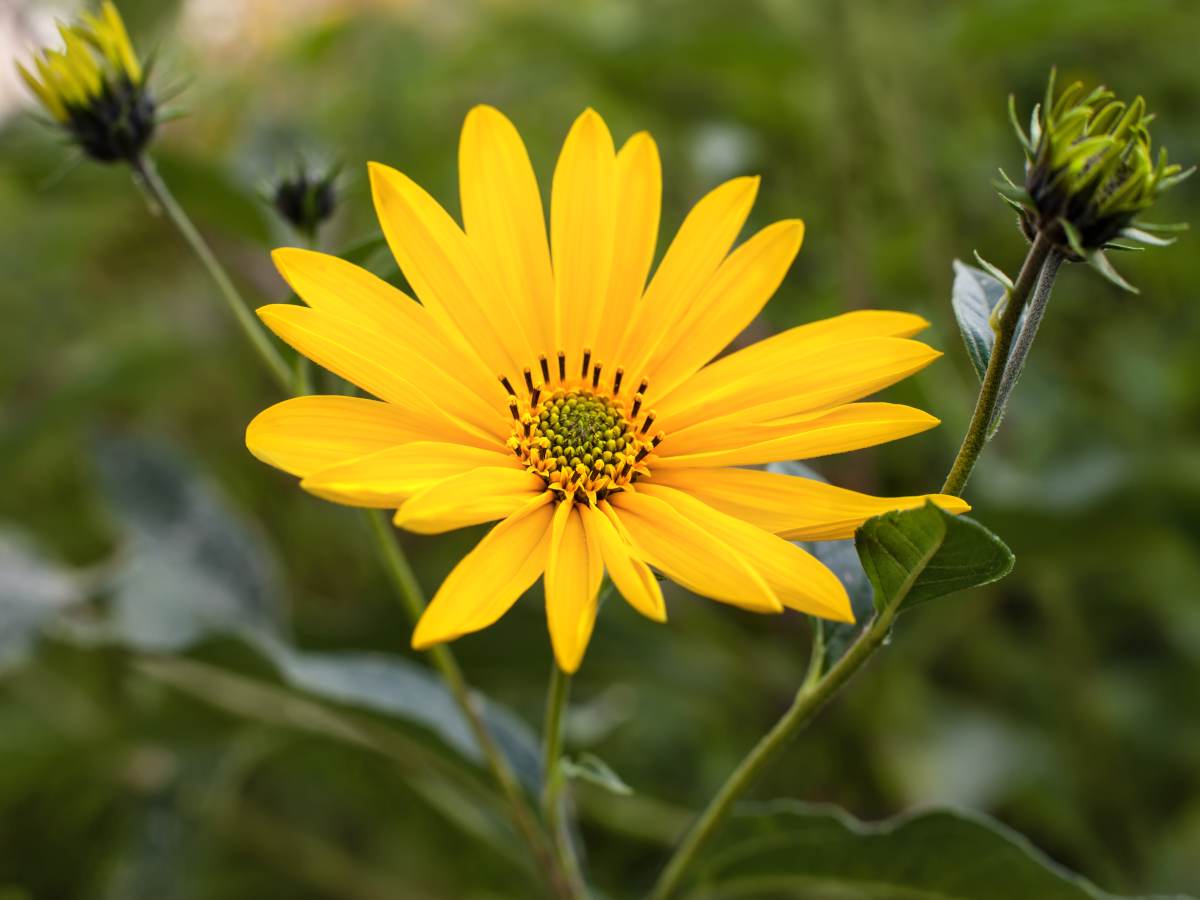
Few hardy perennials make an entrance quite like the cup plant. Towering to head height and beyond, Silphium perfoliatum carries clusters of bright yellow, sunflower-like daisies on stout square stems from midsummer until the first frosts. Its party trick is the pairs of large leaves that fuse around the stem to form watertight cups, which fill after rain and are visited by thirsty birds, bees and hoverflies.
Growing conditions
Give cup plant full sun if you want stout, self-supporting stems and the heaviest flowering. It copes with a few hours of shade, but plants drawn up in dim corners lean and lodge after summer storms. Shelter from the fiercest wind is helpful on exposed sites, though the square stems are surprisingly rigid.
This is a prairie and streamside plant, so it revels in deep, fertile ground that stays moist through summer. Heavy clay that defeats other perennials suits it perfectly, and it tolerates soils that flood briefly in winter. A pH between 5.5 and 7.5 is fine; thin, sandy or chalky soils give shorter, thirstier plants unless enriched with organic matter.
Hardiness is rarely an issue, as the woody crown shrugs off hard continental winters. In hot, dry Mediterranean-type climates, choose a spot with summer irrigation or reliable ground moisture, otherwise the lower leaves scorch by August.
How to plant Silphium
Plant container-grown specimens in spring, once the soil has begun to warm, so that the taproot establishes over a full growing season. Autumn planting also works well on free-draining ground in milder regions.
Spacing: allow 75–100 cm between plants — the clump broadens steadily and crowded plants shade one another into flopping.
Depth: set the crown level with the surrounding soil; burying it deeply in wet clay invites rot.
Soil preparation: fork a bucket of garden compost or well-rotted manure into the planting hole, breaking up any compacted pan so the taproot can drive down.
Watering in: soak thoroughly after planting and keep the root zone damp for the first two summers; established plants need far less.
Propagation: divide congested clumps in early spring with a sharp spade, taking a fist-sized piece with at least two buds — the crown becomes woody and resists division in older plants.
Silphium perfoliatum growing in a naturalistic garden border
Care through the seasons
Spring: Growth breaks late, often not until mid-April, so mark the position to avoid digging into a dormant crown. Mulch with 5 cm of compost around the emerging shoots and protect the soft new leaves from slugs. No rich feeding is needed; excess nitrogen simply produces floppy stems.
Summer: Water deeply in prolonged dry spells, particularly on sandy ground, as drought stress causes lower leaves to brown and drop. Removing spent flowerheads extends the display into September, but leave the last flush if you want seed for finches. Stake only where wind funnels through the garden.
Autumn: Leave the stems standing well into the season: they hold seed for birds and hollow stems for overwintering insects. Cut back to 15 cm once the stems collapse, or wait until late winter. Autumn is also the moment to lift and reduce clumps that have outgrown their allotted space.
Winter: The plant is entirely dormant and needs no protection whatsoever, even in exposed continental gardens. A loose mulch of leaf mould over the crown is beneficial only on very free-draining soils.
Best varieties to grow
Named cultivars of cup plant are scarce, so most gardeners grow the straight species or turn to closely related silphiums for variation in leaf and habit.
Silphium perfoliatum (species) — the standard garden form, reliably 2–2.5 m with the classic water-holding leaf cups.
Silphium perfoliatum ‘Silphie’ — the European biomass selection, notably vigorous, uniform and quick to bulk up into a dense screen.
Silphium laciniatum — the compass plant, with deeply cut leaves that align north–south and flower spikes to 2.5 m.
Slugs and snails: they shred the succulent spring shoots just as they emerge. Apply a barrier of sharp grit or wool pellets in early April and hand-pick after evening rain.
Powdery mildew: a white bloom on lower leaves in late summer, worst on dry soils. Mulch to conserve moisture, thin crowded stems for airflow and remove affected foliage rather than composting it.
Flopping and lodging: tall stems splay outwards after heavy rain, especially in shade or over-fed soil. Avoid nitrogen-rich feeds, plant in full sun, or cut stems back by a third in late May for shorter, sturdier growth.
🌿 Nature & Garden Newsletter
Gardening tips, recipes & seasonal advice, twice a week.