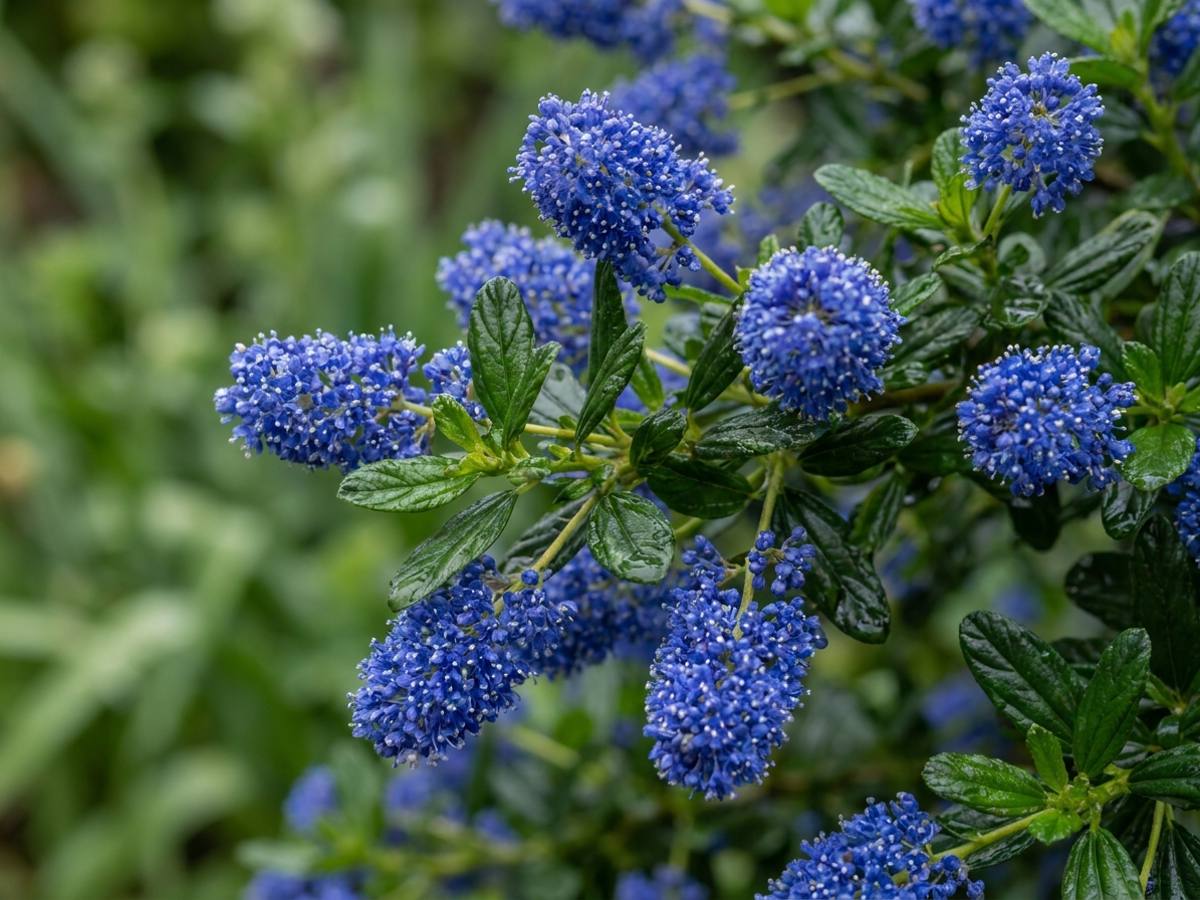
Few shrubs deliver a blast of true blue quite like Ceanothus thyrsiflorus, the Californian lilac, whose fluffy panicles smother the plant in late spring and hum with bees from dawn until dusk. Evergreen, glossy-leaved and remarkably fast-growing, it earns its place against a warm wall or as a bold informal screen. Its most distinctive trait is a fierce loathing of wet feet and heavy pruning — treat it gently on both counts and it will reward you handsomely.
Californian lilac at a glance
Latin name
Ceanothus thyrsiflorus
Common name(s)
Californian lilac, blueblossom, blue blossom ceanothus
Family
Rhamnaceae (buckthorn family)
Type
Evergreen shrub, occasionally small tree
Height
3–6 m (creeping forms 30–90 cm)
Spread
3–5 m
Flowering
Late spring to early summer, with a light second flush in late summer on some cultivars
Hardiness
Hardy to about −10 °C in a sheltered spot / USDA zones 8–10
Sun
Full sun
Soil
Light, sharply drained, neutral to slightly acid; tolerates poor and stony ground
Growing conditions
Give Ceanothus thyrsiflorus the sunniest, warmest position you have. A south- or west-facing wall or fence is ideal in cooler regions, as the reflected heat ripens the wood and improves both flowering and winter survival. Shade produces thin, sparse growth and disappointingly few flowers.
Drainage matters more than fertility. Light sandy or gravelly soils suit it perfectly, and it copes with shallow chalk provided the site never lies wet. Aim for a pH between 6.0 and 7.5; very alkaline conditions can trigger yellowing between the leaf veins.
Wind and waterlogging are the two great killers. In exposed coastal gardens it stands up well to salt-laden air, but cold, drying easterly winds in winter will scorch the foliage badly — plant with shelter to the east and north.
How to plant Ceanothus
Plant in mid to late spring, once the soil has warmed and all danger of hard frost has passed. This gives a full growing season for roots to establish before their first winter, which is far safer than autumn planting in a British climate.
Space wall-trained plants 2–3 m apart, and free-standing specimens 3–4 m apart, as they grow rapidly and resent being cut back hard to fit.
Set the plant at exactly the same depth it sat in its pot — burying the stem base invites collar rot.
On clay, plant on a raised mound of grit-enriched soil rather than digging a deep pit that will fill with water like a sump.
Water in thoroughly once, then water weekly only through the first summer; established plants rarely need irrigating.
Propagate from semi-ripe cuttings taken in July or August, rooted in a gritty compost with bottom heat of around 18 °C.
Ceanothus thyrsiflorus growing in a naturalistic garden border
Care through the seasons
Spring: Resist the urge to feed heavily — ceanothus fixes its own nitrogen through root nodules, and rich diets produce soft, frost-tender growth. A light scattering of sulphate of potash in March encourages flower buds. Tie in new shoots on wall-trained plants before they become woody and inflexible.
Summer: Prune immediately after the main flush of flower fades, usually late June, shortening the flowered shoots by no more than a third. Never cut into old bare wood, as Ceanothus thyrsiflorus almost never regenerates from it. Mature plants are genuinely drought-tolerant and should be left dry.
Autumn: Avoid all pruning from September onwards; late cuts stimulate soft growth that will be blackened by the first frosts. Apply a gravel or bark mulch around the base, keeping it clear of the stem. Take this opportunity to check and loosen any ties that have begun to bite into the bark.
Winter: The shrub stays fully clothed in glossy foliage all winter. In colder inland gardens, drape horticultural fleece over young plants when temperatures are forecast below −8 °C, and shelter the roots with dry leaves or straw.
Best varieties to grow
A handful of selections outperform the wild species in gardens, offering better colour, hardiness or a more manageable size.
‘Skylark’ — compact at around 2 m, with deep blue flowers and unusually good tolerance of cold and damp; holds an RHS Award of Garden Merit.
var. repens — the creeping blueblossom, only 60–90 cm tall but spreading to 2.5 m, superb for banks and low ground cover; also holds an AGM.
‘Millerton Point’ — an elegant white-flowered form with the same vigour as the species, lovely for lightening a shady corner of the border.
‘El Dorado’ (syn. ‘Perado’) — golden-margined leaves and mid-blue flowers, though it needs a particularly sheltered, sunny spot.
Pests, diseases and common problems
Root rot (Phytophthora): Sudden wilting, yellowing foliage and death of whole branches, usually after a wet winter. There is no cure — improve drainage radically before replanting, and never site a new ceanothus where one has died.
Scale insects: Brown limpet-like bumps on stems and leaf undersides, accompanied by sticky honeydew and sooty mould. Rub off small colonies by hand, or spray thoroughly with an organic plant oil or fatty-acid product in mid-summer when the young crawlers are active.
Winter scorch and dieback: Browned, crisped leaves and dead shoot tips after cold winds. Trim damaged shoots back to healthy green growth in late spring, once you can see where the live buds are, and consider a permanent windbreak.
🌿 Nature & Garden Newsletter
Gardening tips, recipes & seasonal advice, twice a week.