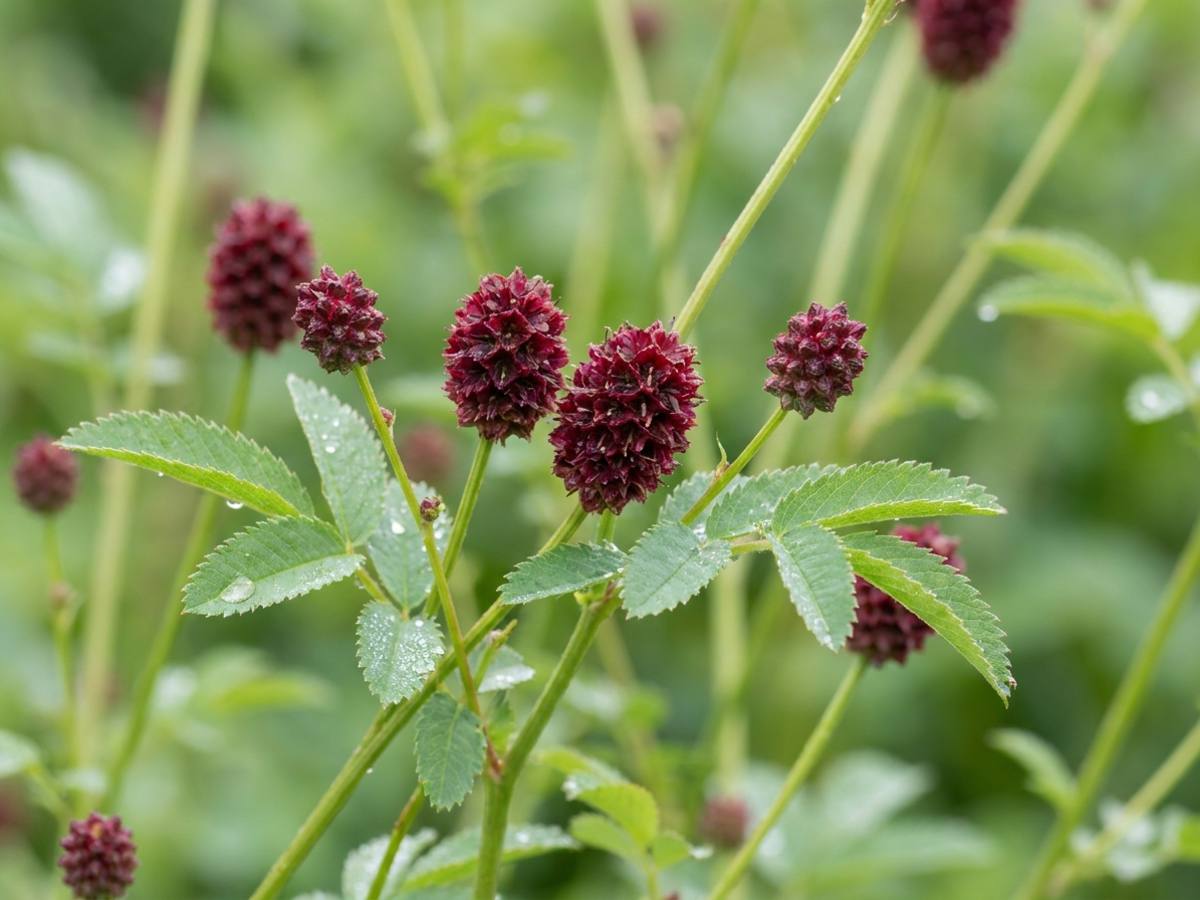
Sanguisorba officinalis, commonly known as Great Burnet, is a striking herbaceous perennial with deep crimson bottle-brush flower heads that bloom from midsummer to early autumn. Its finely divided, feathery foliage adds delicate texture to herbaceous borders, cottage gardens, and wildflower meadows. This hardy native of temperate Europe and Asia is valued for its long flowering season and ability to attract pollinators whilst requiring minimal fussing.
Growing conditions
Great Burnet thrives in full sun to partial shade, performing best with at least four to six hours of direct sunlight daily. In shadier positions, the plant remains healthy but produces fewer flowers and may develop lankier growth.
This perennial prefers moist, well-drained soil that does not dry out completely during summer. It tolerates clay and loamy soils well and prefers neutral to slightly acidic conditions; chalky, excessively alkaline soils may cause slight chlorosis, though the plant survives. Avoid waterlogged conditions in winter, as these can cause root rot.
Great Burnet is fully hardy throughout the UK and tolerates temperatures down to −15 °C. It is equally suited to temperate gardens across northern and central Europe, and thrives in cool to moderate continental climates.
How to plant Sanguisorba
Plant container-grown specimens in autumn or early spring when soil is workable and moisture levels are naturally higher. Autumn planting allows roots to establish before winter dormancy.
Space plants 45–60 cm apart to allow mature foliage room to spread without crowding neighbours.
Plant with the crown level with the soil surface; burying the crown may cause rotting.
Incorporate compost or well-rotted organic matter into the planting hole to improve drainage and add nutrients.
Water thoroughly after planting and keep the soil consistently moist for the first four weeks whilst the root system establishes.
Divide established clumps every four to five years in early spring or autumn to rejuvenate plants and propagate new specimens.
Sanguisorba officinalis growing in a naturalistic garden border
Care through the seasons
Spring: Remove dead growth from the previous year and tidy around emerging shoots once frost risk has passed. Apply a balanced general fertiliser or top-dress with compost in early spring to support new growth. The feathery foliage emerges mid-spring and grows steadily throughout the season.
Summer: Deadhead spent flower heads if you prefer a neater appearance, though leaving them extends the flowering season and provides food for seed-eating birds. Water during dry spells, particularly in the first growing season, to keep soil evenly moist. Mulch around plants to conserve moisture and suppress weeds, keeping mulch clear of the crown.
Autumn: Flowering continues into September and early October; delay cutting back until growth has fully withered and new basal growth is visible. Divide congested clumps in early autumn whilst soil is still warm and moisture is adequate. Apply a thick mulch layer in late autumn to protect the crown through winter.
Winter: Great Burnet is entirely dormant and requires no active care. The crown remains protected beneath accumulated mulch; no further feeding or watering is necessary unless there is an extended dry spell.
Which Sanguisorba should you choose?
The species and its selections differ mainly in flower colour, height and how long the display lasts. Use the table to decide before reading the descriptions below.
Which Sanguisorba should you choose?
Variety
Flower colour
Height and habit
Best use
Sanguisorba officinalis (species)
Deep crimson-red spikes
60–90 cm, robust
Traditional herbaceous borders and wildflower gardens
‘Arnott’s Scarlet’
Particularly bright red
60 cm, more compact
Smaller borders; can be spaced at 45 cm
‘Red Thunder’
Exceptionally deep burgundy
Slightly denser growth pattern
Longest display, midsummer until hard frost
Sanguisorba obtusa
Looser, delicate pink
Finer foliage, softer habit
Mixed plantings wanting a gentler effect
All of them ask for the same thing: moist but well-drained soil and a position in sun to light shade.
Best varieties to grow
Whilst the species is the most commonly grown form, several excellent selections offer subtle variations in habit and colour.
Sanguisorba officinalis (species) — The classic form with deep crimson-red flower spikes and robust growth, ideal for traditional herbaceous borders and wildflower gardens.
Sanguisorba officinalis ‘Arnott’s Scarlet’ — A vibrant cultivar with particularly bright red flower heads and a more compact habit, reaching 60 cm in height.
Sanguisorba officinalis ‘Red Thunder’ — A newer selection with exceptionally deep burgundy flowers and a slightly denser growth pattern, flowering reliably from midsummer to hard frost.
Sanguisorba obtusa — A closely related species with looser, more delicate pink flower spikes and finer foliage, offering a softer aesthetic in mixed plantings.
Pests, diseases and common problems
Powdery mildew: A fine white coating appears on foliage in dry summers when air circulation is poor. Remove affected leaves, improve spacing to increase airflow, and avoid wetting foliage when watering.
Rust: Orange or brown pustules develop on the undersides of leaves, particularly in warm, humid conditions. Remove infected foliage promptly and dispose of it in household waste rather than composting; apply a sulphur-based fungicide if infection spreads.
Root rot: Leaves yellow and wilt despite moist soil, indicating waterlogged conditions. Improve drainage by adding grit to heavy soils and ensure the crown sits above soil level; reduce watering frequency in autumn and winter.
Slugs and snails: Young foliage may be nibbled in spring, particularly after wet weather. Remove debris where slugs shelter, encourage ground beetles with a shallow water dish, and hand-pick after dusk if damage is significant.