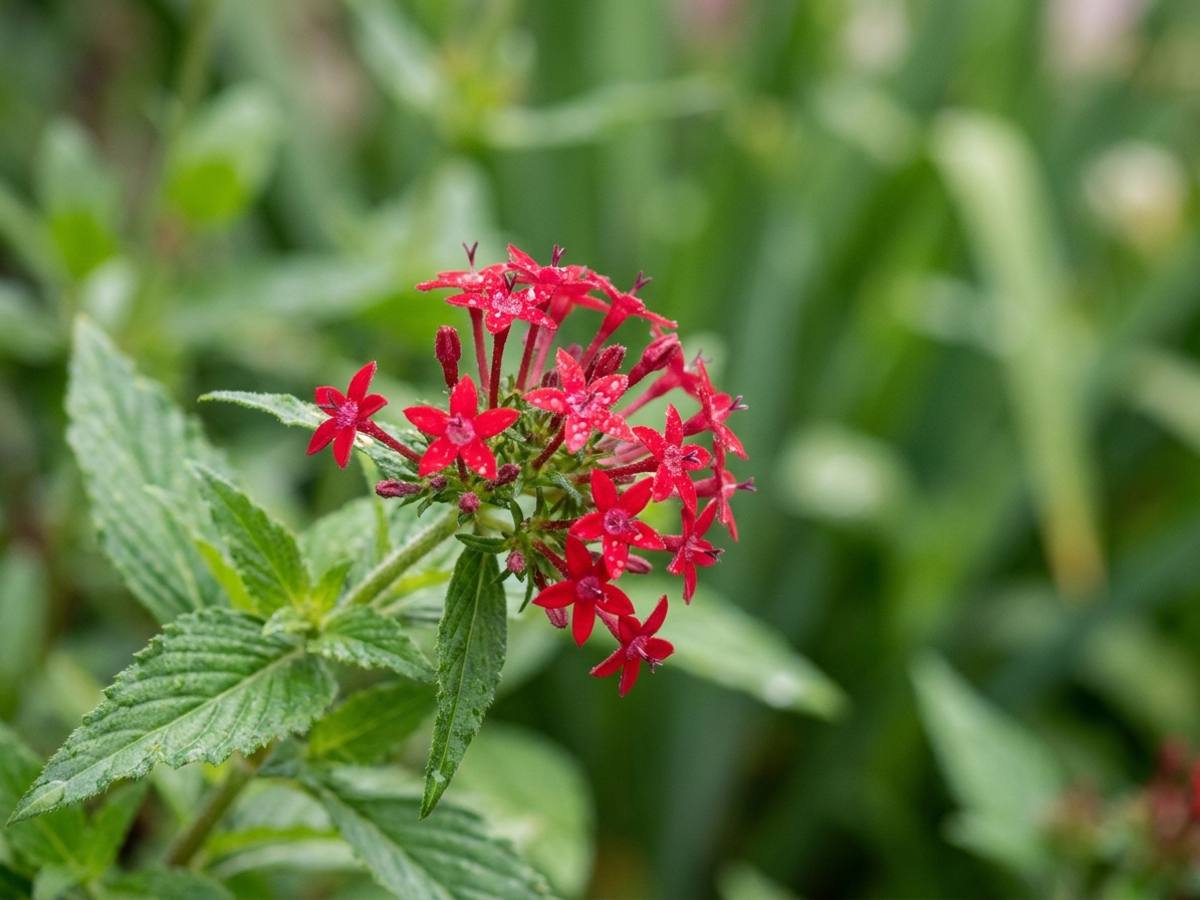
Few perennials give as much colour for as little effort as Centranthus ruber, the red valerian, whose domed heads of tiny star-shaped flowers glow crimson, rose or white from late spring right through to the first frosts. Its blue-green, slightly fleshy foliage forms a handsome bushy clump that looks equally at home tumbling from an old stone wall, softening a gravel drive or filling gaps in a sunny cottage border. Most remarkable of all is its appetite for poverty: the poorer, drier and stonier the soil, the happier it seems to be.
Growing conditions
Red valerian is a sun worshipper, native to the dry limestone hillsides of the Mediterranean. Give it the hottest, brightest spot you have and it will flower without pause for months. In shade the stems flop, flowering is sparse and plants become short-lived.
Drainage matters far more than fertility. Poor, gritty, chalky or sandy soils suit it perfectly, and it has a famous talent for rooting into wall crevices, rubble and old mortar. A neutral to strongly alkaline pH is ideal, though it copes with mildly acidic ground provided the drainage is sharp; heavy, wet clay is the one situation it truly resents.
It is hardy to roughly −15 °C and thrives in coastal gardens, shrugging off salt-laden wind and drought. In cold, damp winters the danger is waterlogging rather than frost, so gardeners on heavy soil should plant on a slope, raised bed or wall top.
How to plant Centranthus
Plant in spring, from March to May, so young plants establish a deep taproot before their first winter. Autumn planting works in mild, free-draining gardens, but on cold, wet soils spring is far safer.
Space plants 45–50 cm apart — they bulk up quickly into broad clumps and need air movement to prevent mildew.
Set the crown level with the soil surface, never buried, as a sunken crown rots in winter wet.
Skip the manure. Instead, fork in horticultural grit or coarse sand on heavier ground to open up the drainage.
Water in well at planting, then water only during prolonged dry spells in the first summer; thereafter it needs none.
Propagate by sowing seed in spring at 15–18 °C, by taking basal cuttings in April, or simply by transplanting the many self-sown seedlings whilst they are small.
Centranthus ruber growing in a naturalistic garden border
The red valerian year at a glance
Red valerian asks for very little, but the little it asks falls at particular moments of the year. This table sets out the one job that matters in each season, and what it buys you.
The red valerian year at a glance
Season
The one job
What it achieves
Early spring
Tidy frost-damaged growth, thin crowded stems, and do not feed
Sturdy, flower-laden growth instead of lush, floppy stems
Midsummer
Shear the whole clump back by about a third as the first flush fades
A second display later in the season, and far less seed
Mid-autumn
Cut stems back to a low framework of 10–15 cm; avoid heavy mulch
A dry crown that will not trap damp over winter
Midwinter
Nothing beyond keeping the crown clear of standing water
Semi-evergreen rosettes come through unharmed
Almost every failure with this plant traces back to the autumn and winter lines of the table rather than to cold.
Care through the seasons
Spring: Fresh grey-green shoots appear from the woody base as soon as the weather warms. Tidy away any frost-damaged growth and thin overcrowded stems. Resist feeding entirely — rich soil produces lush, floppy growth and fewer flowers.
Summer: This is peak season, and the plant needs almost nothing beyond deadheading. Shear the whole clump back by roughly one third as soon as the first flush fades in July, and you will be rewarded with a second display into September. Regular deadheading also drastically reduces the volume of wind-borne seed, which is the key to controlling its spread.
Autumn: Cut stems back to a low framework of about 10–15 cm once flowering finishes, or leave a few heads for the birds. Divide congested clumps only if you must — the deep taproot dislikes disturbance and cuttings or seedlings give better results. Avoid heavy mulching around the crown, which traps damp.
Winter: Plants are semi-evergreen in mild areas, holding a low rosette of bluish leaves. No protection is needed apart from ensuring the crown never sits in standing water.
Best varieties to grow
The species self-sows in a pleasing mix of shades, but named forms give more reliable colour.
Centranthus ruber ‘Coccineus’ — the classic deep carmine-red form, richer and more consistent in colour than ordinary seedlings; holds an RHS Award of Garden Merit.
Centranthus ruber var. albus — pure white flowers above pale green foliage, luminous at dusk and lovely with silver-leaved neighbours.
Centranthus ruber ‘Rosenrot’ — a compact selection with dense, deep rose-pink heads on sturdier, less flop-prone stems.
Centranthus ruber ‘Snowcloud’ — a well-branched white form that flowers exceptionally freely from early summer to autumn.
Pests, diseases and common problems
Powdery mildew: A white dusty film on leaves in hot, still weather, usually where plants are crowded or dry at the root. Cut affected growth back hard, water at the base and space plants more generously to improve airflow.
Crown and root rot: Blackened stem bases and sudden collapse, almost always caused by winter wet on heavy soil. There is no cure — replant on a raised bed or wall top with plenty of grit worked in.
Excessive self-seeding: Seedlings appear in paths, gravel and mortar joints and can crowd out weaker plants. Deadhead before seed heads turn fluffy, and hoe out unwanted seedlings whilst tiny, as the taproot becomes stubborn within months.