Allium cristophii: varieties, planting and garden uses
0
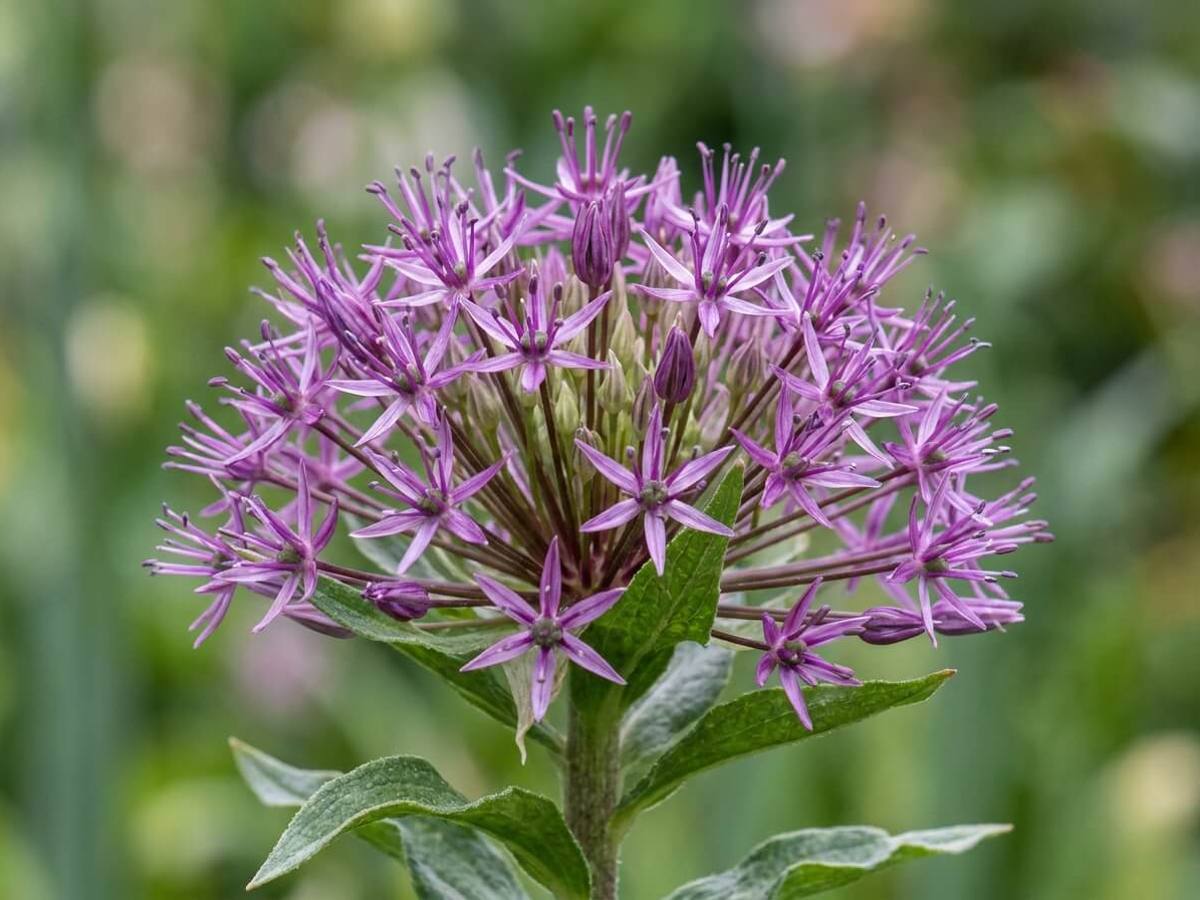
Few bulbs deliver quite as much drama for so little effort as Allium cristophii, the Star of Persia. Each stout stem carries a vast, airy sphere — often 20 cm or more across — packed with up to a hundred metallic violet, star-shaped flowers that catch the light like burnished foil. Better still, the seedhead holds its shape for months, turning the early-summer display into an architectural feature that lasts well into autumn.
Growing conditions
Give Allium cristophii the sunniest, most open position you have. It comes from the dry hills and steppe of Iran, Turkey and Turkmenistan, where the bulbs bake through a long, hot summer dormancy. In shade the stems flop, the colour dulls and the bulbs gradually dwindle away.
Drainage matters more than fertility. A gritty loam, a chalky soil or a well-worked sandy bed all suit it perfectly, ideally neutral to slightly alkaline. On heavy clay, plant on a raised ridge or dig a generous handful of coarse grit into the base of each planting hole.
It is reliably hardy across most of northern Europe and copes with hard frost, provided the soil does not stay wet in winter. In regions with cool, damp summers, a gravel garden, a south-facing slope or the foot of a warm wall will give the ripening the bulbs need.
How to plant Allium
Plant dry bulbs in autumn, from late September to early November, so they root before the ground cools. Autumn planting also gives the bulbs the cold spell they require to initiate flower buds.
Spacing: set bulbs 15–20 cm apart — close enough for the globes to overlap visually, far enough to avoid competition and stagnant air.
Depth: plant 10–15 cm deep, roughly three times the height of the bulb, with the pointed nose upwards.
Soil preparation: fork the bed to a spade’s depth and mix in grit on anything heavy; avoid fresh manure, which encourages rot.
Watering in: water once after planting to settle the soil, then leave well alone — autumn rainfall is usually sufficient.
Propagation: lift congested clumps in late summer and detach the offsets, or simply allow a few seedheads to shed and transplant the seedlings.
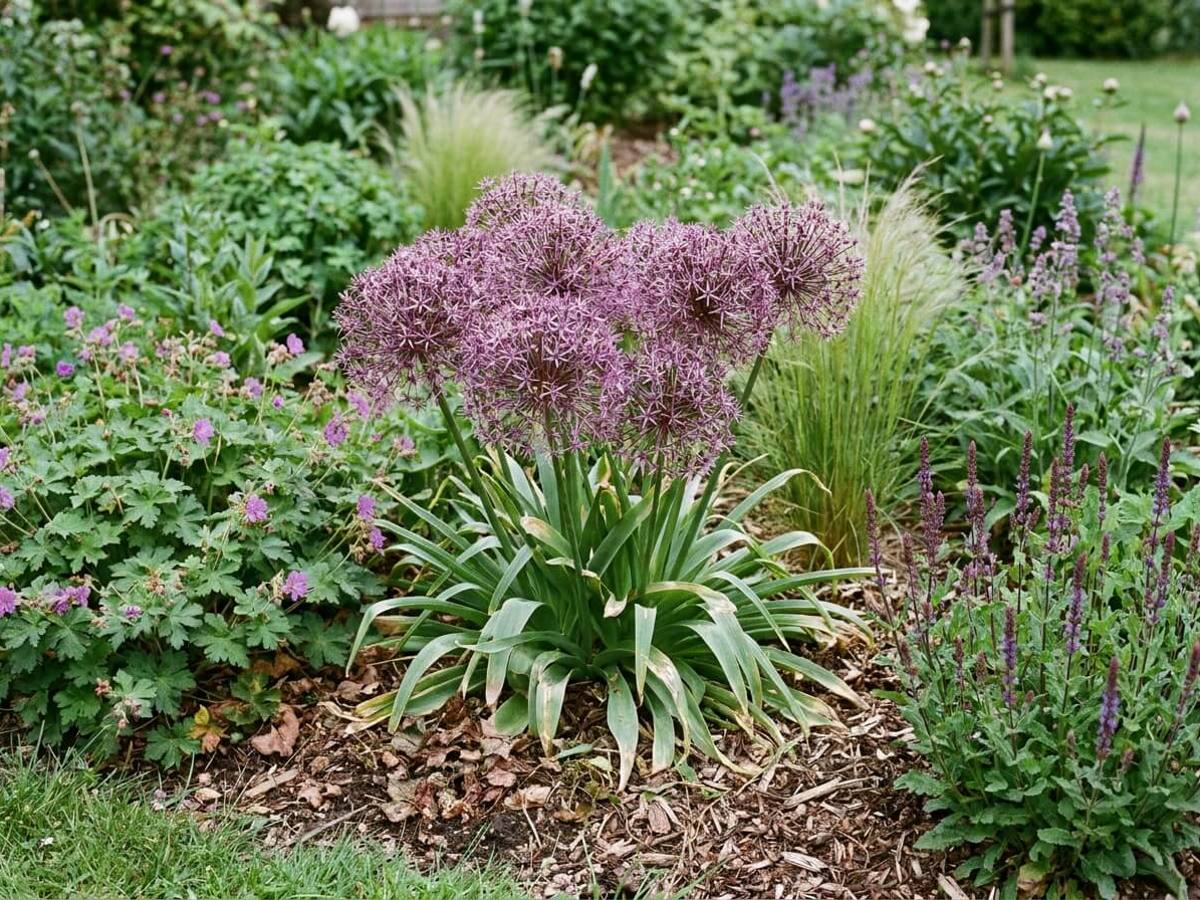
Allium cristophii growing in a naturalistic garden border
Care through the seasons
Spring: Broad, grey-green, faintly hairy leaves appear early and are part of the charm — until they start yellowing just as the buds open. Resist removing them, as they are still feeding the bulb. A light dressing of sulphate of potash or a low-nitrogen general fertiliser in March supports flowering.
Summer: Watering is rarely needed once flowering begins; the bulbs positively enjoy a dry rest. Leave the spent heads standing — they bleach to a pale straw colour and look superb well into August. Snip off a proportion of them if you want to limit self-seeding.
Autumn: Clear away collapsed stems and any remaining foliage in September or October. Lift and divide clumps every four or five years if flowering declines, replanting the largest bulbs immediately. Avoid heavy organic mulches directly over the bulbs, which trap moisture.
Winter: The bulbs are completely dormant and need no protection in open ground. In containers, move pots against a wall or under an overhang so the compost does not become waterlogged.
Best varieties to grow
The species itself is the classic, but several close relatives and hybrids extend the season and the scale.
Allium cristophii — the straight species holds an RHS Award of Garden Merit for its huge, glittering violet globes and superb dried heads.
Allium ‘Globemaster’ — a cristophii hybrid with dense, deep violet spheres up to 20 cm across on 80 cm stems; sterile, so it does not self-seed.
Allium ‘Purple Rain’ — a seedling of A. cristophii with looser, spidery flowers in a richer purple, flowering slightly later.
Allium schubertii — a relation with an extraordinary exploding-firework head; needs sharper drainage and a hotter, more sheltered spot.
Pests, diseases and common problems
Allium leaf miner: wavy white tunnels in the leaves and small brown pupae within the tissue, with distorted growth. Cover emerging shoots with insect-proof mesh in March and again in autumn, and remove affected foliage.
White rot: leaves yellow prematurely and the bulb base turns to a fluffy white mould speckled with black sclerotia. There is no cure; lift and destroy affected bulbs and do not grow any allium, including onions or leeks, on that ground for many years.
Bulb rot in wet soil: bulbs fail to appear, or emerge weakly and collapse. Almost always a drainage fault — replant into raised, grit-improved soil rather than trying to nurse them.
Slugs and snails: ragged holes in the young spring foliage. Use wildlife-safe ferric phosphate pellets or evening hand-picking around emerging shoots.
🌿 Nature & Garden Newsletter
Gardening tips, recipes & seasonal advice, twice a week.