Growing Glory of the Snow: care, varieties and planting
0
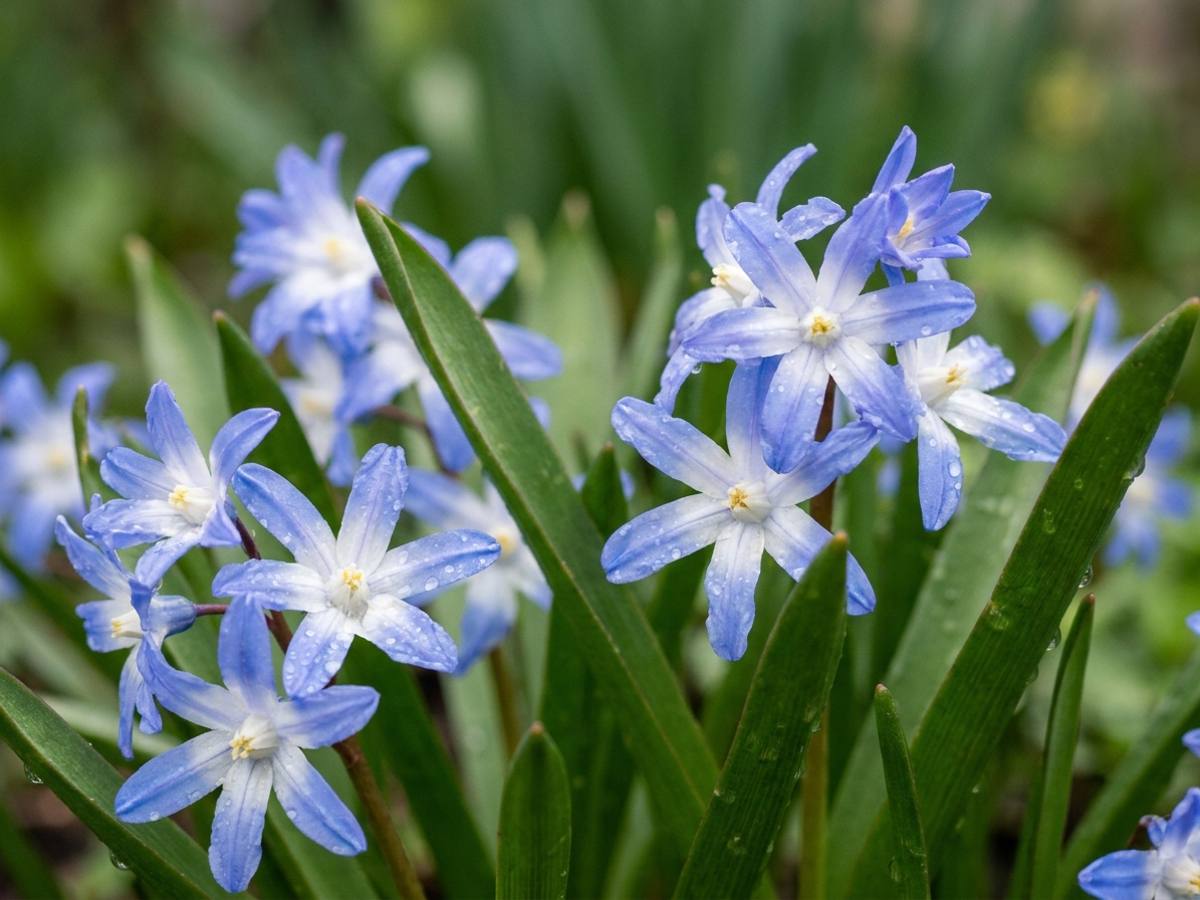
Chionodoxa forbesii is one of the earliest and most cheerful of the small spring bulbs, carpeting bare ground with starry, upward-facing flowers of clear blue with a white eye. It naturalises willingly beneath deciduous trees and shrubs, spreading by both offsets and self-sown seed to form drifts that deepen year on year. Its common name, glory of the snow, refers to its habit of flowering while the last frosts still linger.
Growing conditions
Glory of the snow flowers best in full sun during its short growing season, which conveniently falls before deciduous trees come into leaf. This makes it ideal for planting under apples, birches, magnolias and deciduous shrubs, where summer shade is no disadvantage. Avoid dense evergreen shade, where flowering thins and colonies gradually fade away.
Almost any reasonably drained garden soil suits it, from light sand to loam over chalk. The one thing it will not tolerate is waterlogging, particularly in summer when the bulbs are dormant and prone to rotting. A neutral to slightly alkaline pH is preferred, though it grows perfectly well in mildly acid soils; heavy clay should be lightened with grit before planting.
Native to the mountains of western Turkey, Chionodoxa forbesii is exceptionally cold-tolerant and needs a proper winter chill to perform. It thrives throughout Britain, northern Europe and the cooler parts of North America, but struggles in mild Mediterranean or subtropical gardens where winters are too warm to break dormancy properly.
How to plant Chionodoxa
Plant dry bulbs in early to mid autumn, ideally September or October, so roots establish before the ground cools. Bulbs are small and dry out quickly, so buy fresh stock and plant promptly rather than storing them.
Spacing: set bulbs 5–8 cm apart in generous groups of 25 or more — thin scatterings look mean, whereas dense drifts read as a blue haze from a distance.
Depth: plant 7–8 cm deep with the pointed nose upwards; if you cannot tell which end is which, lay the bulb on its side and it will right itself.
Soil preparation: fork over the planting area, remove perennial weeds and work in a handful of horticultural grit per square metre on heavier ground.
Watering in: water once after planting if the soil is dry, then leave alone — autumn rainfall usually does the rest.
Propagation: lift and split congested clumps as the foliage yellows in late spring, replanting offsets immediately; alternatively leave seedheads to ripen and let it self-sow.
Chionodoxa forbesii growing in a naturalistic garden border
Care through the seasons
Spring: Growth appears in late winter and flowering follows within weeks, needing no intervention at all. A light scattering of general-purpose fertiliser or bonemeal as shoots emerge helps bulbs bulk up for next year. Leave the foliage entirely alone until it yellows naturally, usually by late May, as this is when the bulb recharges.
Summer: The bulbs are fully dormant by June and need no water whatsoever — dry summer conditions actually suit them. Mark the planting positions with labels or a few canes so you do not spear them when planting summer bedding. If self-seeding is spreading further than you would like, remove the seedheads before they split open in early summer.
Autumn: This is the season for planting new bulbs and for lifting and dividing established colonies that have become overcrowded and shy of flowering. A thin mulch of leaf mould over the planting area feeds the soil without smothering the emerging shoots. Avoid heavy applications of rich manure, which encourages rot.
Winter: No protection is required — the bulbs are hardier than almost anything else in the border and shoots shrug off snow and frost. In containers, move pots to a sheltered spot to prevent the compost freezing solid for weeks on end.
Best varieties to grow
Selections vary mainly in flower colour and size, and all combine beautifully in the same drift.
Chionodoxa forbesii ‘Pink Giant’ — soft lilac-pink stars with a white centre, taller and larger-flowered than the species, and an RHS Award of Garden Merit holder.
Chionodoxa forbesii ‘Blue Giant’ — a vigorous, deeper blue form with noticeably larger flowers, excellent for naturalising in grass.
Chionodoxa forbesii ‘Alba’ — pure white, sparkling against dark soil and invaluable for lightening shady corners.
Chionodoxa forbesii ‘Violet Beauty’ — rich violet-purple blooms with a bold white eye, providing depth of colour among the paler blues.
Pests, diseases and common problems
Squirrels, mice and voles: freshly planted bulbs are dug up and eaten, leaving small excavations. Lay chicken wire over the planting area for the first autumn, or plant beneath a mulch of sharp grit to deter digging.
Bulb rot and grey mould (Botrytis): soft, brown bulbs and collapsing foliage after a wet winter, most common in heavy soils. Improve drainage with grit, avoid summer irrigation over dormant bulbs and discard any affected bulbs rather than composting them.
Slugs and snails: ragged holes in petals and young leaves during mild, damp spells. Water the ground with nematodes in early spring, or go out after dark with a torch and collect them by hand.
Blindness (leaves but no flowers): usually a sign of overcrowded clumps, too much shade or foliage cut back too soon. Divide congested colonies in autumn and always let leaves die down naturally.
🌿 Nature & Garden Newsletter
Gardening tips, recipes & seasonal advice, twice a week.