Growing Allium stipitatum: care tips and planting advice
0
Few bulbs make a bolder statement in late spring than Allium stipitatum, whose dense violet or ivory globes float on bare stems up to 1.2 m tall. Native to the mountains and dry slopes of Central Asia and Iran, it thrives on the sort of sun-baked, free-draining soil that defeats many perennials. Its skeletal seed heads remain handsome for months after the colour has faded, giving structure well into midsummer.
Growing conditions
Give this allium the sunniest position you have — a minimum of six hours of direct light daily. In shade the stems stretch, lean and often need staking, whilst flower heads shrink noticeably. A sheltered spot is helpful, since tall stems can be rocked by summer gusts.
Drainage matters far more than fertility. Allium stipitatum comes from stony mountain slopes that bake dry in summer, so heavy, waterlogged clay quickly causes bulb rot. Aim for a light loam, sandy soil or well-worked chalk with a pH from neutral to distinctly alkaline; acidic, peaty ground is best avoided or amended with garden lime and grit.
It is reliably hardy across the whole of the UK, northern Europe and much of North America, tolerating hard frosts once dormant. In wet-winter regions such as western Britain and the Pacific Northwest, plant on a slight mound or raised bed so water drains away from the bulbs.
How to plant Allium
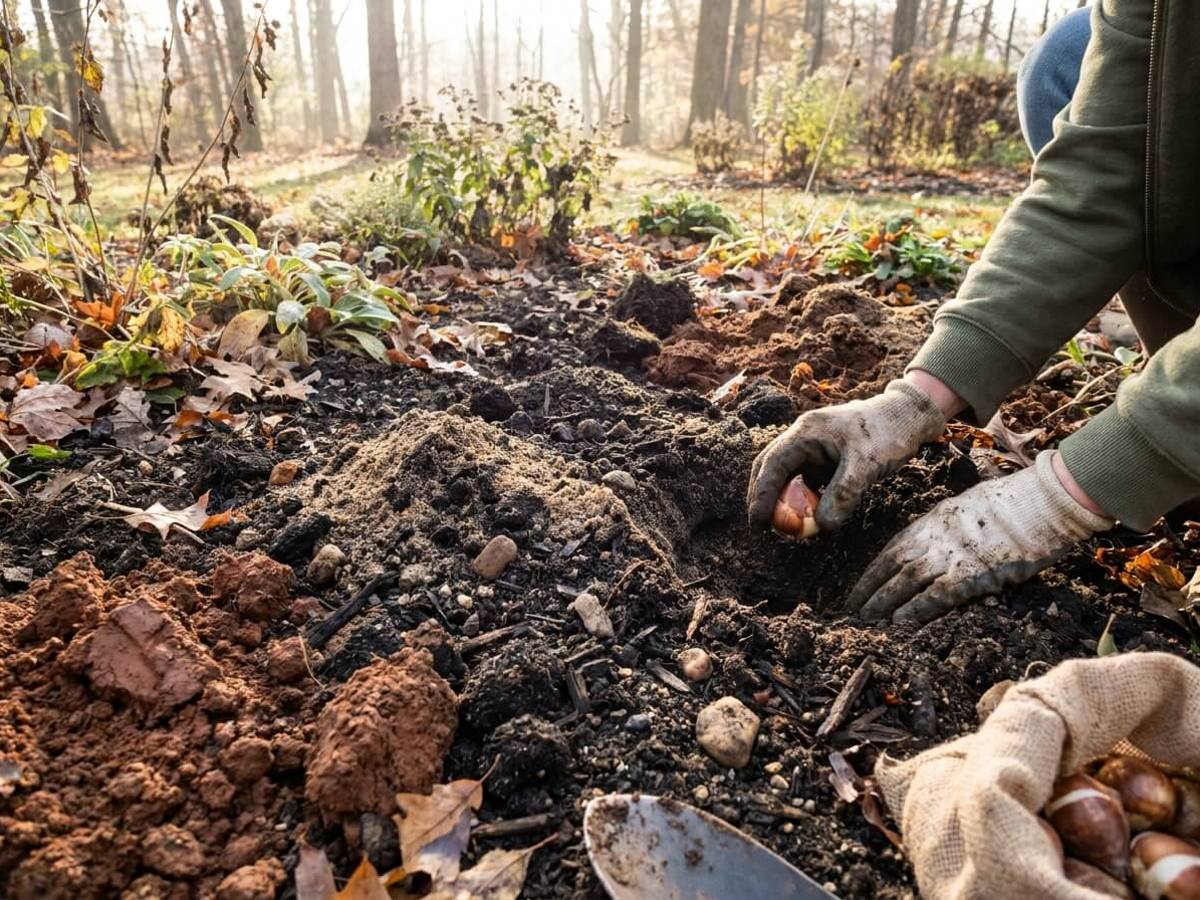
Plant dry bulbs in autumn, from September to November, so they root before winter and receive the cold spell they need to flower well. Late planting into December is possible, but expect shorter stems in the first year.
Spacing: set bulbs 20–25 cm apart, or in casual groups of five to nine for a natural drift — too close and the broad basal leaves shade one another and rot in damp weather.
Depth: plant three times the height of the bulb deep, roughly 15–20 cm, with the pointed nose upwards; deep planting anchors the tall stems.
Soil preparation: fork over the planting area and mix a generous spadeful of horticultural grit or coarse sand into the base of each hole on heavier ground.
Watering in: water once after planting to settle the soil, then leave alone — autumn and winter rainfall is normally ample and extra water risks rotting the bulb.
Propagation: lift congested clumps in late summer when dormant and detach the offsets, replanting the largest immediately; seed is possible but takes three to five years to reach flowering size.
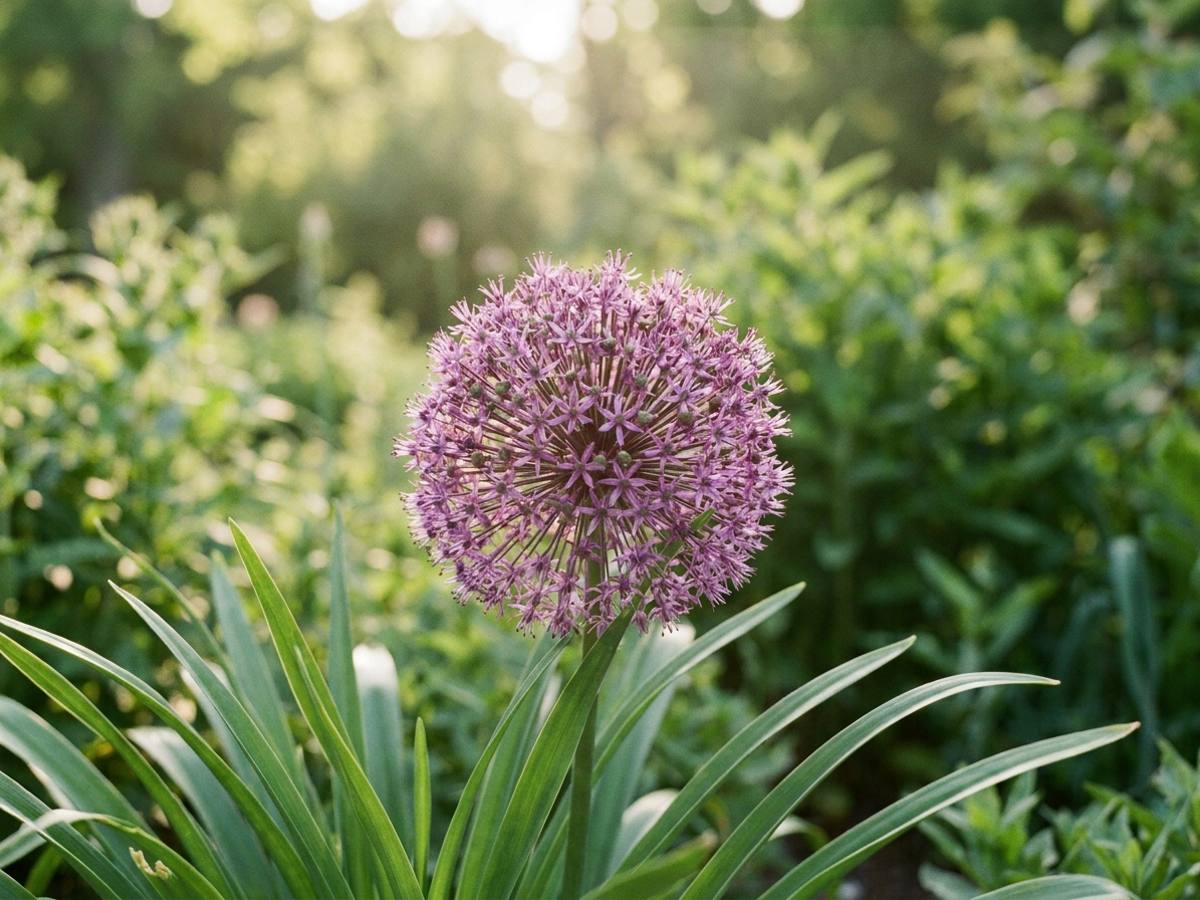
Allium stipitatum growing in a naturalistic garden border
Care through the seasons
Spring: Broad, grey-green strap leaves emerge in March, followed by fast-rising flower stems in May. Scatter a balanced granular feed or sulphate of potash around the emerging shoots to build next year’s bulb. Resist tidying the leaves, however tatty they look — they are actively feeding the bulb.
Summer: Flowering finishes by late June, after which the foliage yellows and dies back naturally; allow it to wither completely before removing. Leave the seed heads standing for architectural interest, or cut a few for drying indoors. Water is rarely needed and a summer bake actually improves flowering, so avoid irrigating the dormant bulbs.
Autumn: Clear away any remaining dry stems and leaves to reduce slug shelter and fungal spores. This is the moment to lift and divide clumps that have become overcrowded, and to plant new bulbs. A thin mulch of grit or gravel over the crowns keeps winter wet off the necks whilst preserving drainage.
Winter: The bulbs are fully dormant and require no protection outdoors, even in prolonged frost. Container-grown bulbs benefit from being moved to a rain-shadow against a wall to prevent the compost becoming saturated.
Best varieties to grow
Most garden forms are selections of A. stipitatum chosen for stem height and flower colour.
Allium ‘Mount Everest’ — the classic tall white form, with 12 cm ivory globes on 110 cm stems; holds an RHS Award of Garden Merit and shines against dark hedging.
Allium stipitatum ‘Violet Beauty’ — deep violet-purple florets with a pale eye, reaching around 90 cm and excellent for cutting.
Allium stipitatum ‘Mars’ — vigorous and reliable, with large rosy-lilac heads on sturdy 100 cm stems that seldom need support.
Allium stipitatum ‘Album’ — a refined pure white selection, slightly shorter at 70–90 cm, useful for smaller borders and gravel gardens.
Pests, diseases and common problems
Allium leaf miner: the larvae tunnel into leaves and bulbs, leaving distorted foliage and rows of pupae; grow susceptible plants under fine insect mesh in March and October, and destroy affected material rather than composting it.
White rot: leaves yellow prematurely and the bulb base turns to fluffy white mould with black specks. There is no cure — lift and bin infected bulbs and avoid planting any allium, including onions and garlic, in that soil for at least eight years.
Downy mildew and rust: pale patches or orange pustules on leaves during a damp spring; improve spacing and air movement, water at soil level only, and remove the worst leaves once flowering has finished.
Slugs and floppy stems: young shoots can be grazed in wet springs, and stems may lean if grown too shaded or too rich; use organic slug pellets or barriers early, and site plants in full sun among grasses or perennials that offer natural support.
🌿 Nature & Garden Newsletter
Gardening tips, recipes & seasonal advice, twice a week.