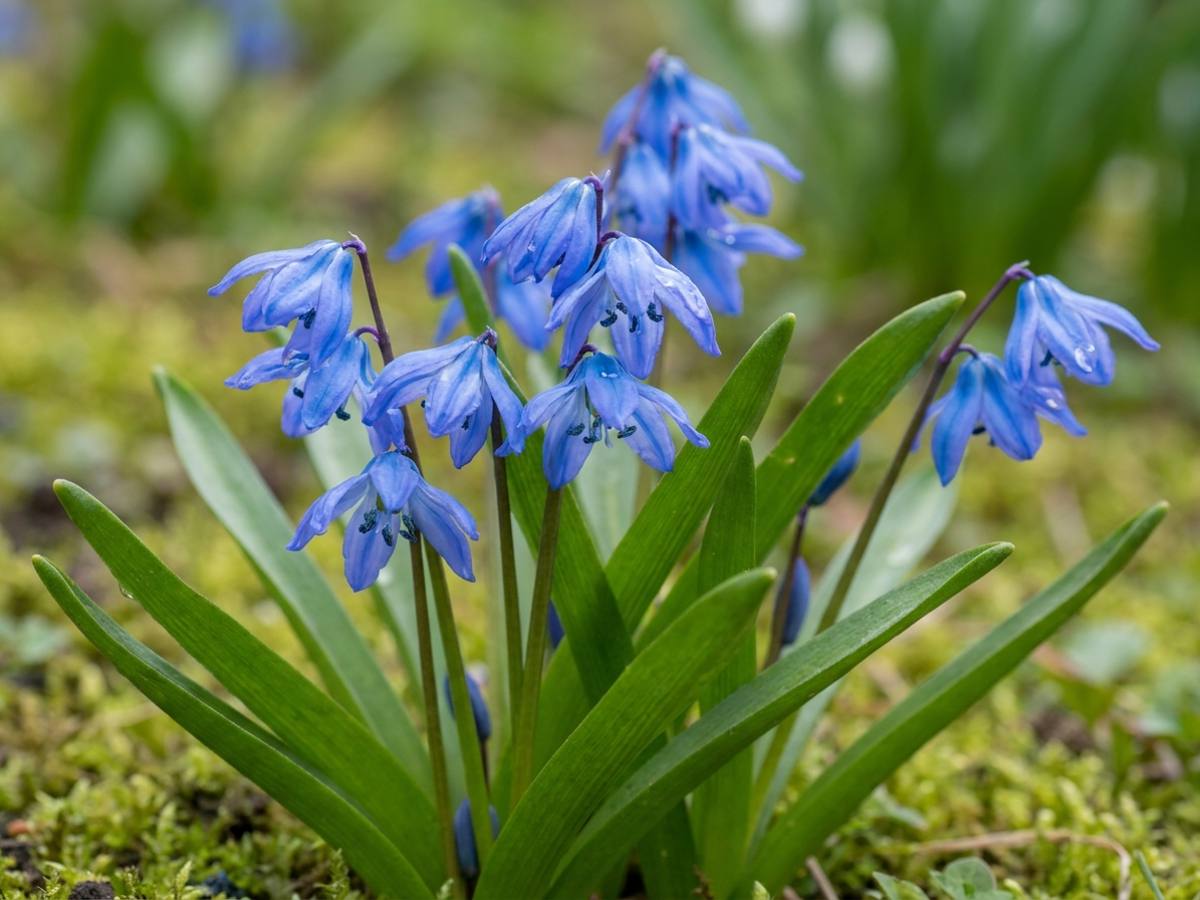
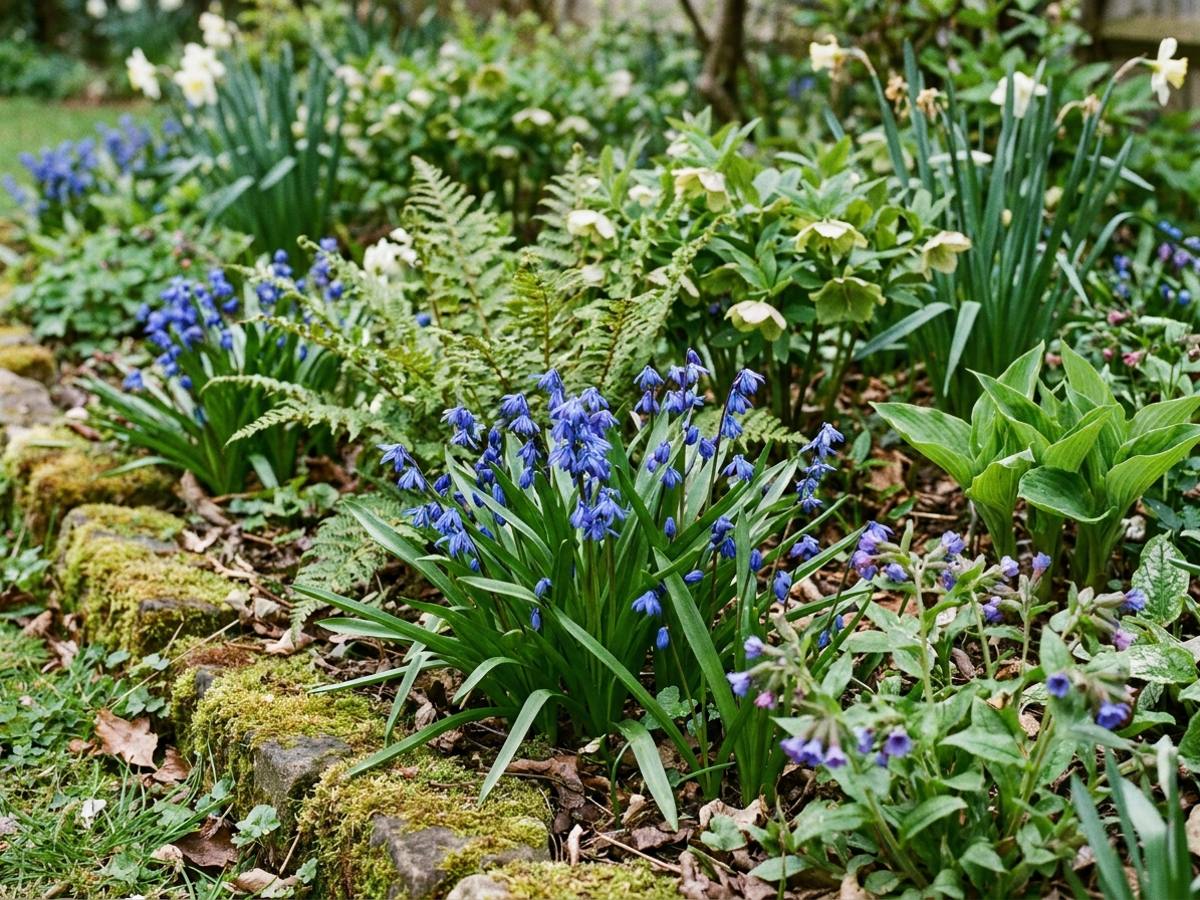
Scilla siberica is a beloved spring bulb prized for its vivid blue star-shaped flowers that carpet woodland gardens and borders with colour from late winter onwards. These delicate, nodding blooms appear in tight clusters and naturalise beautifully, creating drifts of blue that signal the gardening year’s awakening. One of the earliest bulbs to flower, Scilla siberica is also one of the most reliable and unfussy perennials for British gardens.
Growing conditions
Scilla siberica performs best in full sun to partial shade, flowering most prolifically where it receives at least half a day of direct sunlight. In shaded woodland settings, flowers will still appear but may be fewer and slightly paler in colour. Morning sun combined with afternoon shade is particularly ideal, protecting blooms from excessive heat.
These bulbs are unfussy about soil type and will establish in most well-drained soils, including chalk, loam, and even clay. A fertile, humus-rich soil encourages better flowering and spread, whilst poor, compacted soil may limit performance. Good drainage is essential during dormancy; waterlogged conditions in winter and early spring can cause bulb rot.
Scilla siberica is fully hardy throughout the United Kingdom and northern Europe, tolerating temperatures down to −15 °C or below. No winter protection is necessary in British gardens. In warmer regions, these bulbs perform better at higher altitudes where cool dormancy periods are maintained.
How to plant Scilla
Plant Scilla bulbs in autumn, from September through to November, allowing sufficient time for root establishment before winter frosts. Early autumn planting encourages stronger spring flowering and helps bulbs naturalise effectively.
Space bulbs 7–10 cm apart to allow room for division and self-seeding as colonies establish.
Plant bulbs at a depth of 5–8 cm (two to three times the bulb’s height), measuring from the base of the bulb to soil surface.
Work well-rotted compost or leaf mould into planting areas to improve soil fertility and drainage.
Water newly planted bulbs gently to settle soil around them; ongoing watering is rarely necessary unless conditions are exceptionally dry.
Divide established clumps every three to four years after flowering, or allow bulbs to spread freely via self-seeding for a naturalised effect.
Nodding clusters naturalise into carpets of early blue
Which Siberian squill should you plant?
The plain species and its three or four named selections all behave in much the same way underground, so the choice comes down to flower colour and the effect you want in a drift. This table sets the options side by side before you order bulbs.
Which Siberian squill should you plant?
Choice
Flower colour
Distinctive feature
Best use
Scilla siberica (species)
Vivid blue, star-shaped
The most reliable performer, 10–20 cm tall
Naturalising drifts in woodland and borders
‘Spring Beauty’
Bright blue with a subtle purple stripe
Vigorous, with larger and more densely packed flower spikes; RHS AGM
Strongest display where impact matters
‘Alba’
Pure white
Slender stems, ethereal effect
Drifts or planting beneath deciduous trees
‘Atrocaerulea’
Deep, richly saturated blue
More dramatic colour than the species type
Bold blocks of colour
‘Rosea’
Rose-pink
A rare cultivar, harder to source
Interplanting for contrast with blue selections
Whichever you choose, plant in early autumn and let the colony thicken year on year.
Care through the seasons
Spring: Remove winter mulch once growth emerges and apply a balanced bulb fertiliser as flower buds develop. Deadhead spent flowers promptly to tidy the garden, though leaving a few flowers on the plant will encourage self-seeding and naturalisation. Allow foliage to remain until at least six weeks after flowering finishes, as the leaves replenish bulb reserves for next season.
Summer: Scilla requires minimal summer care; foliage will naturally yellow and retreat as temperatures warm. Reduce watering once the plant enters dormancy, as these bulbs prefer dry conditions during their resting period. In very wet summers, ensure planting sites drain freely to prevent bulb rot. Avoid applying summer mulch, which can trap moisture around dormant bulbs.
Autumn: This is the ideal time to divide overcrowded clumps if desired, replanting immediately so divisions do not dry out. Tidy surrounding areas and apply a thin layer of leaf mould or bark mulch to protect bulbs and improve soil structure. Do not use heavy mulches that might compact or smother emerging shoots in late winter.
Winter: Scilla siberica bulbs remain dormant underground and require no active care. In very exposed gardens, a loose mulch of straw or bracken offers minor protection, though it is rarely necessary. Remove any winter mulch in late February as shoots begin to emerge.
Best varieties to grow
The species itself is the most reliable choice, but several cultivars offer refined colour variations and slightly different habit.
Scilla siberica ‘Spring Beauty’ — A vigorous selection bearing larger, more densely packed flower spikes of bright blue with a subtle purple stripe; RHS AGM awarded.
Scilla siberica ‘Alba’ — Pure white flowers on slender stems, creating an ethereal effect when planted in drifts or beneath deciduous trees.
Scilla siberica ‘Atrocaerulea’ — Deep, richly saturated blue flowers, producing a more dramatic colour impact than the species type.
Scilla siberica ‘Rosea’ — A rare rose-pink cultivar that provides subtle colour contrast when interplanted with blue selections.
Pests, diseases and common problems
Bulb rot: Symptoms include soft, mushy bulbs and a foul smell; caused by waterlogging or poor drainage. Prevent by ensuring bulbs are planted in well-drained soil and by avoiding summer watering once dormancy begins. Dispose of affected bulbs and improve drainage in the planting area.
Slugs and snails: Young leaves and emerging flower buds may be grazed, leaving ragged edges and preventing flowering. Encourage natural predators such as ground beetles and frogs, or apply copper tape or organic slug pellets around vulnerable plants in early spring.
Excessive self-seeding: While naturalisation is desirable, Scilla can spread prolifically if left unchecked in contained borders. Deadhead flowers before seeds mature if you wish to control spread, or accept the volunteer seedlings as part of the plant’s naturalising habit.