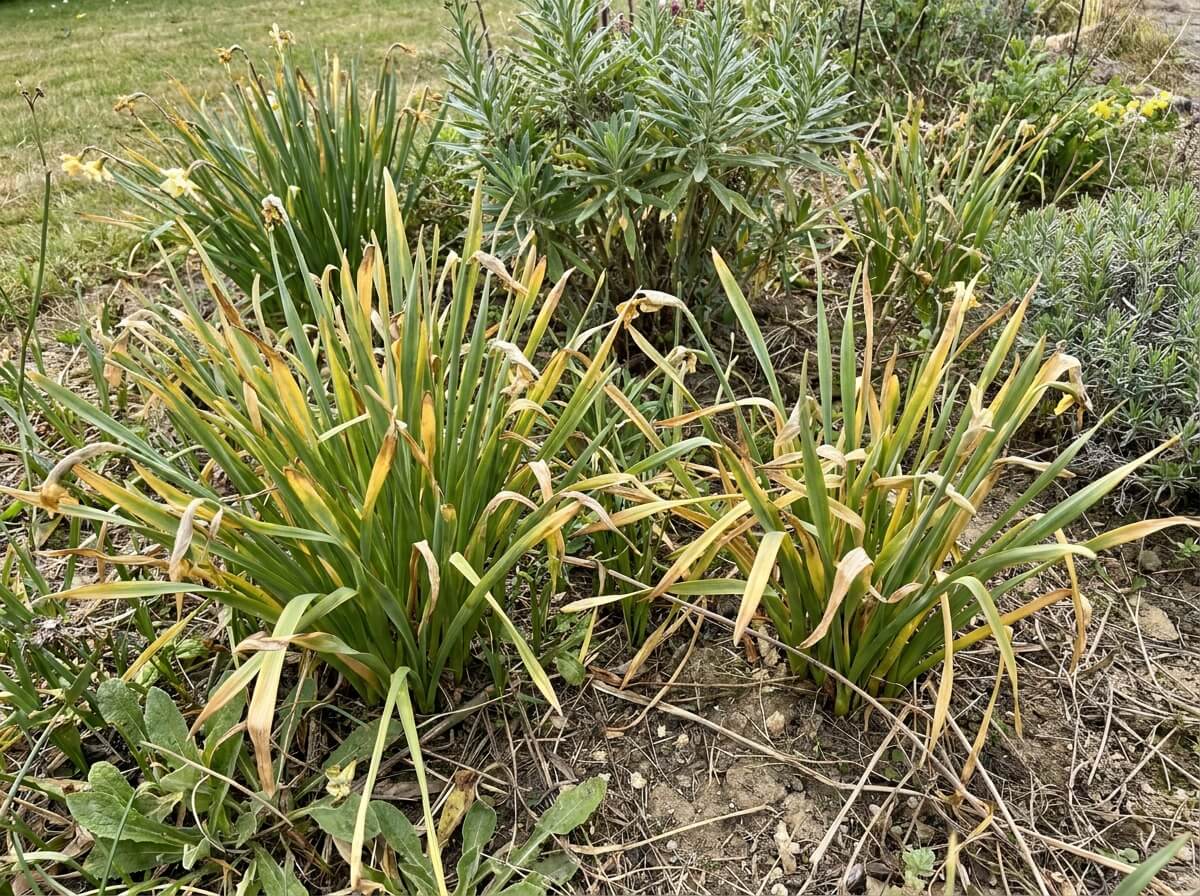
The flowers are long gone, and the foliage looks a sorry sight — floppy, pale, increasingly embarrassing among the bright summer border. Every instinct tells you to cut it back. Resist. What happens to your daffodil bulbs right now, in summer, decides exactly how many flowers you will get next spring. Getting this window right is non-negotiable for a dense, confident display, not a sparse row of blind bulbs that barely bothered.
This is the part most gardeners miss entirely. Long after the yellow trumpets have shrivelled, the stem has flopped, the bulb is still properly alive and active.
Those untidy leaves are photosynthesising, converting sunlight into carbohydrates, pushing all of it downward into the bulb as stored energy. That exact energy will power next year’s flower.
A daffodil bulb needs roughly six full weeks after flowering ends to complete this process. Cut the leaves before that point, and you interrupt the cycle mid-flow. The bulb goes into dormancy underweight. Following spring it either produces a weak, short-stemmed flower, or no flower at all. These are the “blind” bulbs gardeners complain about. Premature cutting is the single most common cause.
The scale leaf wrappers inside the bulb are also being packed with next year’s flower bud tissue right now. By late summer, everything that will emerge in spring is already miniaturised inside the bulb. It waits.
The leaves: leave them. Entirely.
Do not cut, tie, braid, or stuff them under rubber bands. Braiding the foliage is a classic tidying hack; it reduces the leaf’s light-catching surface by more than half. Yes, it looks neater. No, it is utterly ineffective. Dodgy advice. Do not bother.
The bulb suffers in silence.
What you can do is plant something in front. Choose a low, bushy perennial, a mound of hardy geranium, or some late-emerging hostas, to visually absorb the dying daffodil leaves without touching them. But this is the approach recommended by the RHS, and it genuinely solves the aesthetics issue without sacrificing next year’s display.
The one exception: if the foliage has already gone completely straw-brown and pulls free from the bulb neck with almost no resistance, the process is finished. At that point, cutting or clearing it causes no harm at all. Sorted.
Summer is the bang-on moment to feed daffodil bulbs — not spring, when gardeners tend to reach for the fertiliser. By the time flowers are open, the bulb is already spending its reserves. So the time to replenish is immediately after flowering, while those leaves are still green and can carry nutrients down to the bulb.
Use a high-potassium fertiliser. Sulphate of potash (potassium sulphate), applied at roughly 15–20g per square metre, scattered around the base of the dying foliage, is ideal. Potassium does wonders for strong cell development in the bulb. It significantly reduces the risk of the dreaded blind-bulb syndrome the following year.
Avoid high-nitrogen feeds. Nitrogen pushes leafy green growth. This is not what you need from a bulb that is heading into dormancy.
A general granular feed like Growmore works in a pinch, but sulphate of potash is better targeted. Water it in if rain is not forecast within 48 hours.
Most established daffodil clumps in well-drained ground can stay in the soil for years without lifting. They are not fussy. The thing is, there are clear signals that lifting has become worthwhile.
If you do lift, wait until the foliage has died back completely — usually eight to ten weeks after flowering in a Northern Hemisphere summer. Use a flat fork rather than a spade to avoid slicing through bulbs. Lift the whole clump, knock off the soil, and separate the offsets by hand. They detach with a clean snap when they are ready.
Dry the bulbs in a single layer in a warm, airy spot — a garden shed shelf, out of direct sunlight — for about a fortnight. Then store them in a net bag or an old pillowcase. Never in a sealed bag or airtight container. Daffodil bulbs rot fast without airflow. Replant in autumn, at a depth of roughly three times the bulb’s diameter.
For a more detailed walkthrough of the lifting and storage process across all spring bulbs, see our guide to lifting and storing spring bulbs.
Summer is a good time to inspect lifted bulbs for problems that would not be visible in the ground.
Narcissus bulb fly is the main culprit to know. The adult fly lays eggs near the bulb neck in late spring. By summer, the larva has tunnelled in and begun eating the bulb’s core. A damaged bulb feels soft and spongy when you squeeze it.
The centre, when cut open, is hollow and brown — sometimes with a fat, creamy-white maggot inside. Discard any affected bulbs immediately. Do not compost them.
Basal rot (caused by Fusarium oxysporum) shows as a brown, mushy, foul-smelling rot at the base plate of the bulb. Again, bin these. There is no treatment worth attempting on a badly infected bulb. Bin it. Proper experts agree.
Healthy bulbs feel firm, heavy, and have a papery tunic that is tight and dry. If a bulb feels light for its size, or soft anywhere, it will not perform.
Daffodils naturalised in grass — the classic British country garden look — need a slightly different approach. The foliage must still die back fully before the grass around them is cut. The minimum waiting period after the last flower is six weeks, often closer to eight. Mark the patch in spring so that whoever mows the lawn does not accidentally cut through it. A few canes at the perimeter work perfectly.
Once the foliage has gone, the grass can be mown normally. The naturalised patch looks neat again by midsummer.
Naturalised clumps rarely need lifting unless they have been in place for a decade or more and flowering is visibly thinning. The University of Minnesota Extension notes that well-sited naturalised narcissus can persist for 20 or more years without division.
And if your display this past spring was thinner than expected, this summer’s care — the feeding, the patience with the foliage, the careful storage — will show up clearly in the quality of flowering 10 months from now. The turnaround is real, and it is measurable.
Southern Hemisphere gardeners: this applies to your December and January — your daffodils are finishing up in late austral spring, and the same principles apply to what you do with them right now.
The parallel with tulips is worth noting: the same post-flowering discipline applies there too. If you are managing both in your border, see the detailed advice on tulip bulbs after flowering for a direct comparison.
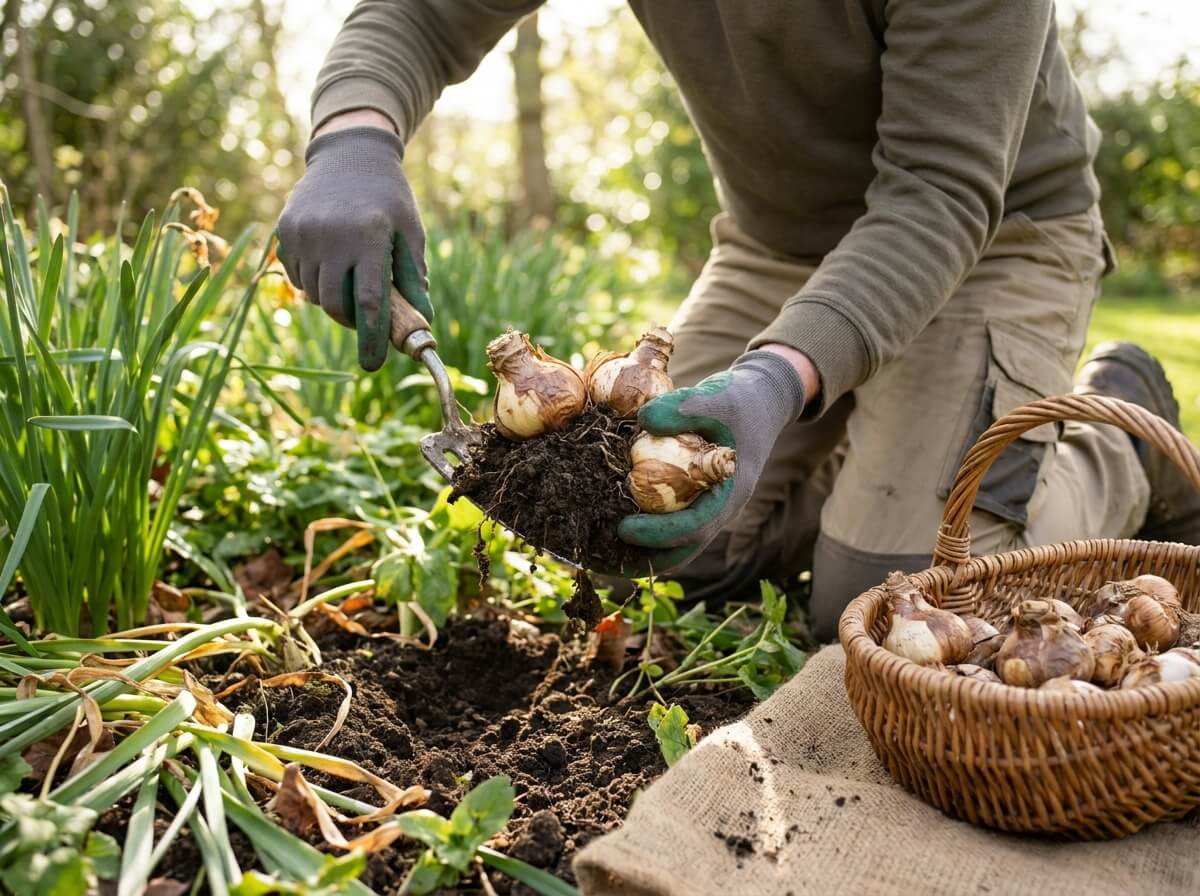
Smart tip: The test for whether foliage is ready to cut: it should pull free from the bulb neck with almost no resistance.
No — cutting before six weeks after flowering ends starves the bulb and causes weak or absent blooming the following year. Plant something in front to hide the dying leaves instead.
No. Most established clumps thrive left in the ground for three to five years or more.
Only lift when flowering noticeably declines or the clump is visibly congested.
Wait until the foliage has turned completely straw-brown and died back — typically eight to ten weeks after the last flower. Lifting too early interrupts bulb ripening.
A high-potassium feed such as sulphate of potash at 15–20g per square metre, applied once the flowers have finished and while the foliage is still green, gives the best results.
These are called blind bulbs. The most common causes are premature leaf cutting in previous years, overcrowding, or a shaded position — all of which reduce the energy stored in the bulb during summer.