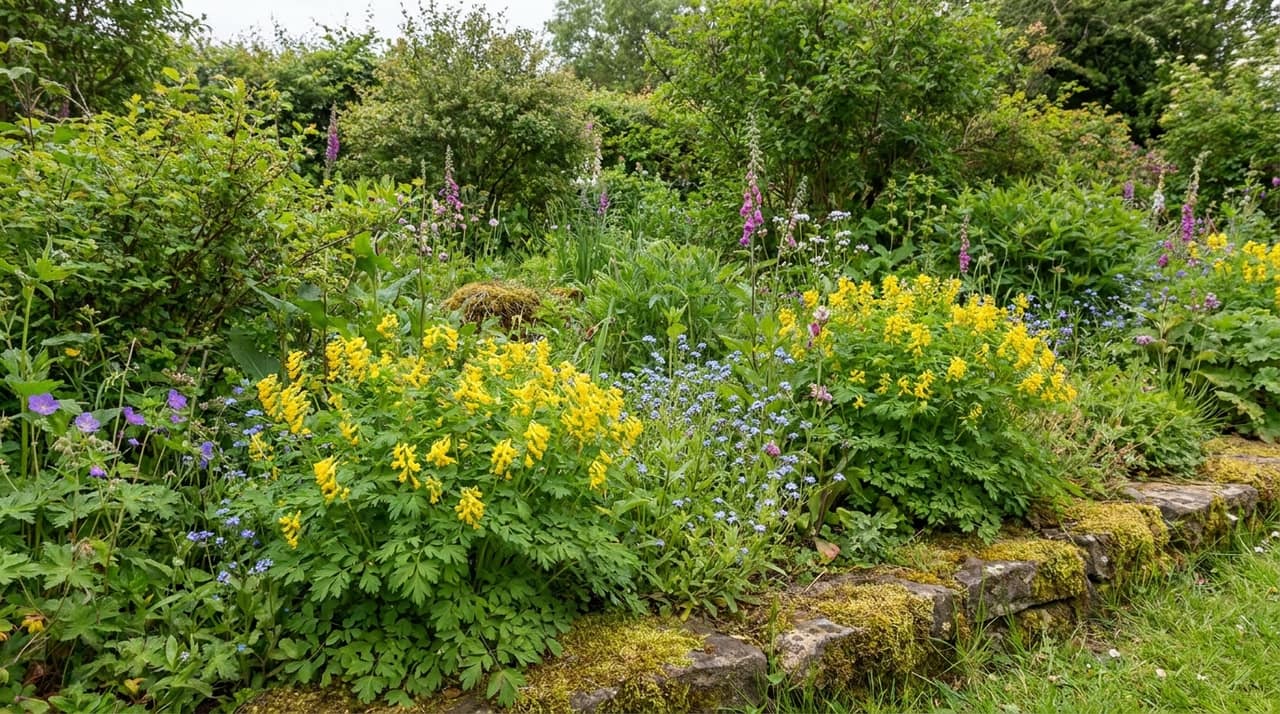
Corydalis lutea is a delightful cottage-garden perennial celebrated for its feathery, fern-like foliage and cheerful clusters of bright yellow flowers. This charming plant thrives in partial shade and rocky spots, making it invaluable for naturalising in gravel gardens, between paving stones, and on shaded bank sides. Its prolific self-seeding habit means once established, it will return year after year with minimal intervention.
Corydalis lutea prefers dappled shade or partial sun, particularly in warmer regions where afternoon shade prevents leaf scorch. It will tolerate full sun in cooler climates and shadier positions in southern gardens. Good air circulation around the foliage helps keep the plant healthy and reduces humidity-related issues.
This plant thrives in well-drained, gritty soil and actually prefers poor, infertile conditions to rich earth. It tolerates chalk, sandy, and rocky substrates well, making it perfect for difficult spots where other perennials struggle. Avoid heavy clay and waterlogged positions, which encourage rot and fungal problems.
Corydalis lutea is fully hardy across the British Isles and northern Europe, tolerating winter temperatures down to −15 °C. In southern regions and milder gardens, it often remains evergreen or semi-evergreen through winter.
Yellow corydalis has several close relatives that look similar on a nursery bench but behave very differently in the garden. This table sets out what each one offers before you buy.
| Plant | Flowers | Habit and vigour | Best for |
|---|---|---|---|
| Corydalis lutea | Golden yellow, late spring to early autumn | Prolific self-seeder, feathery fern-like foliage | Naturalising in gravel, paving joints and shaded banks |
| Corydalis lutea ‘Citrina’ | Pale, citrine-tinted yellow | Similar fern-like foliage, more subdued effect | The same difficult spots, in a quieter colour |
| Corydalis ochroleuca | White and yellow bicolour | Similar habit, slightly less vigorous | Shady corners where yellow would dominate |
| Corydalis solida | Purple-pink, in spring | Tuberous; dies back completely after flowering | Cottage-garden planting where a later perennial can cover the gap |
| Corydalis flexuosa | Blue | Needs cool, moist, humus-rich soil | Not a substitute for dry, gritty positions |
For dry, gritty ground in partial shade, the straight yellow species remains the easiest and most reliable choice.
Plant in spring (March to May) or early autumn (September to October) when soil is moist and temperatures mild. Container-grown specimens can be planted any time the ground is workable, avoiding the height of summer.
Spring: As new growth emerges, deadhead winter-damaged stems at the base. Apply a balanced, slow-release fertiliser only if the soil is particularly poor; overfeeding encourages soft, disease-prone growth. Watch for new self-sown seedlings and thin or transplant them as needed.
Summer: Water during prolonged dry spells, but allow the soil surface to dry between waterings. Deadhead spent flowers regularly to encourage continuous blooming; however, leave some flowers to set seed if you want self-seeding next year. In very hot summers, afternoon shade and mulch around the base help prevent drought stress.
Autumn: Allow some flowers to fade and set seed for natural regeneration. Cut back dead or tatty foliage in late October, leaving any green growth intact. Divide congested clumps in early autumn if needed, planting divisions immediately in moist soil.
Winter: The plant often remains semi-evergreen or dormant, requiring no special care. No frost protection is necessary as it is fully hardy; simply avoid walking over frozen foliage.
The straight species is the most widely grown, though a few named cultivars offer subtle variations.
On nursery labels and in newer plant lists, Corydalis lutea often appears as Pseudofumaria lutea, and Corydalis ochroleuca as Pseudofumaria alba.
Corydalis solida dies back completely after flowering, so mark its position and let a later perennial cover the gap.
Corydalis flexuosa, the blue-flowered kind, wants cool, moist, humus-rich soil and is no substitute in the dry gritty spots that suit yellow corydalis.